Jul 28, 2026
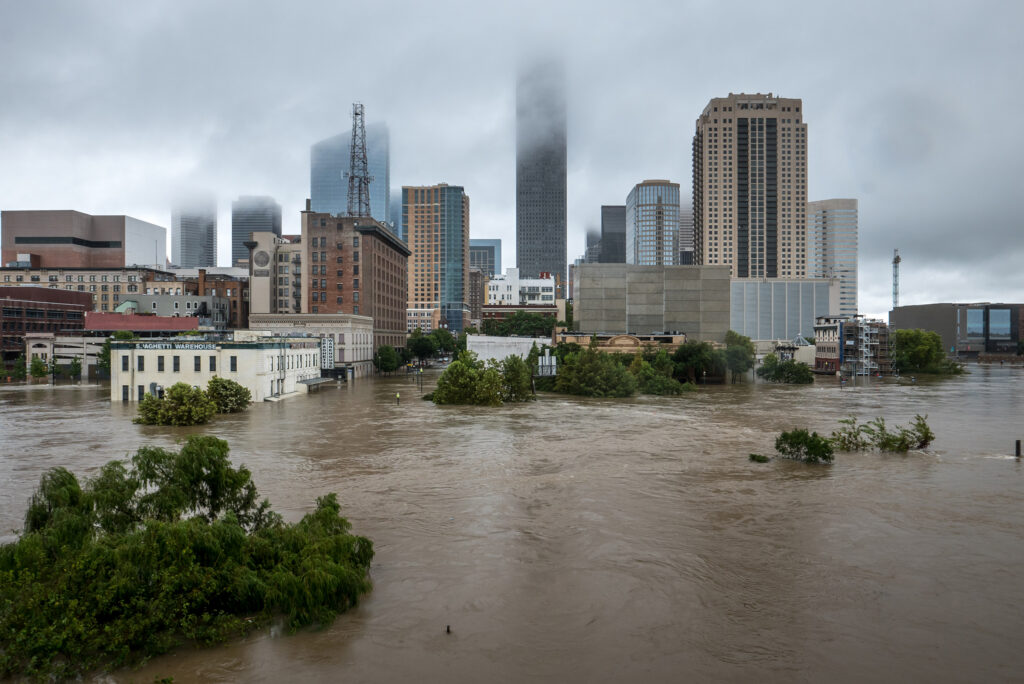
Water has the ability to connect and to divide in equal measure. It shapes the way we experience our communities,…

Corpus Christi’s water crisis reveals the challenges of planning for growth.
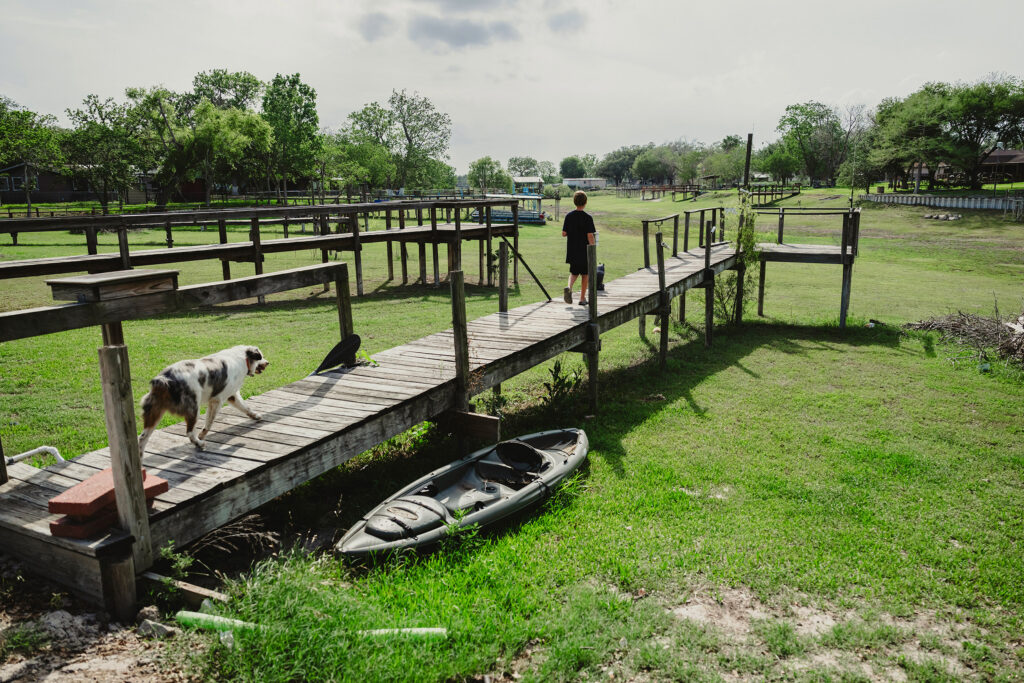
In the summer and fall of 2025, I spent nearly every weekend standing in line at 6 a.m. with dozens of other residents, each with a truck, trailer, and water tank, waiting at a local wastewater treatment plant. We were there to receive effluent water in hopes of keeping the landscaping around our homes alive after the city enacted drastic water-conservation measures in fall 2024 that prohibited irrigation. We remain in severe drought—a drought that has exposed a long-developing water-supply shortage for both my city and the broader Coastal Bend region.
During those early morning hours, I found myself thinking not only about the immediate crisis but also about the lessons it might hold for other cities beginning to see signs of water stress. I also wondered whether architects could play a larger role in helping communities anticipate such conditions and develop long-range solutions. Our profession has spent decades grappling with conservation, sustainability, and resilience at the scale of buildings and sites. As water shortages become increasingly common, perhaps those same skills can be put to use on a broader civic scale.
The city of Corpus Christi and the surrounding seven-county region of roughly 300,000 residents now find themselves in a water-supply crisis. It is rare for a US city of this size to face a shortage of this magnitude. Significant rainfall in April and May finally interrupted the current drought and delivered short-term relief. Local leaders have effectively been granted additional time to make difficult—but necessary—decisions about the region’s water future with fewer immediate punitive consequences than seemed likely only a few months ago.
As of June 2, the Corpus Christi City Council again delayed action, tabling a decision on the Inner Harbor desalination plant—a seawater desalination facility planned along the Corpus Christi Ship Channel—until September. Whether the city can successfully navigate both its near-term water shortage and the longer-term challenge of securing a resilient water supply remains uncertain.
How did we get here? The answers are anything but simple. A sustainable long-term solution will require collective recognition that this is a shared problem demanding shared responsibility. Each new water source will likely come at a higher cost than the last, making conservation not only environmentally prudent but economically necessary.
Corpus Christi and the greater Coastal Bend economy are built on a balance of diverse industries. The region depends on a substantial industrial base that includes refining and petrochemical production, liquified natural gas (LNG) transport, and numerous businesses supported by the energy sector. This industrial base has grown significantly over the past decade and is served by what has become one of the nation’s largest energy-export ports.
Another major economic driver is the geography of the Coastal Bend region itself, which supports agriculture, tourism, fishing, hunting, birding, and other forms of coastal recreation. The region’s robust coastal ecology and marine life support several significant research and educational institutions, including the Harte Research Institute at Texas A&M University–Corpus Christi, the University of Texas Marine Science Institute, and the Texas State Aquarium, which is now part of the Oceans and Wildlife Institute. The long-standing coexistence and collaboration among industry, business, and the marine-science community reflect the interconnected nature of life and work along the Texas coast and are a testament to the dedication of the region’s residents who lead these industries and institutions.
Corpus Christi’s potable water supply shares characteristics with many other Texas cities in that it has historically relied on surface water. Until the late 1990s, the city depended entirely on its western reservoirs, the Choke Canyon Reservoir and Lake Corpus Christi. These reservoirs are fed by a watershed extending west of San Antonio into southern portions of the Hill Country. The Frio and Nueces rivers and their tributaries form the primary arteries of this watershed and have historically received a portion of their flow from the Edwards and Carrizo aquifers. The Nueces River ultimately delivers the watershed’s output to Corpus Christi.
The past 100 years of the river’s history tells the story of a watershed in decline. From 1915 through the mid-1970s, average flow rates exceeded 500 million gallons per day. Since then, flow rates have never returned to those levels, and over the past two decades have averaged less than 220 million gallons per day. This sustained decline may also indicate broader changes affecting the Hill Country aquifers that support much of Central Texas.
A prolonged drought during the early and mid-1990s forced Corpus Christi to accelerate plans that had been in the works since the 1980s to secure an additional water source from a less drought-prone region. The result was the construction of the Mary Rhodes Pipeline, named for the former mayor who relentlessly shepherded the project. The pipeline extends approximately 100 miles east to Lake Texana and entered service in 1999. An additional 42-mile extension to the Colorado River was completed in 2016.
These eastern supplies have since become the city’s primary source of water, providing more than 70 million gallons per day from Lake Texana and the lower Colorado River. Maintaining uninterrupted operation of this pipeline system is therefore paramount. At present, there is little redundancy or storage capacity associated with this portion of the regional water-supply network.
According to the City of Corpus Christi’s website, the regional industrial base collectively consumes approximately 60 percent of the potable water supply for the Coastal Bend. This figure has led some residents to argue that industrial users should bear the primary burden of future reductions.
Historical water-use data, however, suggest a more complicated picture. Reductions in industrial consumption during the 2010s appear to have largely offset demand from newer industrial users. Overall industrial water consumption today remains comparable to levels seen in the 2000s despite significant industrial expansion since 2020.

A Single-Source Model
One of the more unique characteristics of the Coastal Bend’s water system is its reliance on a single supply network delivering a single type of water to nearly all users.
Until recently, residents, businesses, and industry alike depended almost entirely on potable water. Historically, this arrangement made sense. Surface-water supplies were the most economical source available, and operating a single distribution system was far simpler than maintaining multiple networks for different grades of water.
Over time, however, this approach evolved into a municipal and regional system that supplied all users with potable water regardless of end use. The city consequently became financially dependent on what utility managers often describe as a single-rate model: one type of water delivered through one distribution system.
At the turn of the century, rising operating costs were becoming unsustainable for local golf courses. Several sought lower-cost irrigation alternatives and found one in treated effluent water—water that has been through the municipal supply and sewage treatment systems, is partially treated, and would otherwise be discharged into natural waterways. Effluent is suitable for irrigation and certain other nonpotable uses. Courses located near wastewater treatment plants were able to connect directly to effluent discharge lines and purchase water at roughly half the cost of potable supplies.
This arrangement effectively established an alternative water rate model for the region. The primary obstacle to broader adoption is the need for a separate distribution system, and constructing those systems is expensive.
The adoption of the alternative supply for golf courses eventually encouraged industrial users to pursue similar arrangements. For large-volume consumers, the economics were compelling. The cost of constructing new pipelines could be offset over time through lower water rates, while reduced reliance on potable water offered broader public benefits.
Yet implementation moved slowly. For more than a decade, the city’s dependence on potable-water revenue created little incentive to expand alternative supply systems. Today, however, the severity of the crisis now outweighs the concern for revenue loss.
Effluent supplies have the potential to offset 20 to 25 percent of potable-water demand for industrial users able to connect to the system, according to a presentation made by Corpus Christi Water to City Council. Companies including Valero and Flint Hills Resources are now racing to complete infrastructure projects intended to reduce their dependence on potable water before curtailment measures become necessary, which could occur as soon as this year.
Curtailment—the mandatory reduction of water consumption across all user groups—remains a possibility. Early projections suggest that unilateral reductions of up to 25 percent may be necessary. The economic implications of industrial curtailment are complex and uncertain, particularly for industries tied to refining and energy production, but the effects would extend well beyond the Coastal Bend.
Groundwater and the Limits of Traditional Supply
In hindsight, planning for the region’s next major water project was arguably already behind schedule when the final phase of the Mary Rhodes Pipeline was completed in 2016. Around that time, city leaders began exploring seawater desalination and initiated a permitting process that would ultimately take more than a decade to complete. Seawater desalination is complex, energy intensive, and costly but also one of very few options that can provide the scale of water production necessary to reliably fill the void left by drought.
Before discussing desalination, however, it is worth considering another common source of potable water—groundwater aquifers. Many regions of Texas rely heavily on aquifers for potable water. Yet scientists continue to acknowledge that groundwater systems remain less thoroughly understood than they should be given the number of Texans who depend on them. In many areas, aquifers are showing signs of increasing stress, including the Nueces River, noted previously.
The Coastal Bend sits atop the Gulf Coast Aquifer. Although large in area, spanning much of the Texas Coast, it lacks the consistently high water quality found in some other Texas aquifers. Salinity levels vary considerably by location. Some rural communities have enjoyed access to fresh groundwater for decades; other communities have found it altogether unusable; and many have found something in between, using reverse osmosis treatment systems to remove low levels of salinity to make the groundwater usable.
Corpus Christi is now in the difficult position of attempting to rapidly secure groundwater rights and develop well fields capable of supplementing existing supplies. Rural residents and small communities that rely on the Gulf Coast Aquifer are opposing well leases, fearing that a much larger water user tapping into the aquifer could jeopardize water quality and well performance.
At the time of writing, Corpus Christi was bringing its first well field online and constructing a reverse osmosis (RO) facility to treat the water. City leaders continue to search for, evaluate, and negotiate the acquisition of additional groundwater rights for potential future production. Many water experts remain skeptical that large-scale well field projects can provide sustainable long-term yields. Nevertheless, some level of groundwater production will almost certainly be necessary to help the region address its near-term water shortages.
Desalination and Long-Term Supply
This brings us back to the most controversial component of Corpus Christi’s water future: seawater desalination. It is also the only source currently capable of consistently producing potable water in the quantities necessary to ensure a stable long-term supply. Seawater desalination is a proven technology that is being used around the world, particularly in densely populated regions with limited freshwater resources. While the technology is more common in other parts of the world, its use in the United States continues to grow.
The largest desalination facility in the United States, located in San Diego, California, is now negotiating delivery contracts with communities in Arizona, where population growth is placing increasing pressure on traditional water supplies. Tampa, Florida, also operates a successful desalination plant located in a geographically similar back-bay environment to that of the proposed Inner Harbor desalination facility in Corpus Christi.
Clearly, traditional surface-water and groundwater sources remain the preferred options, particularly with respect to energy consumption and production costs. Yet in some regions of the country, growing demand and recurring drought have placed increasing pressure on these conventional supplies. Whether through conservation, expanded groundwater production, desalination, or a combination of approaches, communities such as Corpus Christi are being forced to consider new strategies for maintaining a resilient and reliable long-term water supply.
Environmental concerns are an equal—if not greater—consideration than cost. Evaluating potential environmental impacts has been a fundamental part of the permitting process for the currently approved Inner Harbor site along the Corpus Christi Ship Channel, a process that began more than a decade ago. To obtain permitted status, the project underwent federal and state review through the Environmental Protection Agency (EPA) and Texas Commission on Environmental Quality (TCEQ), respectively.
A key component of that review has been a theoretical analysis known as “far-field modeling,” which attempts to predict the potential effects of highly saline brine discharge from the desalination process on the receiving body of water. This analysis has become a focal point for critics of the project. Although the studies conducted to date—including a recent study commissioned by the City Council—have not projected significant negative impacts on the bay system, some scientists and community members remain concerned about the limits of modeling and the difficulty of predicting ecological effects over time.
The most recent study was subsequently subjected to peer review by a joint team of local scientists from the University of Texas Marine Science Institute (UTMSI) and Texas A&M University–Corpus Christi’s Harte Research Institute. Their review concluded that the modeling was insufficient to support a definitive opinion and recommended the inclusion of dissolved oxygen modeling as an additional metric. According to available information, incorporating this metric presents significant technical challenges. This author was unable to determine whether oxygenation modeling is routinely included in the environmental evaluations conducted for other desalination facilities.
As with any environmentally regulated facility, continuous operational monitoring will be required throughout the lifespan of the plant to ensure that environmental impacts remain within the parameters established during the permitting process. Permitting does not eliminate uncertainty, but it does establish a regulatory framework for measuring and responding to potential impacts. Concern and vigilance are appropriate whenever a new technology or industry is introduced into the environment, whether the issue is groundwater extraction, surface-water use, or seawater desalination. Every source of potable water carries environmental consequences, and each requires responsible management to balance the needs of the community with the protection of natural resources.
The Cost of Water
Having a realistic understanding of project costs is critical to success, particularly for publicly funded infrastructure projects. One of the factors that makes seawater desalination controversial is the difficulty of comparing its costs directly with those of traditional surface-water and groundwater systems. Passive infrastructure such as dams, reservoirs, and pipelines typically requires substantial upfront investment but can be amortized over a long service life, with relatively modest long-term maintenance costs.
Seawater desalination, by contrast, combines significant initial capital costs with higher ongoing operational and maintenance expenses due to its energy requirements and greater construction and maintenance complexity. As a result, the cost of providing the reliable potable water on which we all depend is likely to increase substantially in the years ahead. For the Coastal Bend, that future has already arrived.
Politics and Governance
Responsibility for addressing the current water crisis ultimately rests with the City of Corpus Christi, even though the consequences of those decisions extend well beyond city limits. Much of the Coastal Bend region depends on the city’s water system, meaning that residents, businesses, and industries throughout the region are affected by decisions made by local elected officials and city staff.
Like most Texas municipalities, Corpus Christi operates under a system in which a professional city manager and staff oversee day-to-day operations while the mayor and city council establish policy and provide oversight. Over the past decade, successive city councils and professional staff invested significant time and resources in evaluating future water-supply options, including seawater desalination. The current Council is on the brink of walking away from years of grounwork laid by their predecessors. The current debate over the Inner Harbor project reflects both the scale of that effort and the challenges of making long-term infrastructure decisions amid changing political, economic, and environmental conditions.
Recent City Council votes have revealed a closely divided governing body, with disagreements centering on project costs, environmental uncertainty, permitting, and alternative water-supply strategies. Those debates continue as city leaders weigh immediate water-supply concerns against longer-term planning objectives.
Harbor Island, another proposed seawater desalination project led by the Nueces River Authority (NRA), has emerged as a potentially viable option, albeit one with a longer development timeline and significantly higher infrastructure costs. The proposed facility would be substantially larger than the Inner Harbor plant and could potentially serve multiple regions.
For many critics of the Inner Harbor facility, a key distinction is Harbor Island’s proposal to draw seawater and discharge brine far offshore in the Gulf. The assumption is that this approach would present less risk to the salinity balance of the bay system and the aquatic life it supports.
Harbor Island is proposed as a public-private partnership (P3), a procurement model that introduces additional complexity regarding financing, governance, and long-term water costs. Private equity investors typically seek a return on investment, raising questions about how future costs would be structured and managed. At the same time, debate surrounding the Inner Harbor project has largely centered on environmental concerns, particularly the uncertainty associated with brine-discharge modeling. As a result, the two desalination proposals are often framed as competing alternatives, despite their differing scales, timelines, and intended service areas.
The ongoing discussion reflects the difficult balance between addressing immediate water-supply needs and evaluating longer-term alternatives. Environmental impacts, project costs, permitting requirements, and implementation schedules all remain central considerations as regional leaders assess potential paths forward.
Although the original permit modeling satisfied state and federal regulatory requirements, the Corpus Christi City Council has voted to commission additional brine-discharge modeling to address concerns raised by some stakeholders.
Cost considerations have also influenced the project’s development process. The City Council has approved a change in developers in hopes of reducing overall project costs. The new developer has projected savings compared with the original proposal; however, a guaranteed maximum price (GMP) cannot be established until the project advances further through design and procurement.
The project’s financing is also tied to approximately $750 million in low-interest state loans specifically designated for the Inner Harbor facility. These funds were secured through the efforts of a bipartisan coalition of state legislators working with the governor’s office and reflect broader state concerns regarding long-term water security.
The debate surrounding the Inner Harbor and Harbor Island projects also raises broader questions about water governance in Texas. As population growth, infrastructure demands, and environmental considerations become increasingly interconnected, policymakers may need to evaluate whether existing governance structures are sufficient to address long-term regional water-supply challenges. The scale and complexity of these issues often extend beyond individual municipal boundaries, requiring coordination among multiple jurisdictions and stakeholders.
The Role of Design and Long-Term Thinking
As architects, we are not typically in positions to directly influence broader governmental decision-making. However, our training, knowledge, and problem-solving skills can provide valuable perspective to friends, colleagues, and leaders who are. Architects can also help shape the future of their communities by serving on planning commissions, design review boards, watershed and conservation committees, and other civic advisory groups. As politics across the spectrum becomes increasingly divisive, professions that bring analytical thinking, collaboration, and clear problem-solving capabilities are more important than ever.
In the long run, it is difficult to see how the cost of providing a reliable, high-quality water supply will not increase. Water rates will rise. Conservation will become increasingly important for individual consumers. And the need for thoughtful, collaborative problem-solving—across disciplines, institutions, and communities—will only continue to grow. Architects have an important role to play in those conversations, helping connect the design of individual buildings to the broader systems that shape our cities and regions.
Note: The author of this article has been identified to the editor but has requested to remain anonymous.




Desert, sky, and ocean converge at a remote retreat in Mexico.
Plunging into Texas Water Conservation

Where form and atmosphere converge

Designing data centers for a resource-constrained future
A luxury resort is made smaller and greener.

A room for every season
Reimagining a campus landmark after Harvey
A center for the arts sustains Rockport’s creative community.


The Why and How of a Rammed Earth Enclosure

Urban Shores: Towards Landscape-Based Coastal Adaptation
Anna Aslaug Lund, Ole Fryd & Gertrud Jørgensen
Danish Architectural Press 2025

Earthy, warm hues, such as amber, terracotta, and violet, bring a grounding touch to these new kitchen and bath products.

I am surprised Texas Architects would publish an opinion article with a storyline as volatile as this on a Texas city by an author requesting to remain anonymous.