Jul 28, 2026
Water has the ability to connect and to divide in equal measure. It shapes the way we experience our communities,…
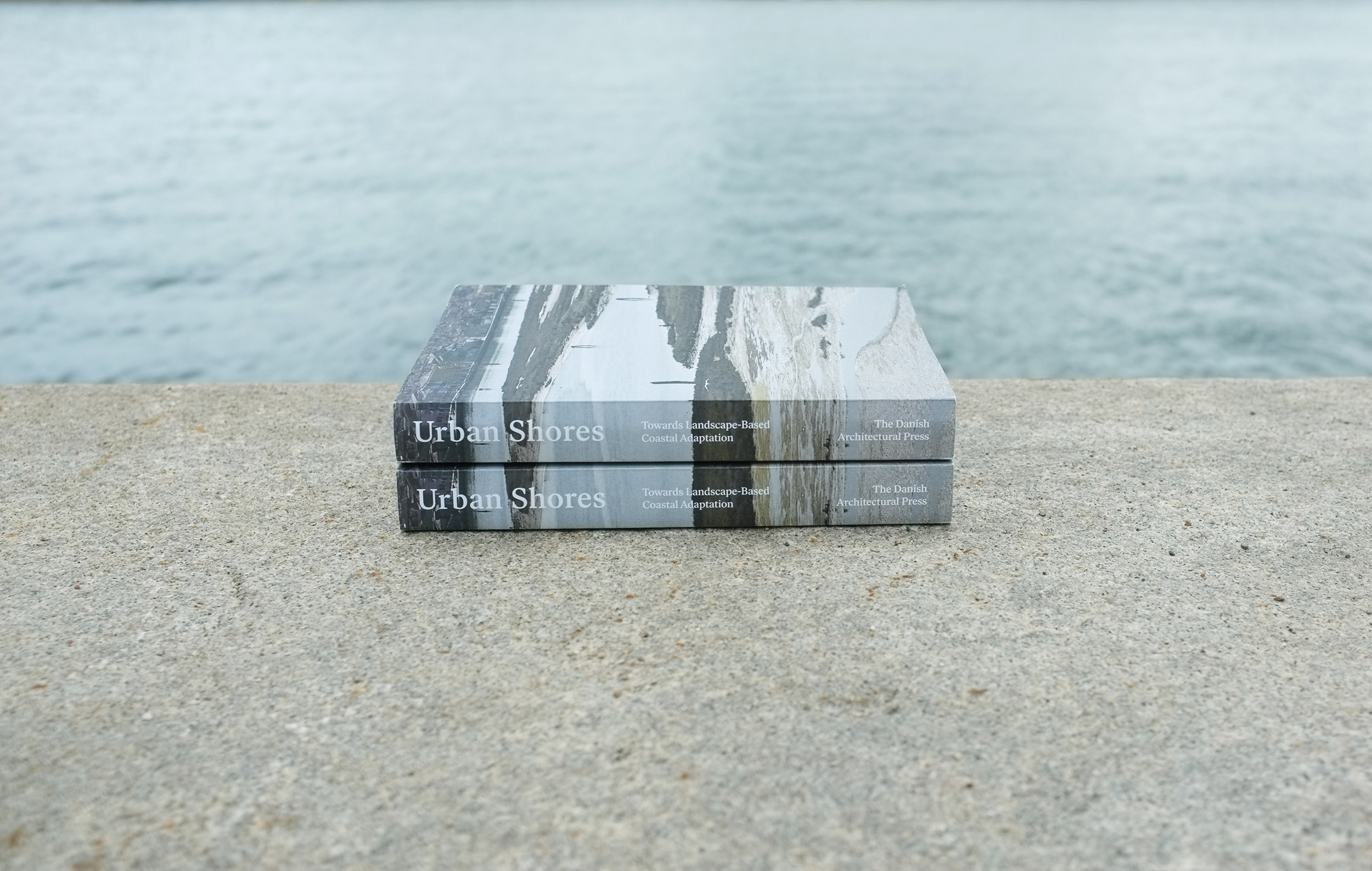
Urban Shores: Towards Landscape-Based Coastal Adaptation
Anna Aslaug Lund, Ole Fryd & Gertrud Jørgensen
Danish Architectural Press 2025
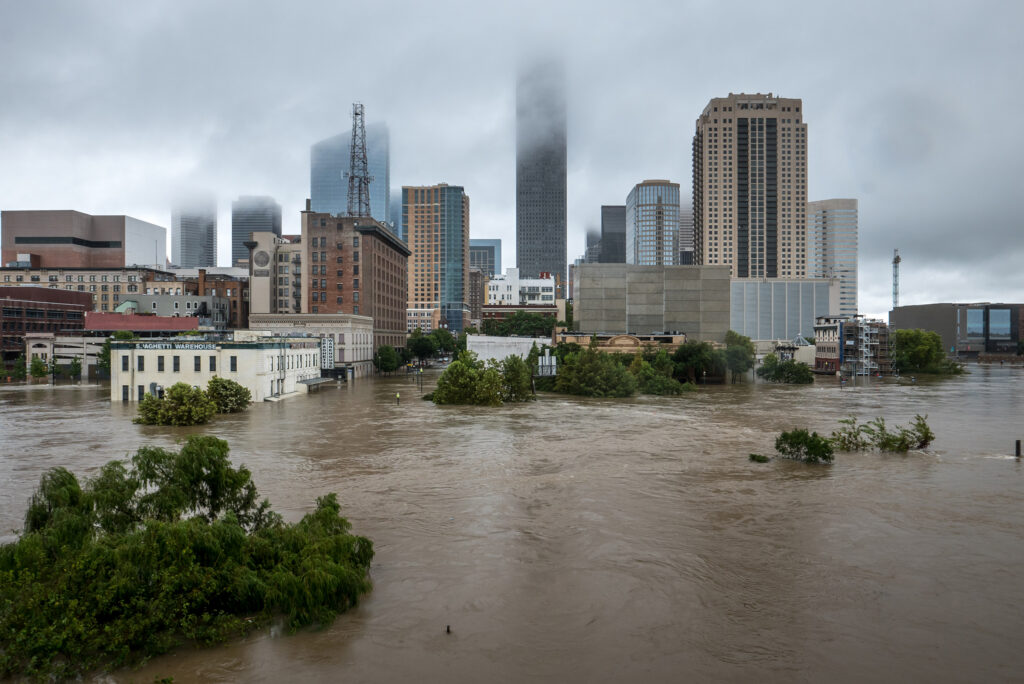
“Globally, close to one billion people currently live in the low-elevation coastal zone,” write the authors of Urban Shores: Towards Landscape-Based Coastal Adaptation. This spells trouble for those one billion people as flooding, erosion, and sea level rise will transform, and potentially submerge, the cities they call home. Based on research by University of Copenhagen scholars, this book explores three main coastal change dynamics—erosion, storm surge, and sea level rise—in various cities.
The first few introductory chapters provide context to the interface between land and sea, the effects of climate change on urban coastal landscapes, and an explanation of landscape-based approaches. Within these chapters, an understanding of the importance of “reading the landscape” and its intertwined history with urban layouts begins to surface. The publication analyzes this from medieval eras, where the core urban functions were placed at a higher elevation “while the low foreshores of wetlands were used only for functions that were flood tolerant, temporary, and specifically related to the presence of water.” This is in contrast to the value and development of coastal lands today. The introductory chapters also point out that the recurrence of storm surges will quickly ramp up, turning what is currently a 100-year storm-surge event into a nearly annual occurrence in many coastal cities by 2100. Such a projection is troublesome for Texas and Louisiana, which are noted as global hot spots of coastal erosion, with annual rates of up to 16 meters (about 52 feet) per year.
Chapters four through nine chronicle the six landscape-based adaptation measures—green dikes; dunes, sand nourishment, and sand engines; barrier islands and reefs; coastal wetlands; retreat and relocation; and avoidance and nature preservation. These are structured identically with an introduction of the typology complete with definitions and accompanying visual explanations, followed by subcomponents on cultural heritage, biodiversity and mitigation of climate change, spatial potentials, and international examples and trends. Two or three case studies give broad overviews within the categories of background, planning, spatial experience, narratives, ecology, synergies and values, and lessons learned.
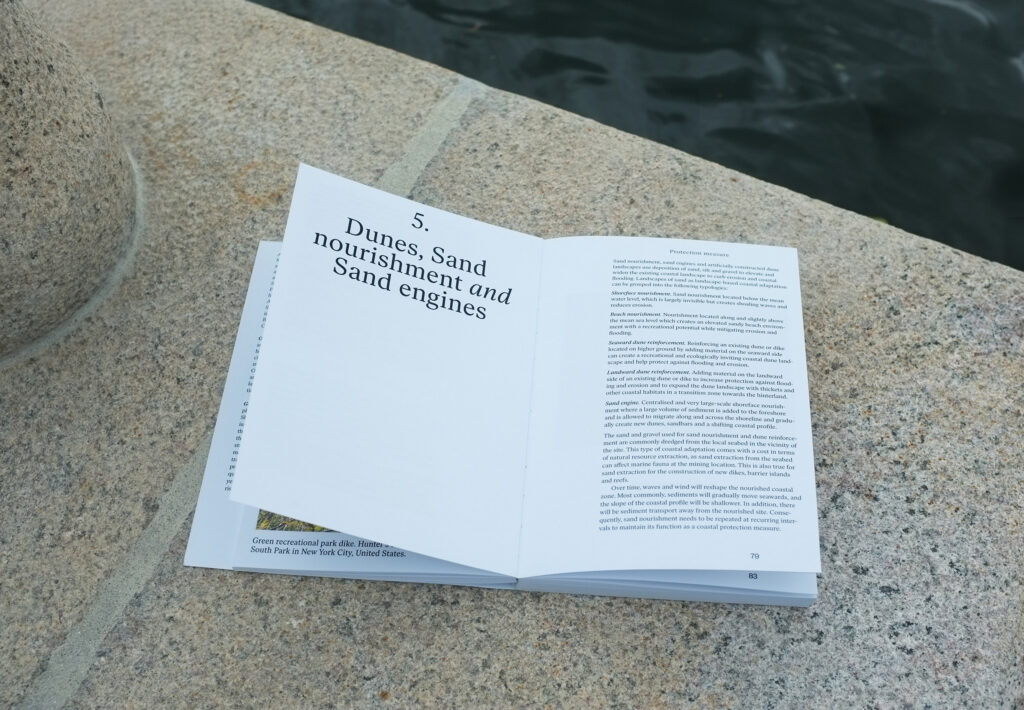
In these chapters, the reader gains a high-level understanding of each landscape-based approach by category, with tangible locations and descriptions to help differentiate between them. For example, within the “Coastal wetlands” chapter, seagrass meadows, marshes, and swamps are explored adaptations. One of the two case studies within the “Green dikes” chapter is Hunter’s Point South Park, situated in Queens, New York, across the East River from Manhattan. The area was initially part of the city’s bid for the 2012 Olympic Games and was slated to house the Olympic Village. Upon losing the bid, the city continued its many urban visions for the future of New York, including Hunter’s Point neighborhood. The realized park is unique in its dual coastal protection with integrated recreational qualities, all within a dense urban environment. The authors note that this project proves the potential for green dikes to create recreational connections within the limited space of urban contexts.
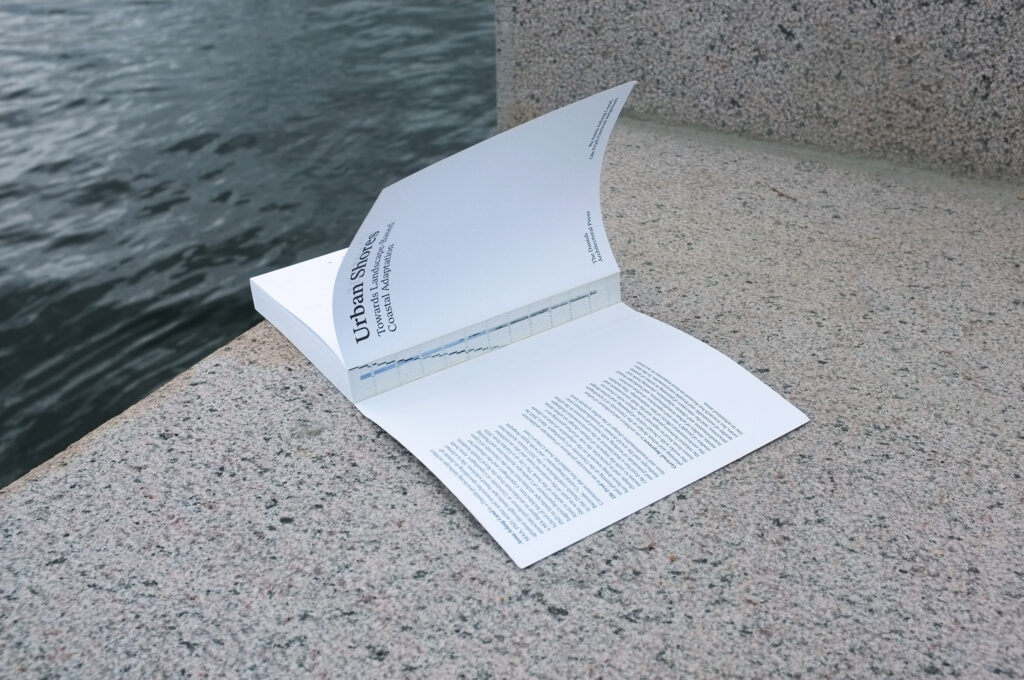
The authors have successfully grounded their research in one of the most important and diverse ecological zones on the planet: coastlines. Since most of the world’s largest cities are situated along coasts, together with critical infrastructure including power plants, oil refineries, and freight terminals, there is a serious climate threat to the basic functions of global society. The authors do not oversimplify the precariousness of the climate crisis. As global mean sea level rises and flooding catastrophes increase in severity, many coastal cities and regions will drastically change, if not disappear. When discussing a “reinterpretation of [a] historical fortification ring” in Sweden, the authors note that “where the enemy used to be foreign armies, the aggressor is now the rising sea level and the impacts of climate change,” emphasizing the dire risk faced by coastal populations worldwide. The severity of the situation is furthered through a striking and well-composed array of photos throughout the publication—nearly all of which are devoid of humans to enhance the emotive loneliness of coastal degradation. The photographs compel the reader to empathize with the beauty of the landscape in the pursuit of protecting the ecological fragility of each case study and the broader world.
While the publication is compelling in its material as an introduction to the topic, the authors acknowledge the limited geographical scope of their research, as all case studies are from Europe and the United States; seven of the eleven are from the Netherlands or New York. Unfortunately, this creates a blind spot in the landscape-based approaches happening elsewhere in the world and furthers the widely perceived narrative that Global North scholars prefer to focus on Western ideology and societies; any talk of Indigenous practices in relation to flood mitigation is essentially absent. There are trace mentions of adaptation measures elsewhere in the world, but these seem to be included as a grasp at broader connection.
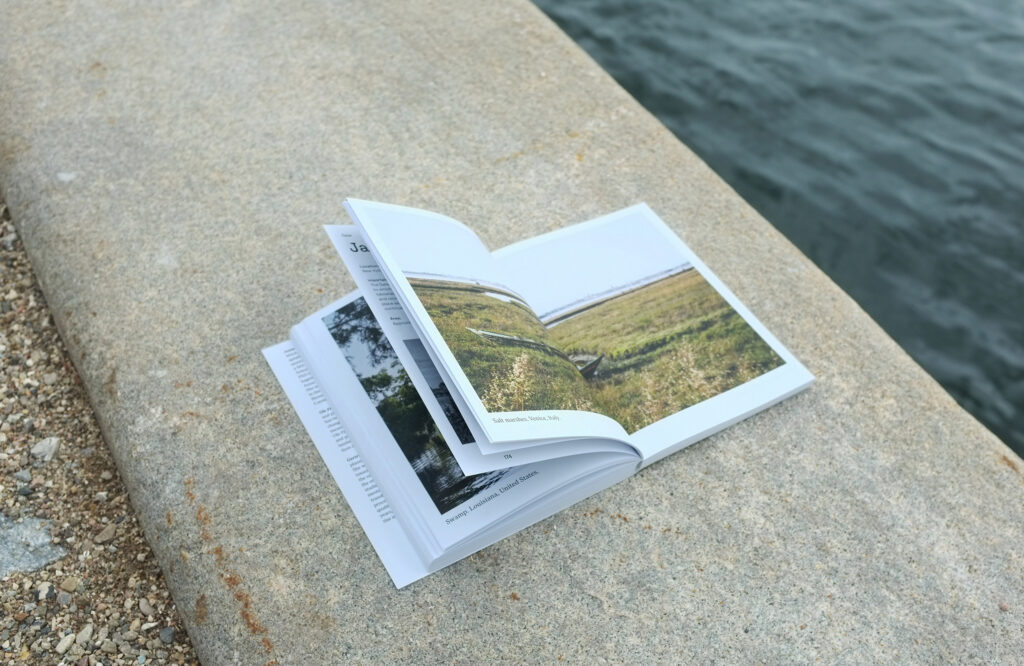
While the first three chapters provide valuable context, they are essentially all introductory and create slight fatigue among readers who might question when the meat of the text will begin. Within each case study, there is a shift toward black-and-white photography which, in comparison to the richer colored photographs throughout the rest of the book, is a disservice to the abundance of color within the chronicled ecologies. Similarly, the case studies use a sans-serif font for their body of text, which differs from the serif font type in the rest of the publication. This is a troubling design decision as sans-serif is not typically used for large bodies of text due to its lack of horizontal continuity for extended reading, which serif enables. Together, the black-and-white photography and the switch in font type are a poor graphical attempt at differentiating the case studies from the remainder of the text; cohesion with the rest of the book would have been more appropriate. Another point of confusion is the sources, which are located at the end of each chapter but not displayed within the text itself. This decision weakens the book’s academic rigor and unfairly forces the reader to manually match sources with the text.
As a whole, Urban Shores is successful in its aim to introduce the reader to the subject, techniques, and approaches associated with landscape-based coastal adaptation. It is clear that society must stop expanding cities into low-lying, flood-prone areas and return these landscapes to nature. I especially recommend this book to anyone whose work intersects with the built and natural environments as this highly valuable read provides a rich baseline of adaptations that can be implemented to help safeguard coastal communities and their populations.

Cole von Feldt, Assoc. AIA, is a designer, urbanist, and writer with a transcontinental educational and professional background between the US and Europe.


Desert, sky, and ocean converge at a remote retreat in Mexico.
Plunging into Texas Water Conservation
Where form and atmosphere converge

Designing data centers for a resource-constrained future

A luxury resort is made smaller and greener.
A room for every season
Corpus Christi’s water crisis reveals the challenges of planning for growth.
Reimagining a campus landmark after Harvey
A center for the arts sustains Rockport’s creative community.

The Why and How of a Rammed Earth Enclosure

Earthy, warm hues, such as amber, terracotta, and violet, bring a grounding touch to these new kitchen and bath products.