Jul 28, 2026
Water has the ability to connect and to divide in equal measure. It shapes the way we experience our communities,…
If “deferred maintenance” is the government’s version of the excuse “the dog ate my homework,” then some Texas cities may need to repeat their sophomore year. Deferred maintenance is no longer simply a question of keeping up with repairs. It has instead become a pretext in many cases for erasing architectural and civic heritage in favor of development.
The pattern is playing out differently in Dallas, San Antonio, and Fort Worth, but the logic is remarkably similar.
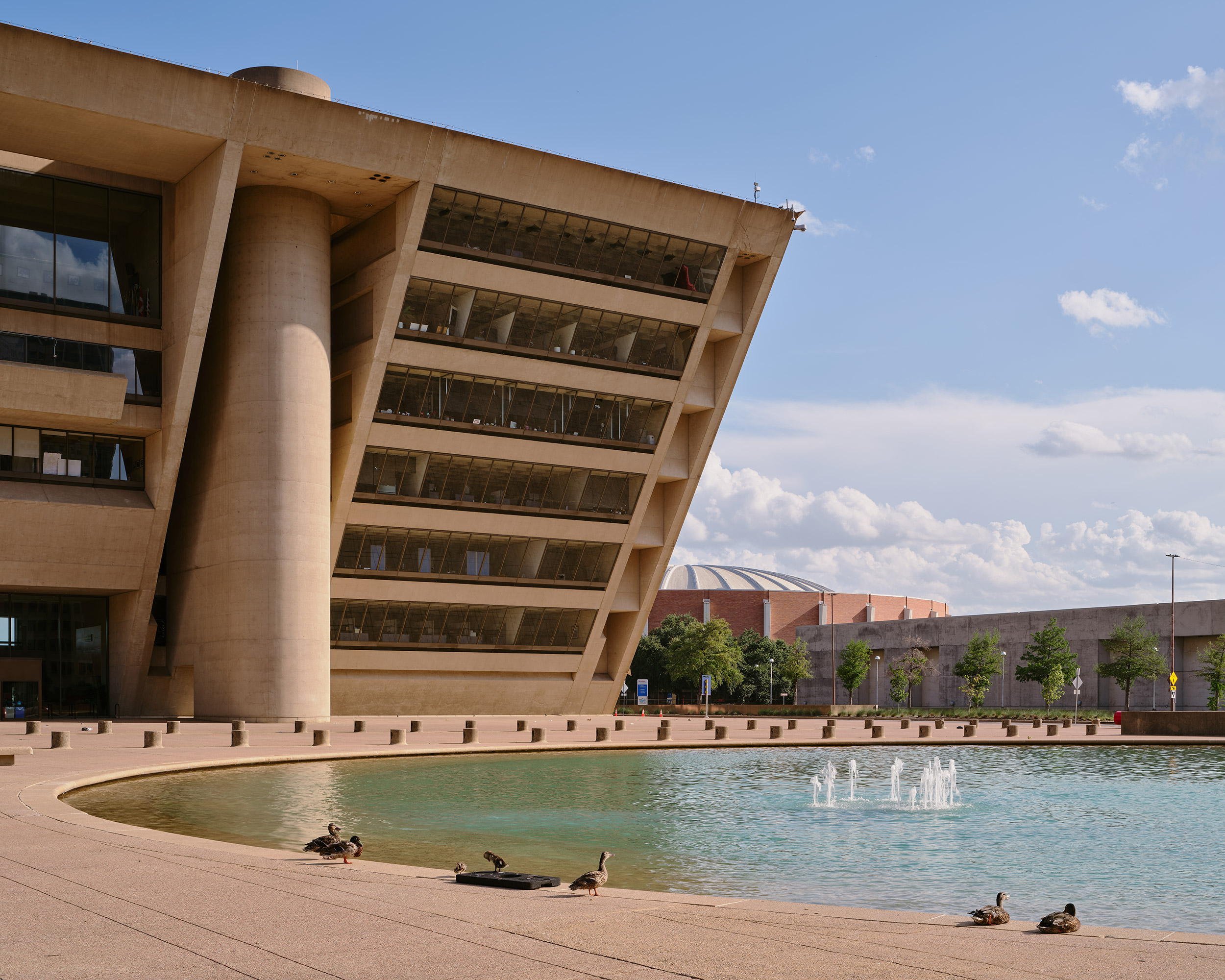
In Dallas, city leaders are hearing arguments for and against abandoning, selling, and demolishing one of the most debated civic buildings in Texas.
The public is supposed to buy the case for abandoning and tearing it down because repairing it would cost too much. According to one city-commissioned report from consulting firm AECOM, repairs would cost up to $1 billion.
The subtext is that some of Dallas’s most powerful businesspeople want to tear it down to build a mixed-use development and a new stadium for the Dallas Mavericks. (The Mavericks chose the former Valley View Mall in far North Dallas as the site of their new arena.)
There’s a lot of irony in the debate.
Following President Kennedy’s assassination, Mayor Erik Jonsson and a task force of civic leaders, including developers as well as the dean of MIT’s architecture school, worked to reframe Dallas as a world-class city. After going through a series of finalists, they settled on Pei, who later designed the softer Morton H. Meyerson Symphony Center. The sloping, cantilevered building covering an open plaza opened in 1978. In rare form, Brutalism in the South was treated as a sign of progress. Years later, Dallas Morning News architecture critic David Dillon called it a masterpiece and a testament to Jonsson’s bold vision for downtown and the city.
Flash forward to this year, when Dillon’s successor, Mark Lamster, won the Pulitzer Prize for Criticism, in part for his passionate, detailed arguments defending the structure while skewering those who want to demolish it. Developers, in fact, were to blame for the sordid state of that end of the central city. Once bustling, “now it is plagued by countless empty surface lots where buildings once stood,” wrote Lamster in November 2025. “What happened? Developers demolished them, hoping for newer, bigger, more profitable projects, only to have the economy and their hubris undermine their fantasies.”
AIA Dallas executive director and past president Zaida Basora, FAIA, is a former city employee and zealous opponent of the teardown. In op-eds and at town halls, she’s refuted the billion-dollar price tag and argued, with maps, facts, and research to support it, that City Hall and a mixed-use complex anchored by a stadium and surrounded by vibrant development can coexist. She’s part of a group of past chapter presidents known as the “Ten Presidents” who have joined forces in framing the messaging and an alternative.
But she’s had to keep up with the fast-changing timeline, which seems to swiftly react to whatever opponents of demolition argue. Last year, a plan to fund upgrades to the facility became a plan to possibly move out, leaving the building up for grabs. Then came AECOM’s report spitballing the high price tag.
In a short and ferocious period, opponents have moved away from the historic preservation argument, which, Basora said bluntly, “did not resonate with city leaders,” and instead have begun making their case with hard numbers.
The strategy seems to be catching on. What she and her colleagues have proposed is a 10-year phased plan that, even considering inflation, could cost roughly $70 million to $100 million. Combining the sky-high cost of demolition—an estimated $60 million—with the renovation or construction of new facilities and relocation could cost the city more.
Downtown Dallas has taken a beating recently. AT&T announced plans to move its headquarters to Plano, and Victory, another downtown mixed-use development meant to bring people back downtown and home to the Mavericks’ current arena, is dead save for concerts and games. A mixed-use development, Basora said, is necessary. “There has to be more housing, more connectivity, more walkability of that whole area of downtown. We also believe that there’s no reason to leave the building.”
In the face of lawsuits and uncharacteristically forceful pushback, city leaders may be opening up to the idea of staying downtown. New consultants have pitched different plans, including a similarly phased repair schedule. But that the option was there, and the building’s history ignored, is still alarming.
Dallas is hardly alone. Across Texas, public institutions and civic landmarks are increasingly being judged less on their cultural value than on the redevelopment opportunities beneath them.
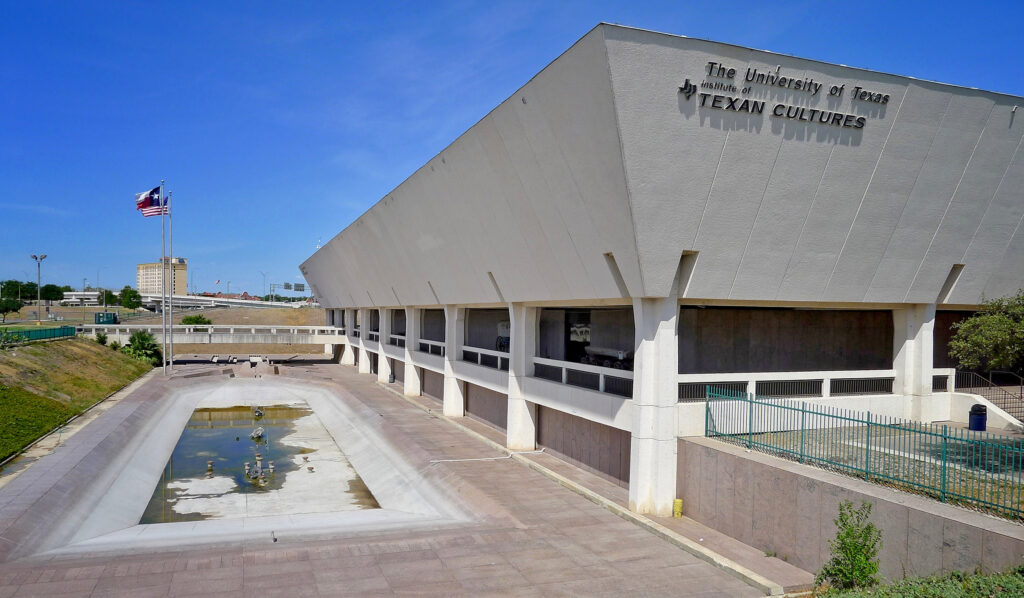
Farther south, San Antonio prides itself as the home of the Alamo, “Military City USA,” and a fantastic historic preservation community. So it’s baffling that significant civic structures in the city have also faced similar fates. The demolition of the former Institute of Texan Cultures building is a case in point.
Built as the Texas Pavilion for Hemisfair ’68, the building eventually became a colorful history museum documenting the full Texas experience. A study commissioned by The University of Texas at San Antonio, who managed it since 1973, was its death knell: Repairing it would cost $178 million. Heritage was in the way of development. The San Antonio Spurs want a new arena, and developers see a chance for a new mixed-use development.
The simple rectangular inverted pyramid hanging over a plaza may not have stood out like Dallas City Hall, nor been tied to a big name like Pei, but the Brutalist structure had a voice of its own. It was also the only downtown building designed by a Mexican American architect. William Peña of Caudill Rowlett Scott was dubbed the father of architectural programming, and his work was too important to lose.
The board of Latinos in Heritage Conservation, in a letter supporting its designation as a state landmark, called it “a testament to the resilience and contributions of the Latino community in San Antonio” and said: “It exemplifies our community’s resilience and cultural heritage. For generations, it has been a place of learning, inspiration, and connection.”
It got the designation, then was torn down.
If San Antonio’s example demonstrates how preservation protections can prove surprisingly fragile, Fort Worth offers a different version of the same story: civic institutions left to languish until deferred maintenance becomes the dominant narrative.
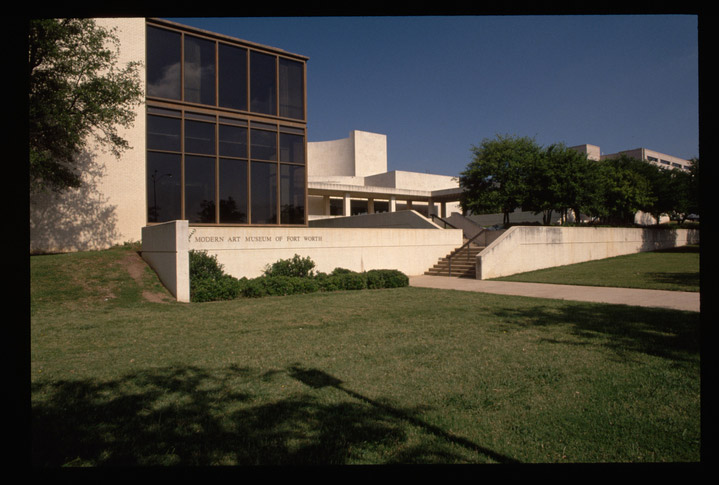
In Fort Worth, what were once sites of civic pride have been all but abandoned. The Lawrence Halprin-designed Heritage Park Plaza on the edge of downtown has been closed since 2007 for deferred maintenance, but is set to reopen in the future. However, the more recent focus has been on the closing of the Fort Worth Community Arts Center, originally built for what’s now the Modern Art Museum of Fort Worth.
The arts center opened in 1954 in a small building designed by Herbert Bayer, an Austrian who became best known for his quirky graphics. In 1966, local architect Joseph Pelich designed the William Edrington Scott Theater next door, a 468-seat thrust stage. In 1974, O’Neil Ford and Associates designed the third expansion. After the museum moved to its current home, designed by Tadao Ando, local arts booster Arts Fort Worth took over.
What made it unique was not the design but its character. It was a gritty incubator for artists and experimentation. It showed what other spaces shouldn’t, wouldn’t, or couldn’t. In a defeat for local artists, it closed last year after a study estimated it needed more than $30 million in repairs. A task force formed to solicit proposals to make it into a “world-class cultural hub.” They received four proposals, which were all rejected.
Failing grades indeed.
James Russell is a journalist in Fort Worth writing about art, the built environment, and politics. His writing has appeared in Landscape Architecture Magazine, CityLab, Arts and Culture Texas, and the Fort Worth Star-Telegram, among other publications.

Desert, sky, and ocean converge at a remote retreat in Mexico.
Plunging into Texas Water Conservation
Where form and atmosphere converge

Designing data centers for a resource-constrained future
A luxury resort is made smaller and greener.
A room for every season
Corpus Christi’s water crisis reveals the challenges of planning for growth.
Reimagining a campus landmark after Harvey
A center for the arts sustains Rockport’s creative community.
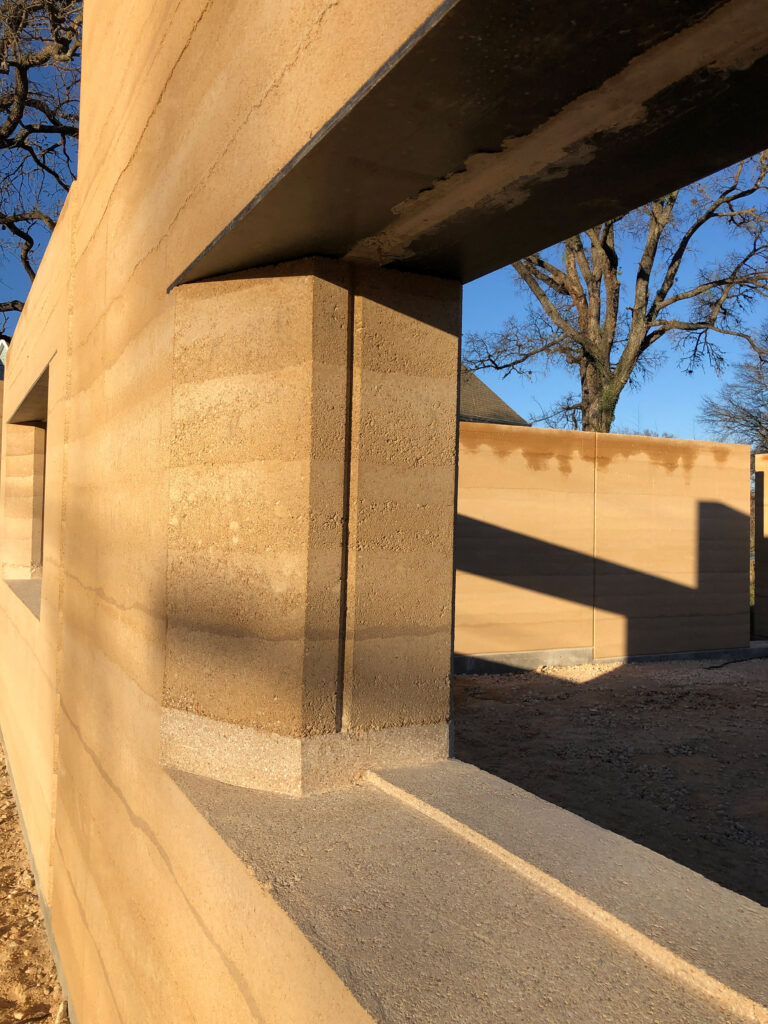
The Why and How of a Rammed Earth Enclosure
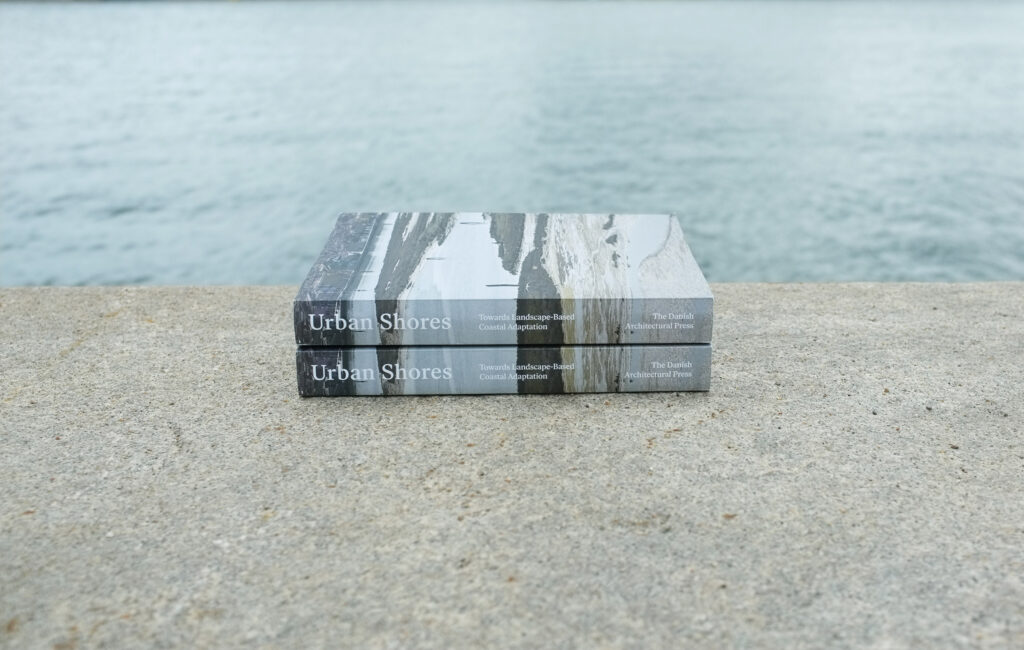
Urban Shores: Towards Landscape-Based Coastal Adaptation
Anna Aslaug Lund, Ole Fryd & Gertrud Jørgensen
Danish Architectural Press 2025
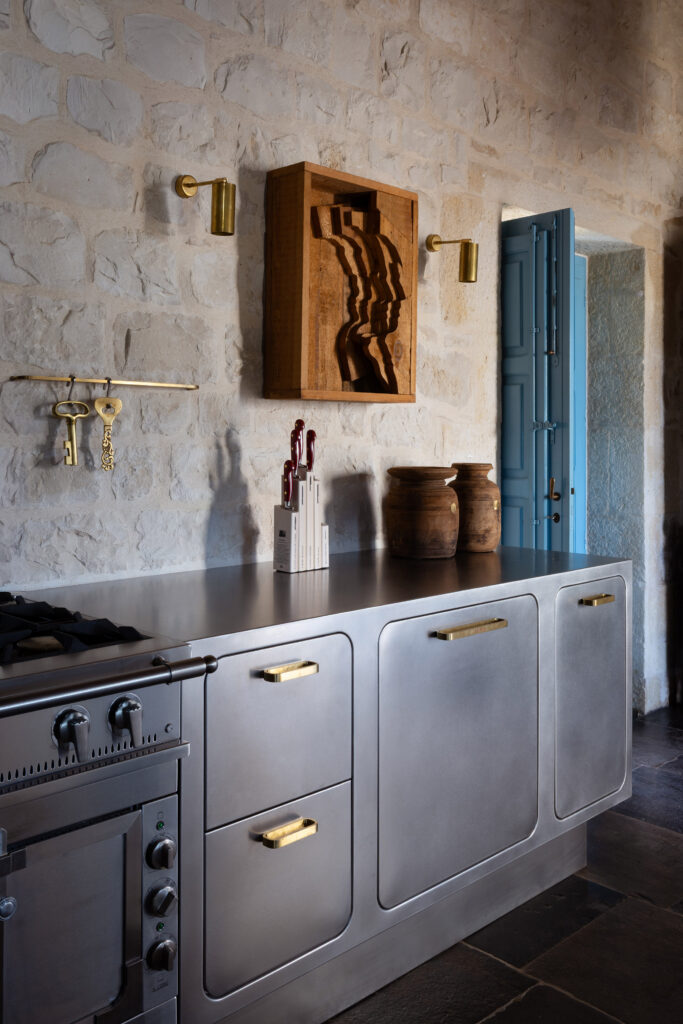
Earthy, warm hues, such as amber, terracotta, and violet, bring a grounding touch to these new kitchen and bath products.

As a former president of the Dallas Chapter of the AIA, I would love to add my name to the list of ten presidents, although “Eleven Presidents” may not be as catchy. Of course tearing it down is a stupid idea. Unfortunately stupid is an epidemic in today’s USA.
Mike Wells, AIA Emeritus,
President, 1998.
Mr. Mike Wells, AIA Emeritus I want to join in to support the many past presidents and other Dallas architect that are conveinced a “tear down” of our City Hall is not necessary or required. But i want to take note of the past “Owners Representatives” that did not do their job and as a result we have this problem. In the early 1960s I was a member of a 3 man team who designed NorthPark Shopping Center. The owner was Mr. Raymond Nasser. He and his family members have ha it ever since. They have taken good care of the original buildings and have expanded the mall over time. Everyone can see what love and good maintenance and protection can do. Northpark is still very successful today as it was when it opened for business in the mid 1960s. I am very proud to have been a part of the design team with Paul Pate and Jim Patterson for Harrell & Hamilton Architects.
Lewis Faulkner, AIA Emeritus