May 22, 2026
Delight often comes from the unexpected. I’m reminded of moments I’ve experienced in places like Siena, Italy, or San Miguel…
Total Design for a New Era
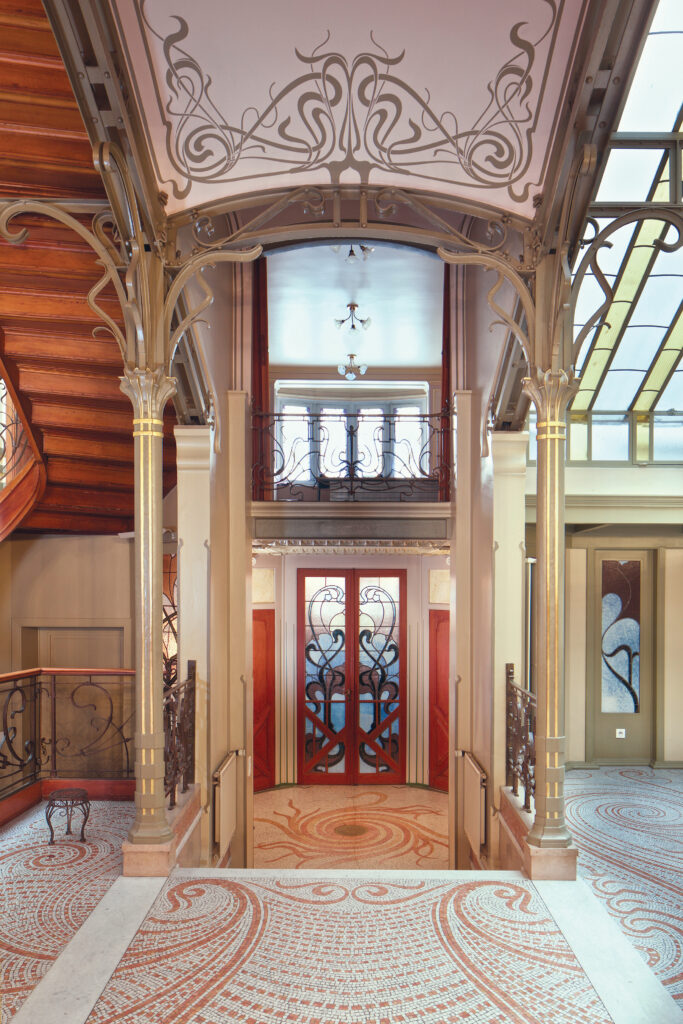
Total Design emerged in the Arts and Crafts movement as a holistic approach: Designers sought to control every detail of a space—from overarching volumes to the texture of a finish, from wall bases to draperies. It was a philosophy that wove interior décor tightly into architecture, creating spaces that read as unified, deliberate works. The disruption came with Adolf Loos’s Ornament and Crime, a critique that reframed ornament as superfluous and heralded a “clean modern look.” The ensuing shift did not erase the idea of Total Design; it transformed it. In today’s studios, the same impulse to orchestrate detail persists, but it does so through coordination among disciplines, mastery across materials, and the selective deployment of technology. This essay follows three artisans—Kevin Austin, Hillary Water, and Peter Glassford—whose practices illuminate how a holistic, design-led craft survives and evolves in a contemporary economy.
The Arts and Crafts ideal of Total Design insisted that every element—volume, proportion, texture, craft—be coherent within a single design logic. The aim was not merely decoration but a disciplined integration of architecture, interior, and craft. Yet, as modernist ideas gained traction, ornament removal and the embrace of simpler forms gained cultural currency. The economics of craftsmanship also shifted: Fewer labor hours in highly ornate spaces, coupled with rising expectations for a “finished” look, paradoxically increased costs for the remaining skilled work as demand contracted. In a modern sense, the impulse to control every detail was not abolished; it was redistributed. Artisans, designers, fabricators, and craftspeople negotiate a shared design language across disciplines, balancing tradition with new materials, tools, and workflows.
The enduring question is how such a thread persists when the studio is no longer a single workshop but a network. The answer, as the portraits that follow suggest, lies in three commitments: rigorous training in classical proportion and craft; collaborative design processes that integrate still-pertinent architectural logic with contemporary fabrication; and a selective embrace of technology that clarifies, rather than replaces, the hand’s guidance. Each practitioner illuminates a different facet of this commitment, yet all converge on a shared premise: Delightful detail results from disciplined collaboration, patient learning, and an attentive partnership with materials.
KEVIN AUSTIN
Exploration of Materials
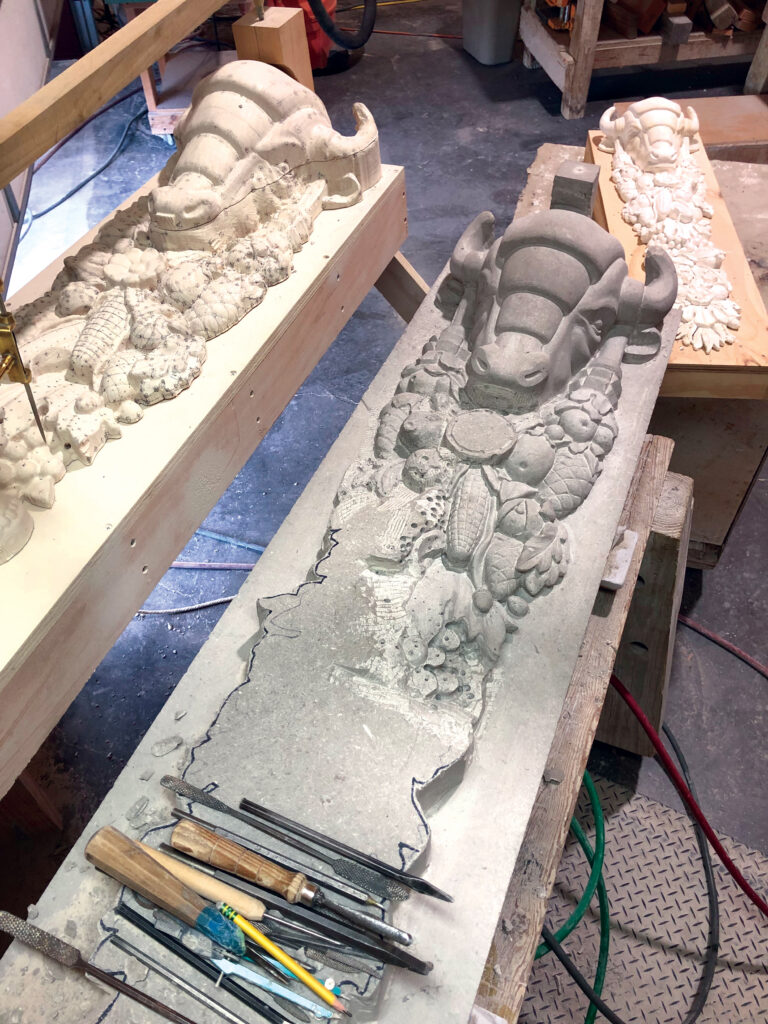
Kevin Austin began working as an apprentice in carpentry in Dallas in the 1980s and quickly found his passion for woodcarving. He experimented until he achieved mastery of a primary material and then followed his curiosity into other media, guided by a willingness to follow where the work leads. He describes a learning path shaped by books on classical orders and a practical apprenticeship with tools from the hardware store; the result is not merely skill in one medium but fluency across materials and methods. He notes, emphatically, that “skill in one area does not necessarily mean skillfulness across the board,” a truth that underpins his approach to collaboration: Specialists contribute their strengths while the team coordinates to realize a cohesive design narrative.
Across Austin’s practice runs a consistent thread—the value of repeat clients and long-term relationships. The craftsman’s value is not only in the final carving but in the trust that enables ongoing projects—repeat commissions that allow for deeper, more elaborate detailing and cross-material exploration. The artisan’s path also reveals an essential tension in modern practice: the need to balance precision and speed, tradition and experimentation. Austin’s forays into stone—driven by an anecdote of a friend witnessing similar woodcarving detail in Italy rendered in stone—show how an idea can migrate across media, demanding different tools and refined techniques while preserving the sculptural logic of the original concept. An interest that started in wood carving evolved into carving in stone, as seen in the Old Parkland cartouche and at the entrance of a residence on Beverly Drive. This cross-pollination is a living example of Total Design reinterpreted: The overarching vision remains, but the tools and sequence evolve.
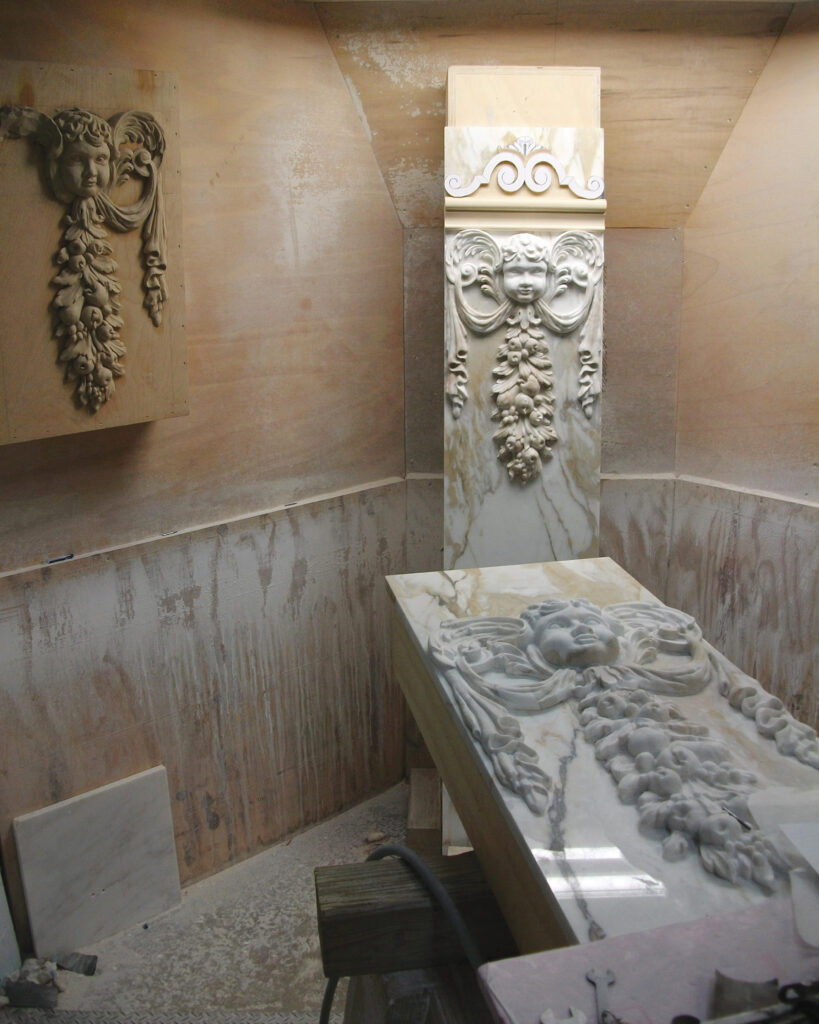
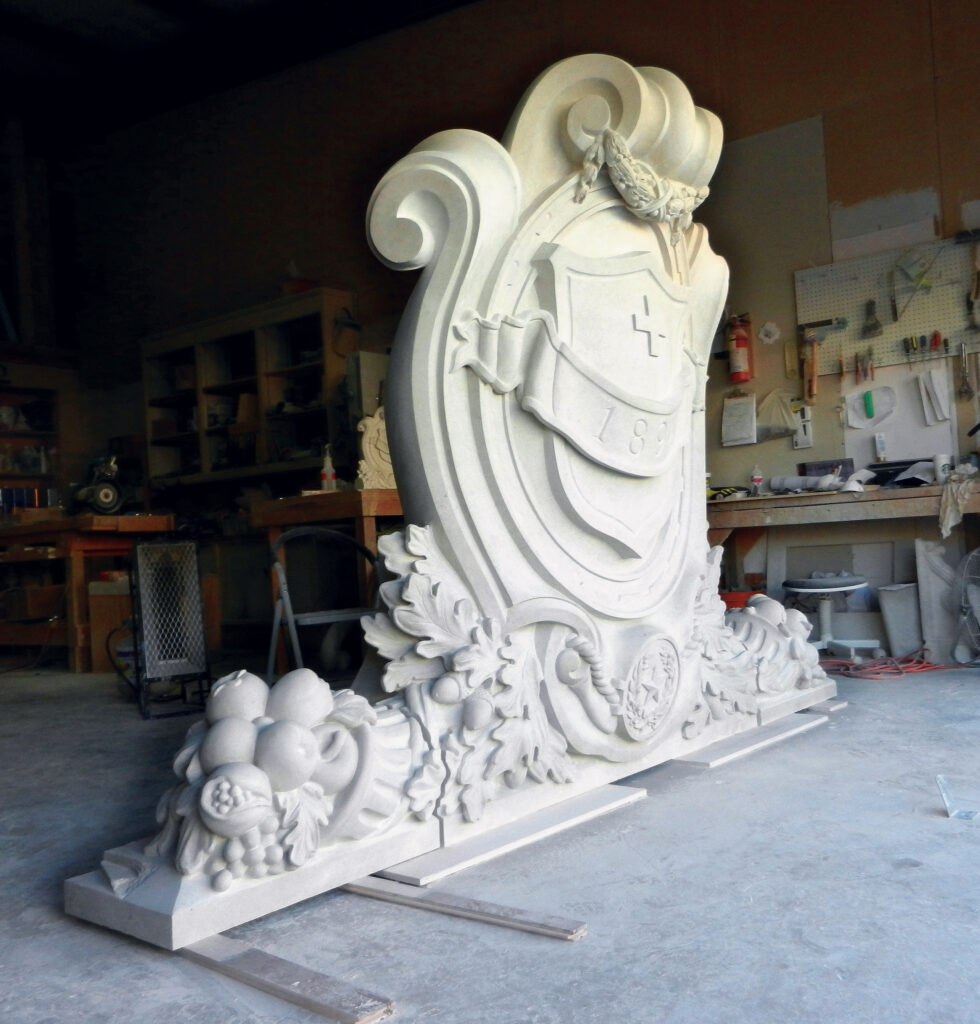
In Austin’s world, collaboration is not a slogan but a practice. He emphasizes that design work is a dialogue among trades, with interior designers, architects, and artisans negotiating parameters, allowances, and details. The result is a space where the strengths of each participant—structural understanding, aesthetic judgment, and hands-on craft—cohere into a unified outcome. Even as materials change and the workflows shift, the discipline of listening, clarifying, and integrating remains central to each practice. Austin’s story demonstrates how a modern craftsman sustains the ethos of Total Design by translating that old principle into today’s collaborative, cross-material reality.
HILLARY WATERS
Complexity in Simplicity
Hillary Waters’s FMW FabLab Studio extends the same ethos into a different sphere: a small, family-run operation that blends interior design insight, welding expertise, and architectural sensitivity to produce pieces that sit at the intersection of craft and architecture. Waters’s background in interior design provides a design-centric lens on fabrication, ensuring that engineered solutions are not merely functional but integrated with spatial intent. Her partnership with a spouse who brings welding proficiency creates a collaborative team capable of translating concept into material form with a designer’s eye for proportion, balance, and texture.
The collaboration ethic is explicit in Waters’s practice. She describes a workflow in which designers supply guiding concepts, and the fabrication team engineers solutions that realize those concepts within the constraints of material behavior and construction detail. In practice, this results in furniture, fixtures, and architectural details that reflect Art Deco, modernist, or other stylistic cues while maintaining a contemporary sensibility. The work demonstrates how robust collaboration can honor historical design language while embracing current technologies and methods. The Art Deco–inspired pieces fabricated for the President’s Suite at Texas A&M University, for example, illustrate how repeated semicircular motifs or sunburst patterns—timeless design elements—can be reinterpreted with modern materials and fabrication processes, yielding a core Art Deco vocabulary that speaks to today’s spaces.
Waters’s framework also brings into focus the human dimension of craft in a modern economy. The narrative she shares—designers guiding concepts, technologists enabling feasibility, and craftspeople ensuring tactile fidelity—aligns with a broader argument: Collaboration reduces friction between idea and realization, enabling more deliberate detailing and a more cohesive final composition. In this sense, Waters’s practice demonstrates how the long arc of Total Design can be realized in a lab-like setting where design intent, manufacturing capacity, and craft prowess converge.
FMW FabLab is known for integrating several materials into one installation. “There is a lot of complexity that comes from making a straight line and a clean joint, you don’t need ornamentation to make a detail delightful,” says Waters. Education to understand the complexity of an assembly is needed to appreciate the craftsmanship of the detail. The challenge of matching the different thicknesses and expansion properties of each material is a skill. Waters shares that she “loves a clean detail; it is difficult to create simply.” The feature walls at Fluor illustrate how Waters’s team integrated reclaimed bamboo, metal, and moss into one composition. The decision to use specialty connections between the bamboo planks and the substrate, allowing for a clean joint without visible fasteners, is an example of the complexity behind a clean joint line.

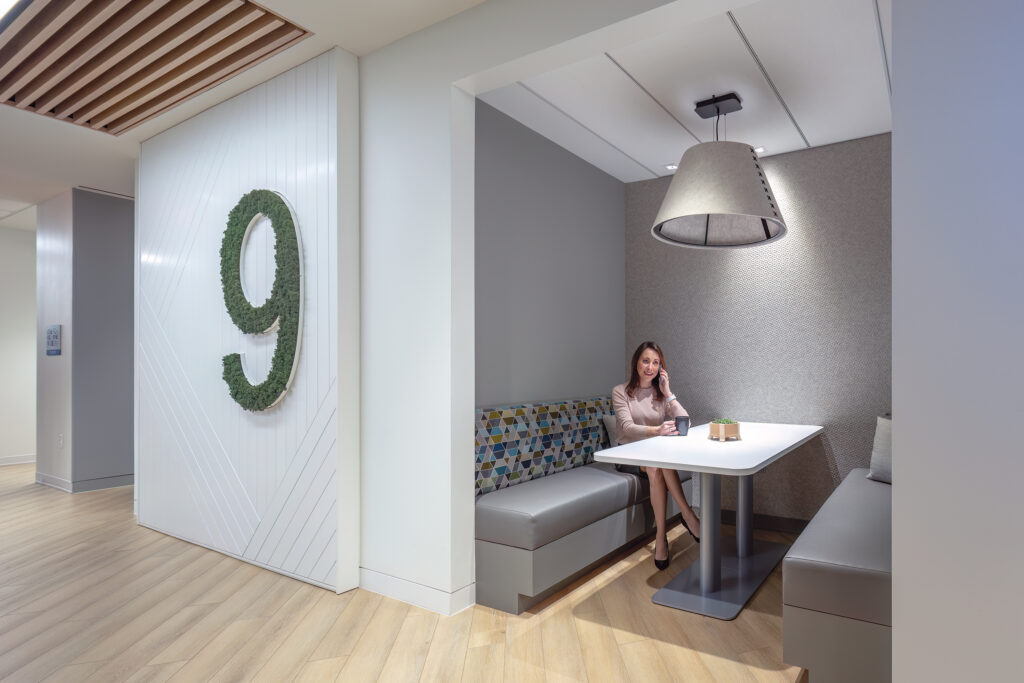
Moreover, Waters volunteers her time toward professional education and mentorship. Through involvement with organizations such as the International Interior Design Association (IIDA) and a commitment to preparing emerging designers for the NCIDQ certification, she positions fabrication not as an end point but as a pathway for young practitioners to engage deeply with the craft. The implication for architects and designers is clear: When fabrication partners are integrated early and treated as essential collaborators, the design quality of the final space rises, and the interpretive latitude of the design team expands without sacrificing craft integrity.
PETER GLASSFORD
Modular Warmth
Peter Glassford brings a different yet complementary axis to the conversation. A UT Austin alumnus with a background in sculpture, Glassford’s early engagement with scrap pieces—collected from his own furniture shop—led to a signature approach to wall panels that balance energy, improvisation, and structure. The method embraces randomness as a deliberate design parameter: Each piece is chosen for its energy and its edge, yet the overall composition preserves a disciplined logic that makes the panels cohesive when assembled as a system.
Glassford’s process is, in his own words, meditative. He speaks of “turning off your consciousness, letting your hands do the work,” an approach that yields vitality and rhythm that cannot be produced by planning alone. The panels are not simply decorative; they are a form of material storytelling that can travel with a project, attached to walls and architecture as a warm, human counterpoint to metal, glass, or concrete. The key insight from Peter’s practice is the way in which craft becomes adaptable to architectural systems: panels designed for transport, compatible with standard framing, and capable of integration with other trades while maintaining a distinctive material voice.
The adaptation from collage sculpture to architectural wall systems is another result of Glassford’s constant exploration with materials and trades. From sculpture to furniture making, back to sculpting with furniture scraps, all in collaboration with other artisans and craftspeople in his workshop and with project designers.
This integration can be seen at Mi Cocina, orchestrated by Droese Raney, a Dallas-based architecture and interior design studio, designed to honor tradition through craft and materiality. “At the heart of the design is a layered narrative of culture and craftsmanship,” where the wooden columns and sculptural collage are two of the elements of “Mexico City’s contemporary design language—refined, tactile, and deeply expressive.” This example demonstrates how Total Design has shifted from a single practice into a collaborative network of design professionals and artisans: a design concept executed across different disciplines. In this case, Heather Magee, a project designer from Droese Raney, and sculptor Peter Glassford collaborate to “reinterpret the textures of Mexican materials into a custom textural material palette of wood.” In addition to Glassford’s wooden collage, the sculptural columns add warmth to the atmosphere.
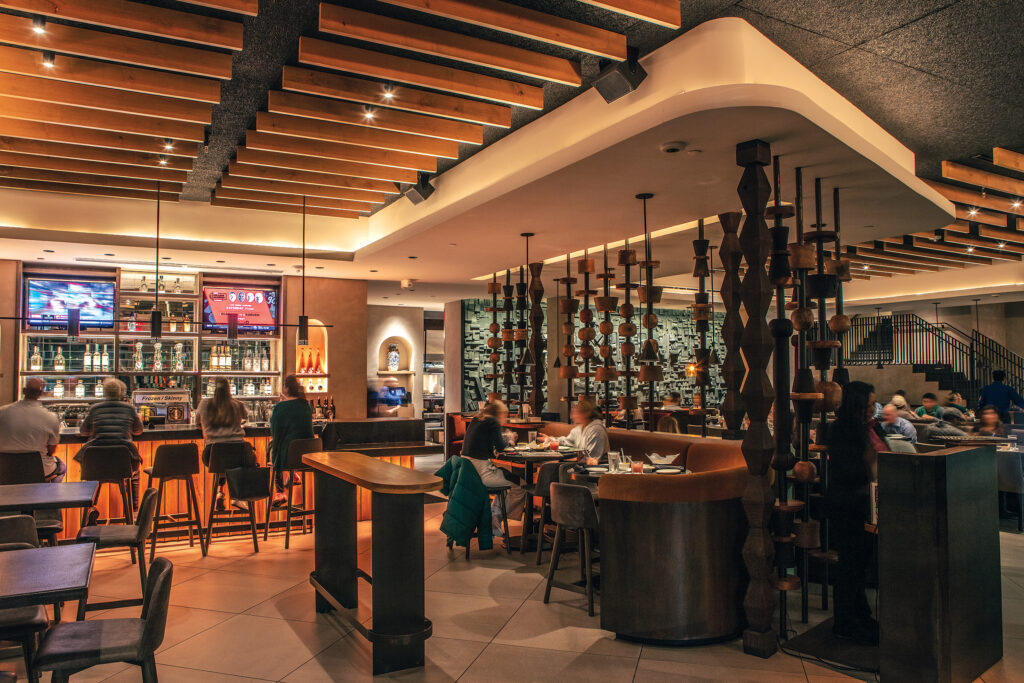
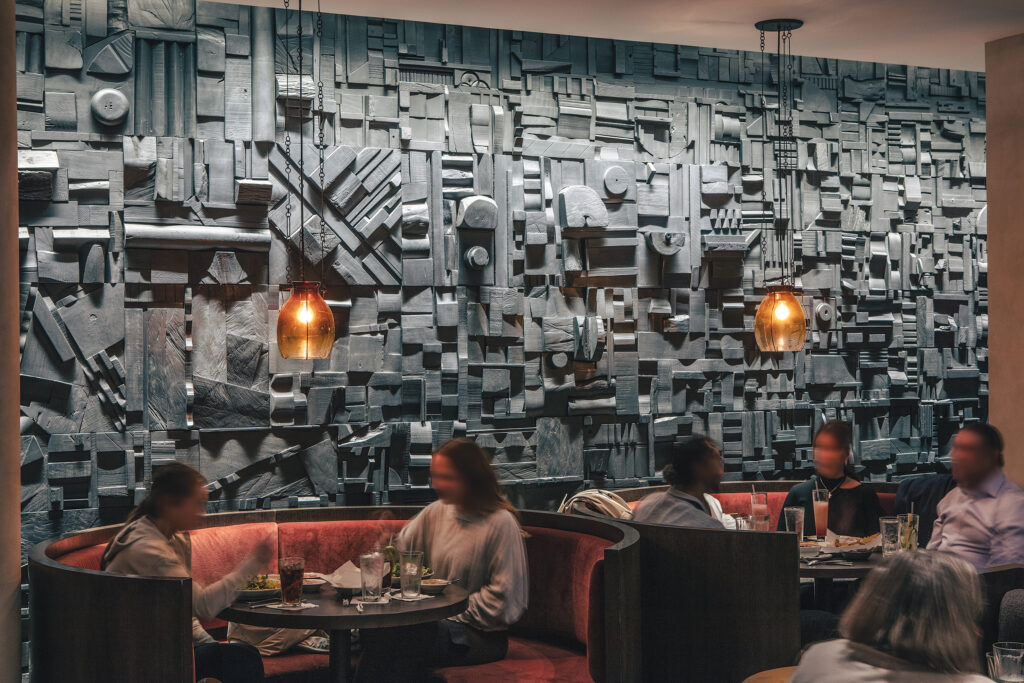
Glassford’s practice also emphasizes collaboration across the trades in a way that resonates with Austin’s and Waters’s experiences. Architects may want to control the formal reading of a space; designers might push for a certain texture or color palette; and the craftsperson translates those aims into objects and surfaces that carry the room’s narrative. In Glassford’s world, the boundaries between art and architecture blur, and collaboration becomes the mechanism by which a design idea gains depth, energy, and resilience. The takeaway for designers and planners is that modular, cross-material approaches can support a resilient design language—one that honors the past while enabling flexible, scalable implementation in contemporary spaces.
Across the work of these artisans, a throughline emerges in three intertwined performances of Total Design:
A shared commitment to disciplined training in classical proportion and craft, complemented by a willingness to learn across media. Austin’s cross-material journey (wood to stone) and Glassford’s collage-based panels exemplify this fluency, while Hillary translates design intent into manufacturable form with precision and elegance.
A robust culture of collaboration that treats designers, architects, fabricators, and craftspeople as co-creators rather than as isolated players. The mantra “Design is a collaboration” becomes a working principle that shapes decisions about materials, processes, and timing, ensuring coherence from concept to completion.
A nuanced integration of technology that enhances, rather than replaces, human judgment and hands-on skill. From digital scanning to modular fabrication, advances in tools enable greater precision, repeatability, and efficiency, while the final character of the space—its tactility, warmth, and proportion—remains a human achievement.
This has practical implications for today’s architects, designers, and planners. It suggests a design workflow that begins with a shared vocabulary of proportion, material behavior, and craft intention; moves toward early collaboration with fabricators who can translate concepts into feasible systems; and ends with a disciplined refinement of detail that honors both the design’s integrity and the material truth of the built environment. The three profiles collectively argue that Total Design is not a relic of early 20th-century reform but a living discipline—one that thrives at the intersection of hand skill, material imagination, and collaborative discipline.
A central tension in modern craft concerns how to reconcile the desire for hand-made detail with the realities of cost, time, and scale. These case studies reveal the pragmatic stance that technology can accelerate research, prototyping, and fabrication, but it cannot replace the tactile discernment of an experienced craftsperson. As Austin notes, the human hand remains the decisive instrument for the “final details” that give a space its character. Waters’s FabLab model shows how designers can supply intent while fabricators provide the means to realize it, and Glasford’s modular approach demonstrates how technology-enabled systems can carry a robust craft voice across multiple projects and scales.
Education and mentorship emerge as critical levers for sustaining craft across generations. Hillary’s engagement with NCIDQ preparation and IIDA mentoring signals a deliberate investment in the next generation of designers, who will at least be aware of fabricators and craftspeople. For planners and architects, this underscores the importance of early, integrative collaboration with fabrication partners and allied trades, establishing a design process that respects craft while embracing appropriate technologies.
Total Design is not a fossilized relic of the Arts and Crafts era; it is a living philosophy reframed for contemporary practice. Austin, Waters, and Glassford embody three routes through which design intention—proportion, material truth, and collaborative clarity—enters the built environment. The result is spaces that feel deliberate, coherent, and, above all, human. In the words of the interviewees, design is collaboration, and the most enduring delight is found in the details that others might overlook. As you walk through a room, consider the joint where wood meets stone, the seam where metal and fabric align, and the pattern that unifies surface with space. Think of the people whose hands operated the tools to create this; imagine them reading, traveling, or studying nature. Consider the team of different trades involved and how they may have exchanged tools, materials, and knowledge. Reflect on the designers who allow room for one another’s creativity and collectively refine the details. Now think again about the hours of training it must have taken them to achieve their craft. Behind every visible detail lie hours of study, dialogue, and hands-on work—an unspoken promise that craft, knowledge, and collaboration will continue to shape the places we inhabit.

Nyx Valerdy Marquez, AIA, NCARB, LEED AP, is an architect at the Perkins&Will Houston studio, where she works on science and technology projects. She is also interested in neuroscience and well-being, which inform her study of how people navigate their environments.



On the Invisible Forces and Narrative Logics of Art and Design
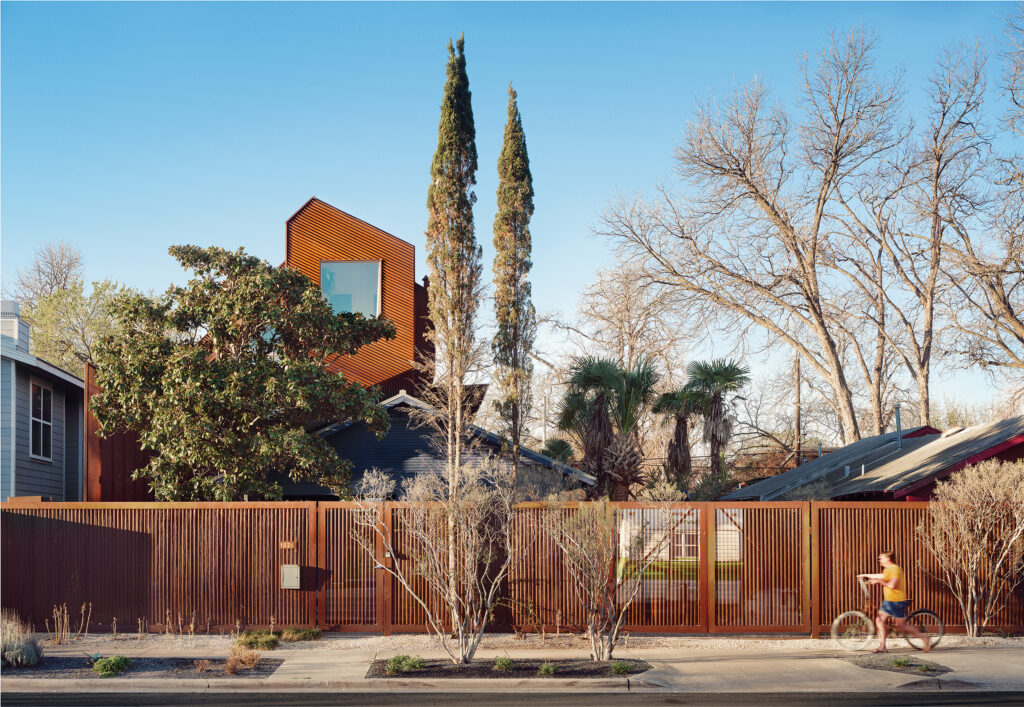
An East Austin studio rises above the rest.
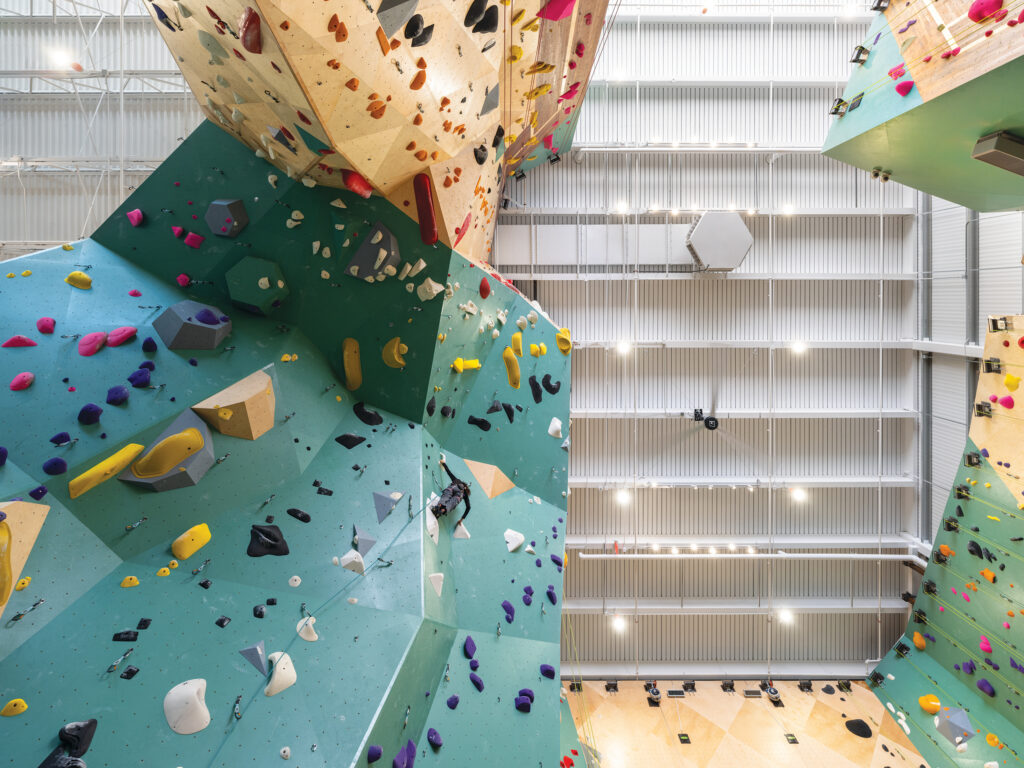
Redefining Suburban Recreational Architecture

Thermal Delight in Architecture and the Continued Work of Lisa Heschong
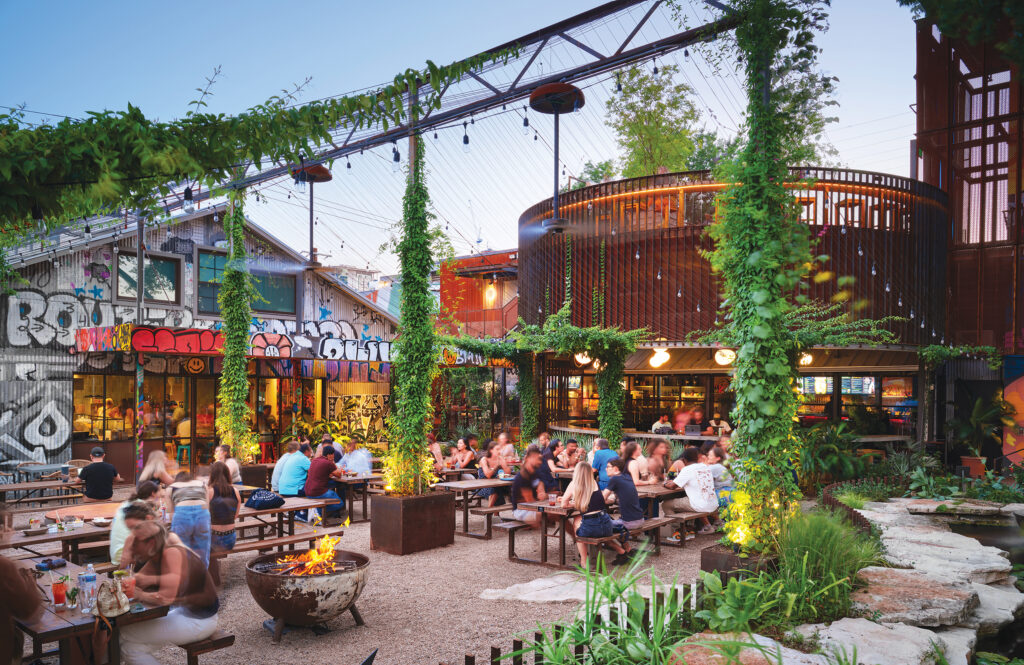
A Watering Hole for the Ages
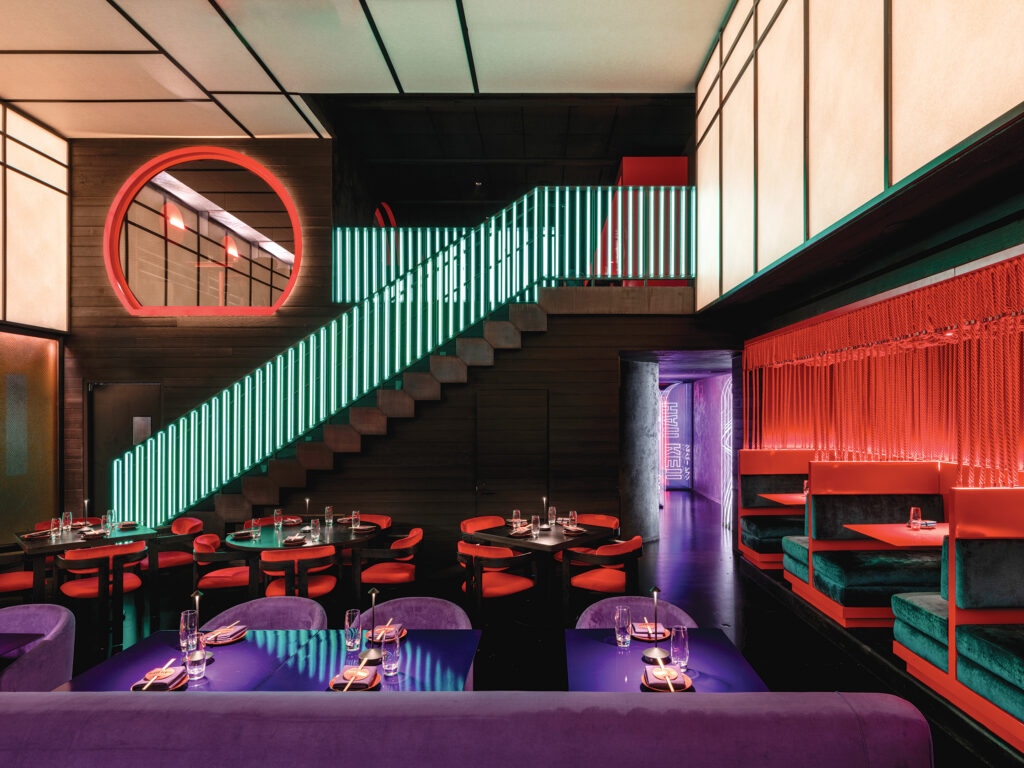
Cinematic drama meets fine cuisine.

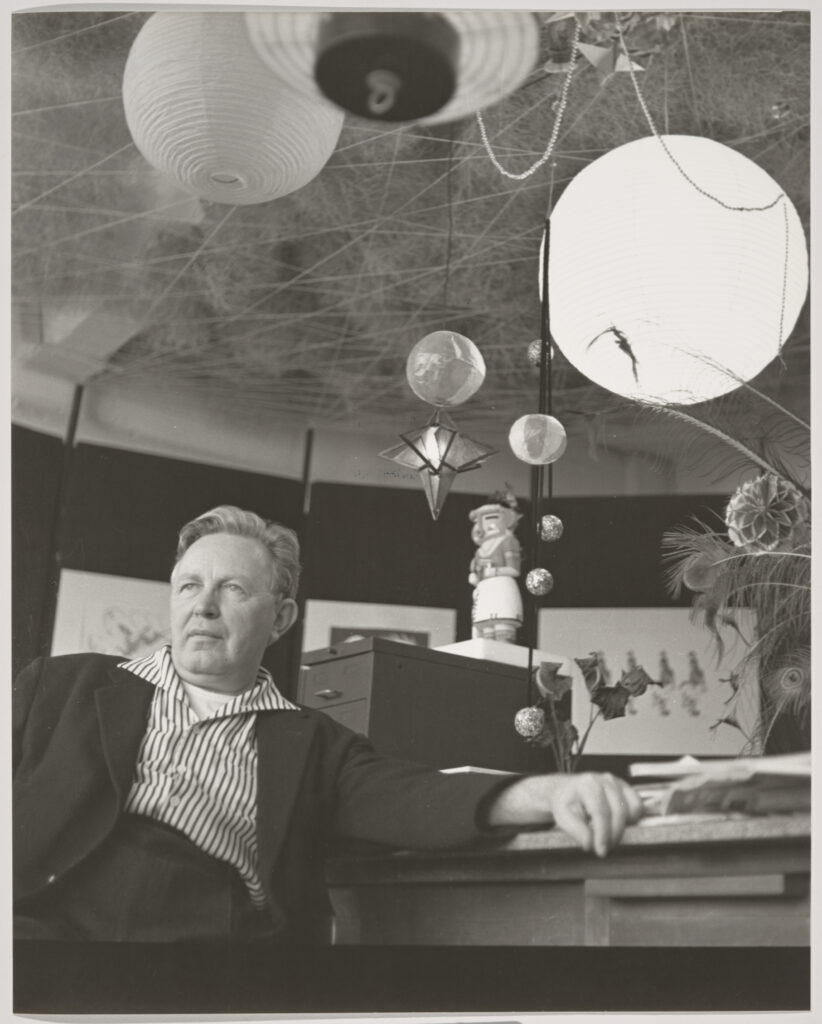
Bruce Goff: Material Worlds
Art Institute of Chicago

The House of Dr Koolhaas
Françoise Fromonot with editor Thomas Weaver
Park Books, 2025

The rounded edges of these products align with the growing trend toward incorporating more organic, softer shapes and curves into hospitality interiors.
Very inspiring article!