May 22, 2026
Delight often comes from the unexpected. I’m reminded of moments I’ve experienced in places like Siena, Italy, or San Miguel…

An East Austin studio rises above the rest.

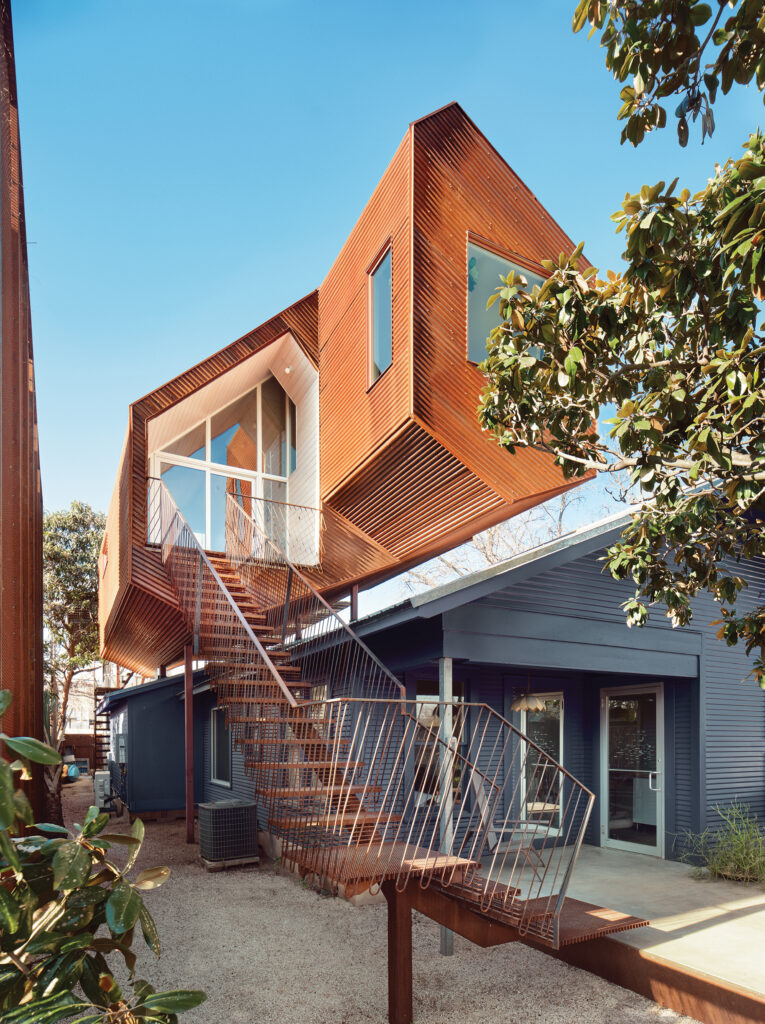
Like slotting a puzzle piece perfectly into place, this accessory structure hugs its setback tent to hover just two feet above a classic East Austin home. Fittingly named “The Perch,” the studio lifts itself over the roofline of a blue bungalow that serves as a workspace for one of the owners, who is a landscape architect. On an adjacent lot, a matching pink house serves as the couple’s primary residence. The houses are conjoined by an expansive backyard—designed by the resident landscape architect, of course.
Searching for a way to add flexible studio space to these properties without disrupting their carefully crafted outdoor area, the owners sought out local architect Nicole Blair, AIA, to design and construct an addition that achieved the impossible. Constrained in two dimensions, Blair instead looked upward for a solution, settling her 660-sf structure atop four steel columns. Despite its close proximity to the original houses, The Perch protects the owners’ privacy by angling views outward to the city skyline and surrounding East Austin neighborhood. This design makes it well-suited to its current role as an Airbnb.
To minimize the impact of construction on the site, the steel structure was fabricated off-site in three parts then craned in and welded into place in a single day. A large window in the bungalow was removed to function as the primary access point during construction, and water, electrical, and gas systems were carried up into studio from a preexisting mechanical closet. The addition touches the ground lightly on its columns, which are secured by enormous footings poured underneath the bungalow floor. The structural framing is concealed behind the house’s walls, making The Perch appear supernaturally suspended. It is clad in corrugated metal wrapping smoothly around its angled forms and mirroring the rounded teardrop siding of the house beneath.
Interconnected by materiality and structure, The Perch contains a delightful series of vignettes that coalesce into a symphony of tactile and visual experiences. Its floating form is grounded by materials that are of the earth, like metal, wood, and stucco. Working with the owners to repurpose items they already possessed, Blair viewed The Perch as an exercise in compromise. A willingness to prioritize affordability—while saving enough space and funds for a few special moments—is what made this fantastical project a reality. Blair is passionate about the attainability of well-designed buildings at all scales: “To me, the best architecture can happen at any scale or budget. There are opportunities within projects of any type or size to make something feel special.”
The Perch is approached via a cantilevered exterior stair. Designed to be as pervious as possible, the steps are made from bar grating topped with expanded metal decking—safe for bare feet and porous for water drainage. The material combination, inspired by an existing structure in the backyard, also allows light to permeate into the bungalow below. The stair was carefully engineered to resist lateral forces but shifts underfoot to reinforce awareness of the forces acting on the building. The industrial railing, reminiscent of rebar, is bent to temper any sharp edges and complement The Perch’s corrugated siding.


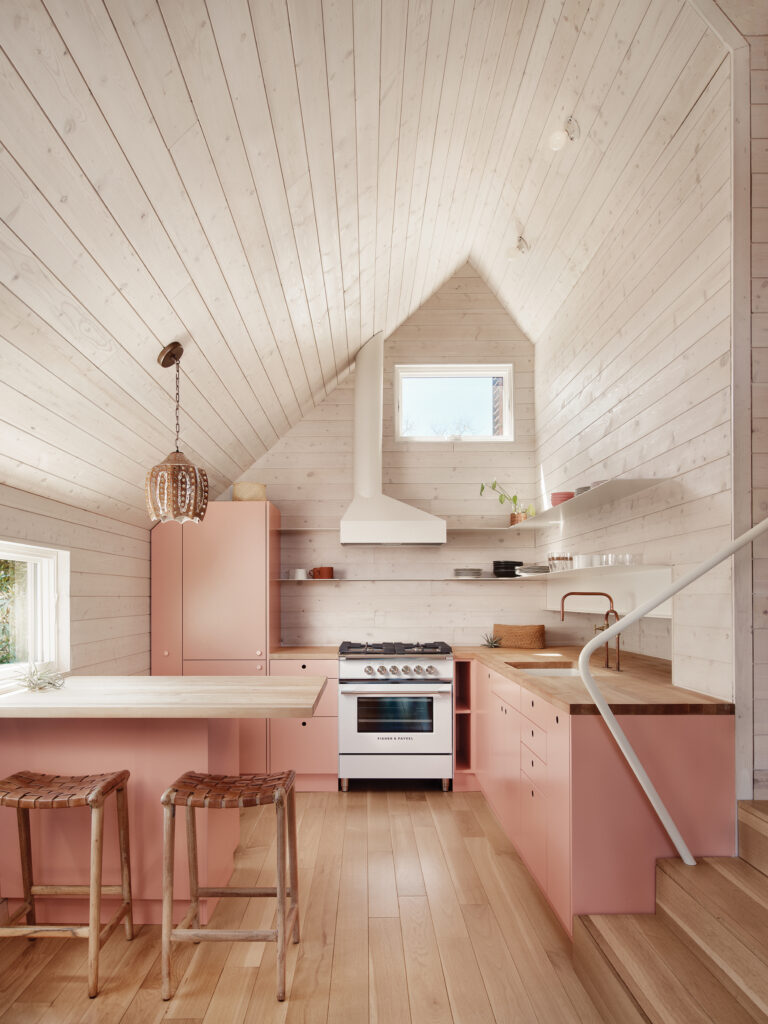
The striking geometric profile of The Perch is carried into the kitchen, where a custom vent hood mimics and inverts its cantilevered form. As a budgetary strategy, the base cabinets are from IKEA but sport custom fronts painted a playful shade of dusty pink. Every possible inch is used for efficient storage: A trapezoidal cabinet in the back corner fits perfectly against the angle of the steeply sloped ceiling. Behind the sink, what Blair refers to as a “hardworking beam” has been left exposed, with a shelf attached to provide additional open storage and the space below and behind opened up to extend the countertop and conceal task lighting. “A simple move like this can make a tight space feel significantly bigger,” explains Blair.
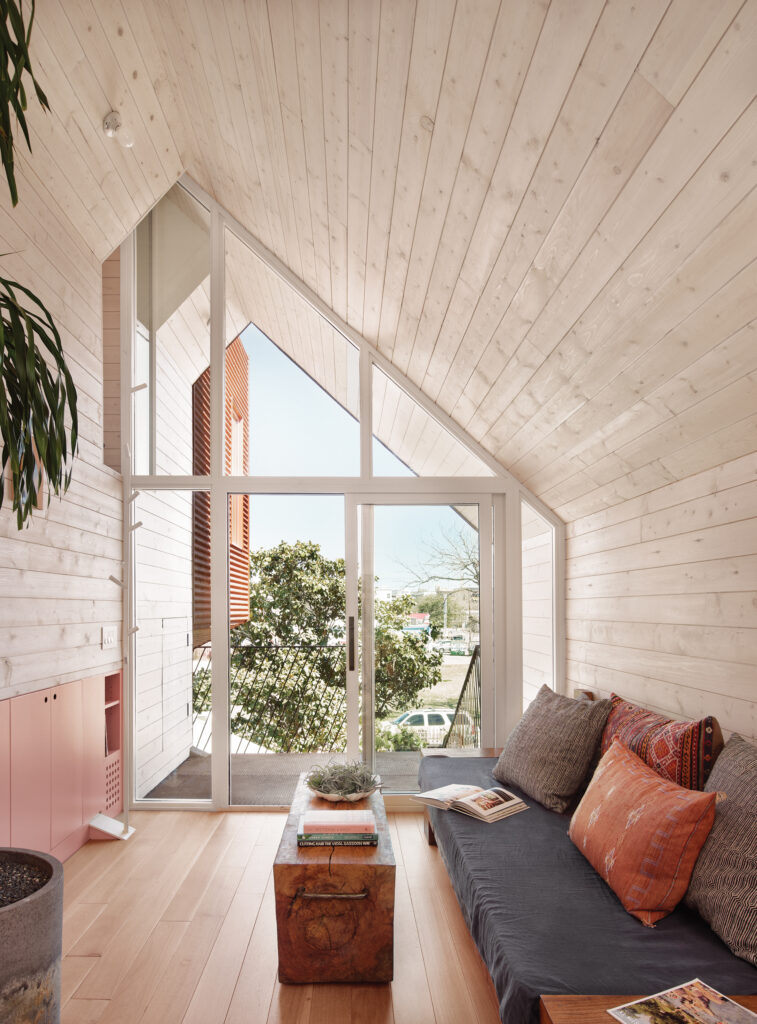
The kitchen and living room walls are clad in planks of whitewashed pine. This off-the-shelf, prefinished product was selected to reduce cost while adding texture and life to the interior. The hardwood flooring, a mix left over from one of the supplier’s previous projects, was chosen for a similar reason and maintains a scale that harmonizes with that of the corrugated exterior. The glass front door is surrounded by a wood-framed wall that simulates the look of an expensive picture window at a fraction of the cost. Another exposed beam crests up from the floor near the living room’s built-in storage wall. Its presence, caused by an onsite decision to drop the height of the finished floor, is embraced and accentuated with the addition of a metal coat rack. Like the stair outside, the welded pole sways in response to the lateral and gravitational forces at work on the building.
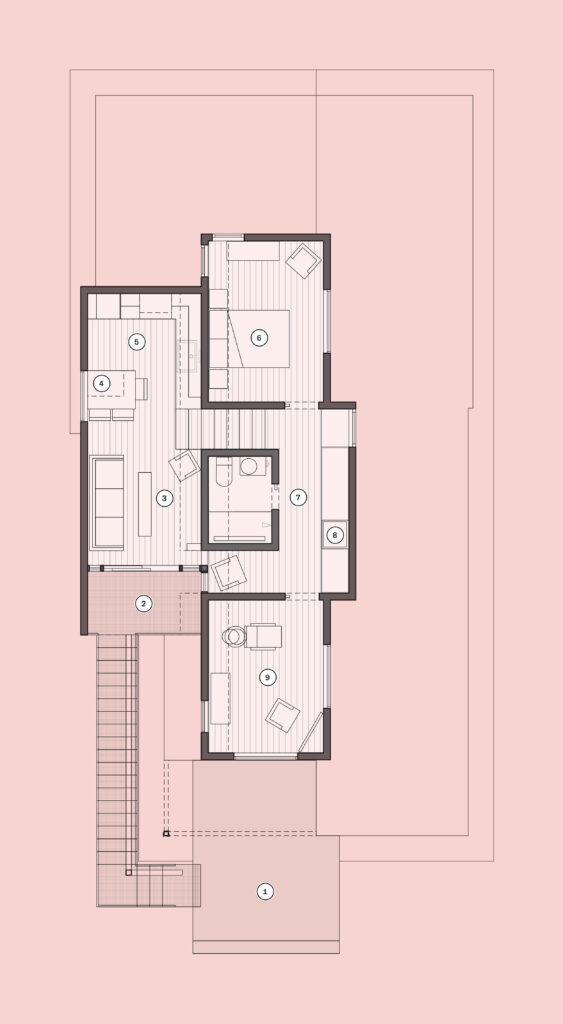
A curved white handrail referencing the railing of the exterior stair leads up from the kitchen to the second story. A window strategically placed at the top of the staircase is another way Blair makes The Perch feel larger than it truly is. The upstairs hallway is lined with flexible storage, finished in the same pink paint used in the kitchen. A tiny desk nook offers a study in scale, providing both privacy and visibility through its split view to the living room and front porch. By creating an even smaller space within the tight floor plan, Blair applies a counterintuitive spatial principle, making the main area feel roomy in comparison.


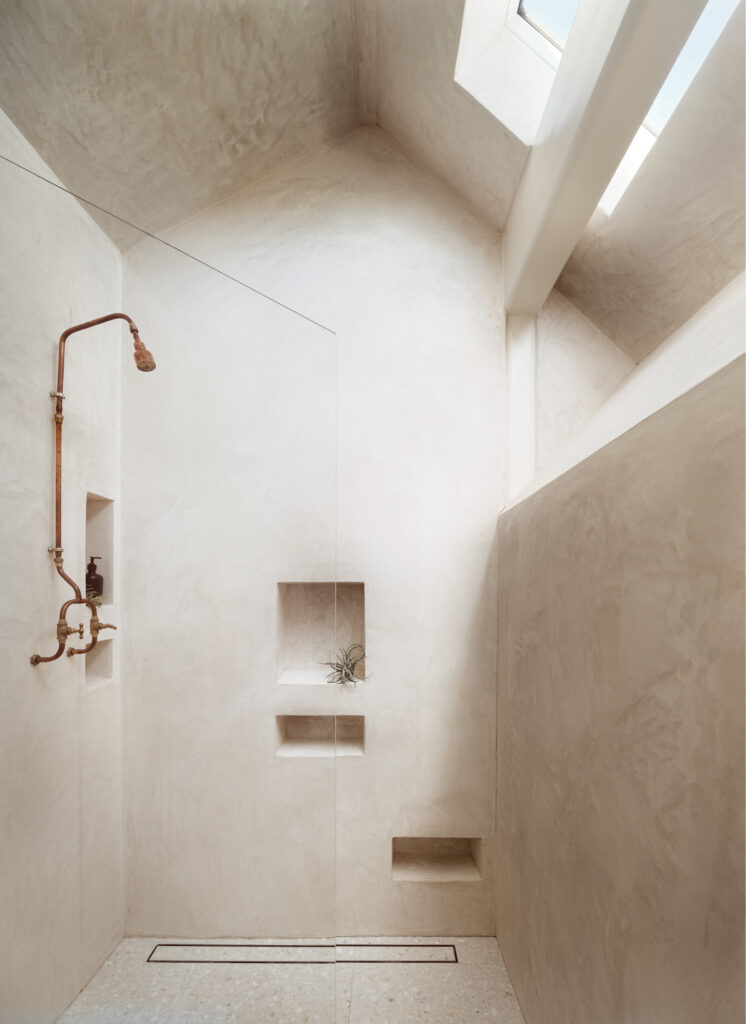
In the bathroom, attention is drawn once again to the structure. The room’s location at the center of the studio did not permit a window, so Blair added a skylight. Although a beam cuts across the skylight’s profile, exposing the structure was a worthwhile trade-off to allow more natural light to enter the space. The bathroom is home to strong geometric shapes paired with soft, natural forms; the polygonal mirror over the sink alludes to the building’s overall shape, while hand-crafted niches in the stucco of the shower walls add an organic touch.
The Perch contains two bedrooms, both of which briefly housed the hair salon run by one of the owners during the pandemic. Here, the beams overhead are integrated into the walls to read as natural parts of the space. Full-length mirrors and ceramic light fixtures—vestiges of their time as a salon—adorn both rooms. The offset gable feels cozy and emphasizes a thematic link with the older bungalow below. Artfully placed windows in the rear bedroom tactfully avoid views of the owners’ backyard and next-door neighbors. In the front bedroom, occupants can feel the building shift as someone mounts the stairs outside—another constant reminder of the forces at work on The Perch.

The Perch is an amalgamation of tiny details that add up to create a joyful and relaxing space. Blair held a unique role as both the architect and contractor for the project, enabling her to be involved in its minutiae at every stage. This lends The Perch an artful quality; it is evident that each piece was selected by hand. Blair describes the impact of being able to tweak small bits of the design along the way to match the picture in her head: “The design process means constantly thinking about all the options—and being open to changing them.” By honoring the existing structure in a clever manipulation of shape and materiality, The Perch evokes familiar feelings using unfamiliar elements, offering an experience that feels at once timeless and unprecedented



On the Invisible Forces and Narrative Logics of Art and Design
Redefining Suburban Recreational Architecture
Thermal Delight in Architecture and the Continued Work of Lisa Heschong
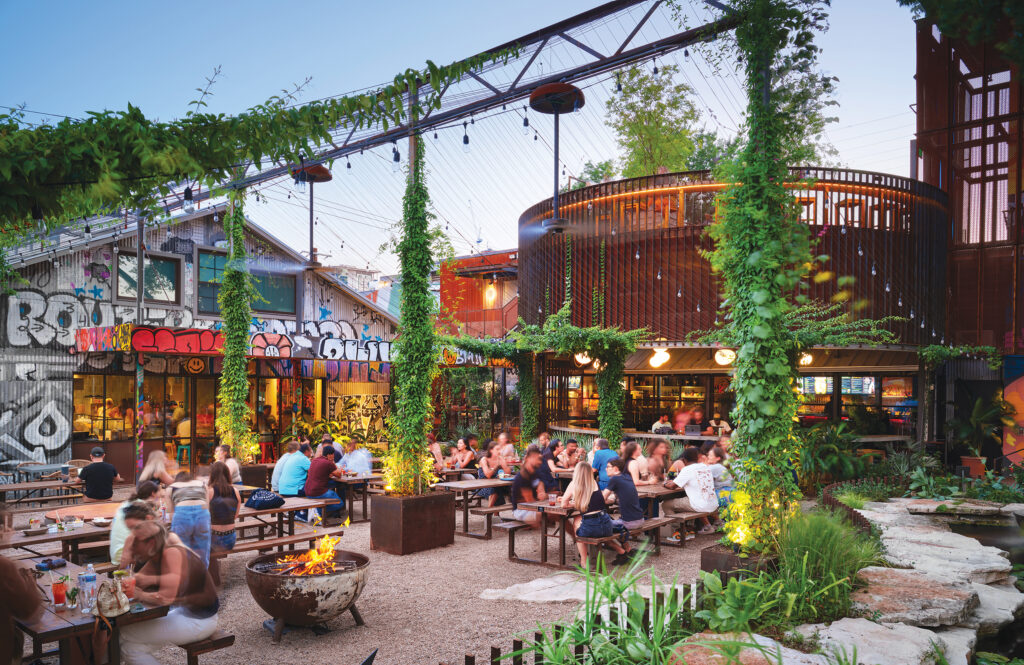
A Watering Hole for the Ages
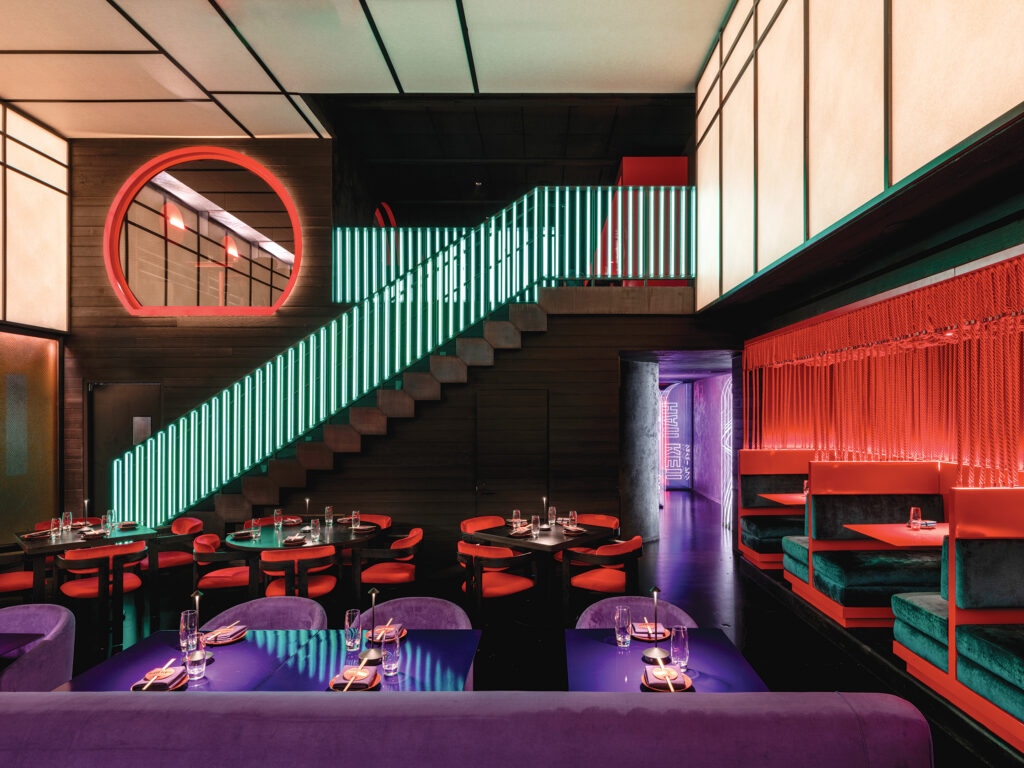
Cinematic drama meets fine cuisine.
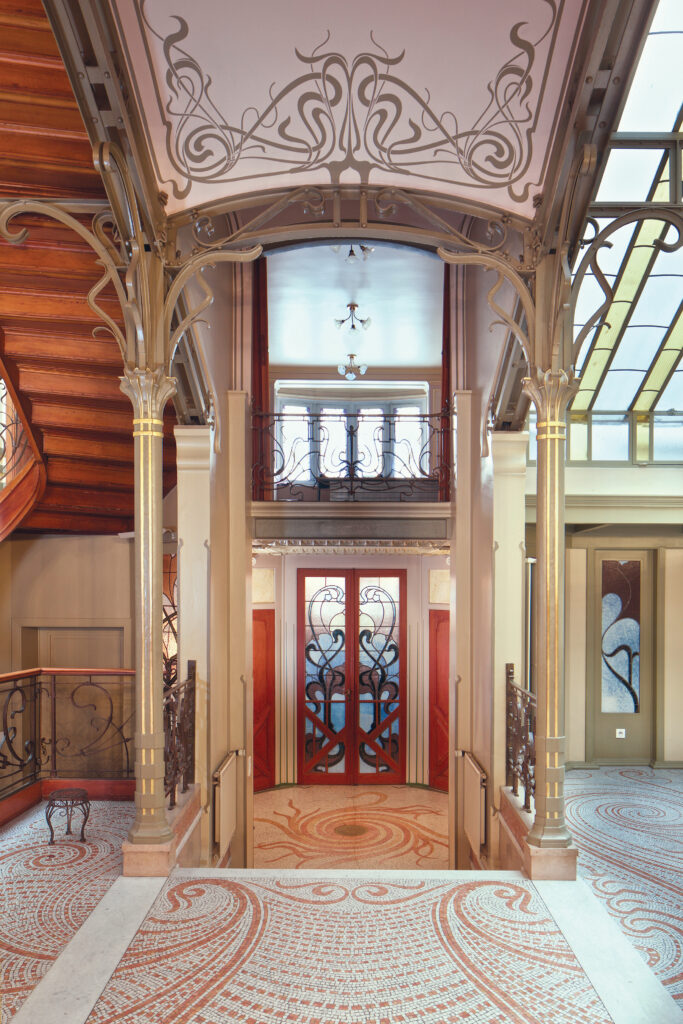
Total Design for a New Era

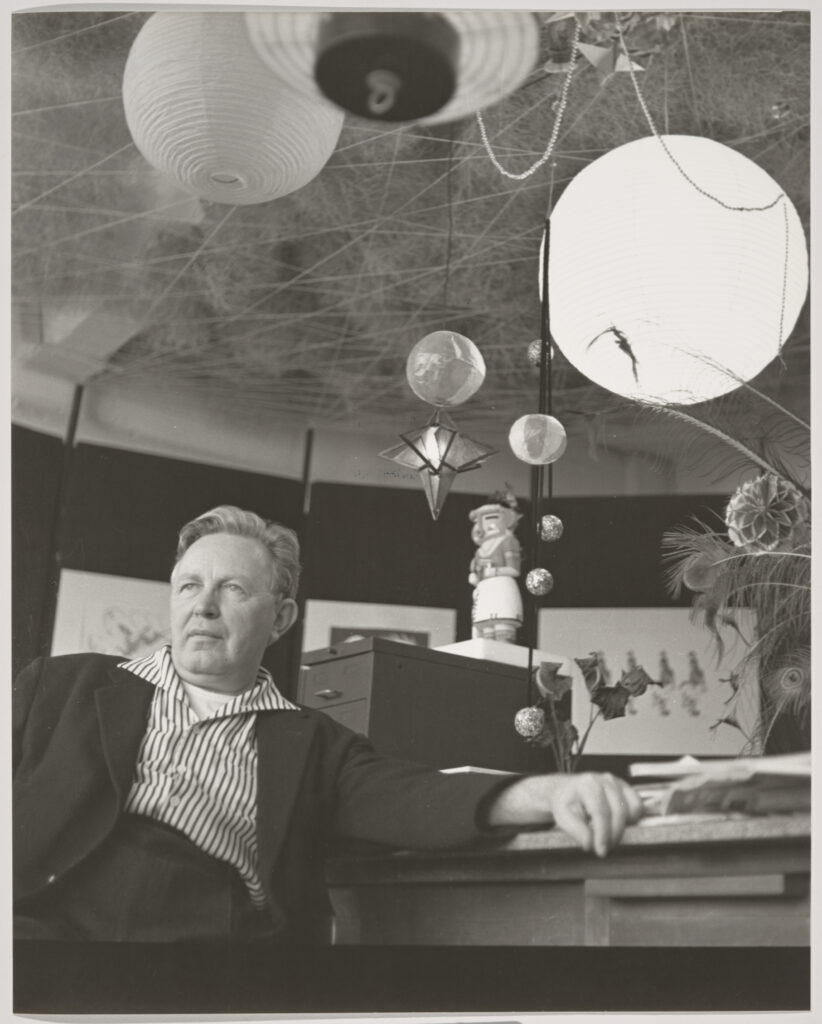
Bruce Goff: Material Worlds
Art Institute of Chicago
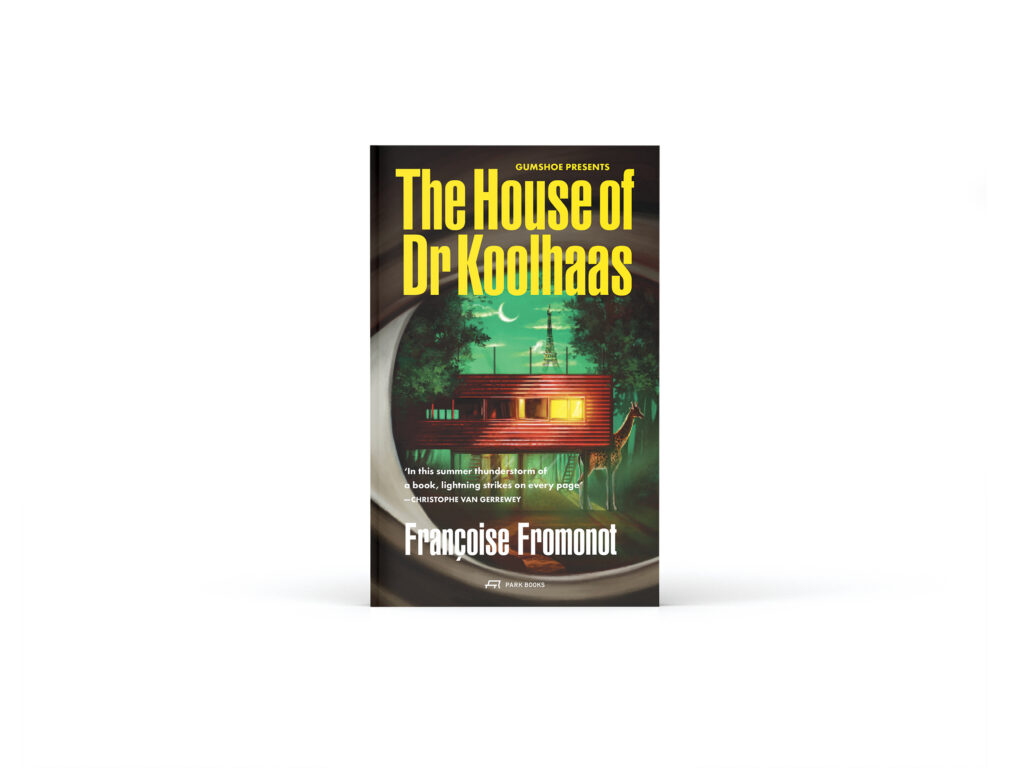
The House of Dr Koolhaas
Françoise Fromonot with editor Thomas Weaver
Park Books, 2025
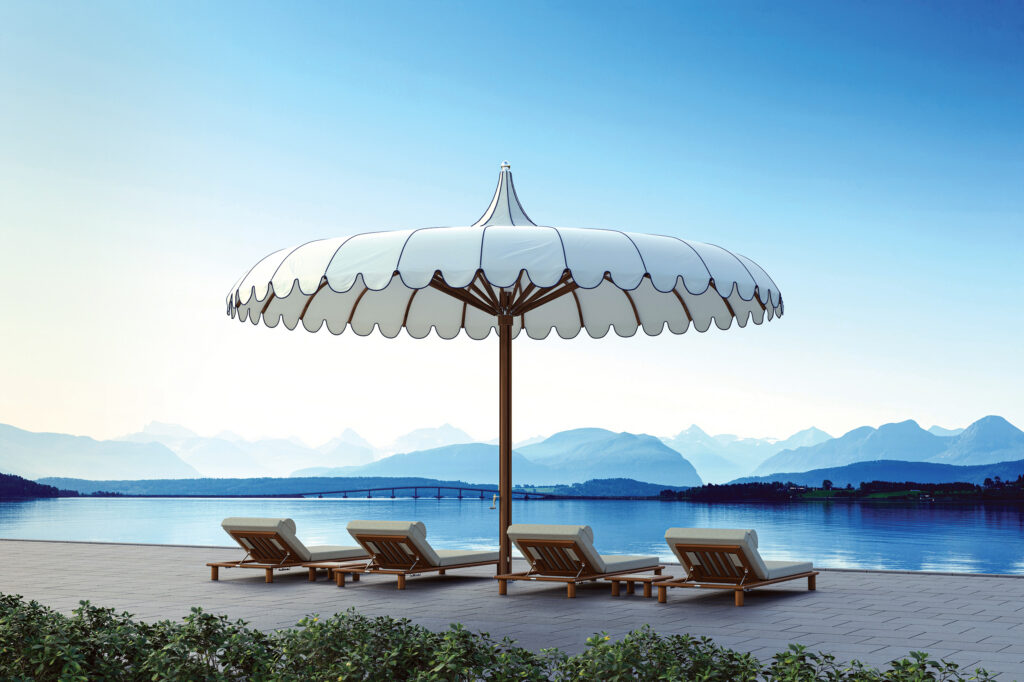
The rounded edges of these products align with the growing trend toward incorporating more organic, softer shapes and curves into hospitality interiors.