
May 22, 2026
Delight often comes from the unexpected. I’m reminded of moments I’ve experienced in places like Siena, Italy, or San Miguel…
The House of Dr Koolhaas
Françoise Fromonot with editor Thomas Weaver
Park Books, 2025
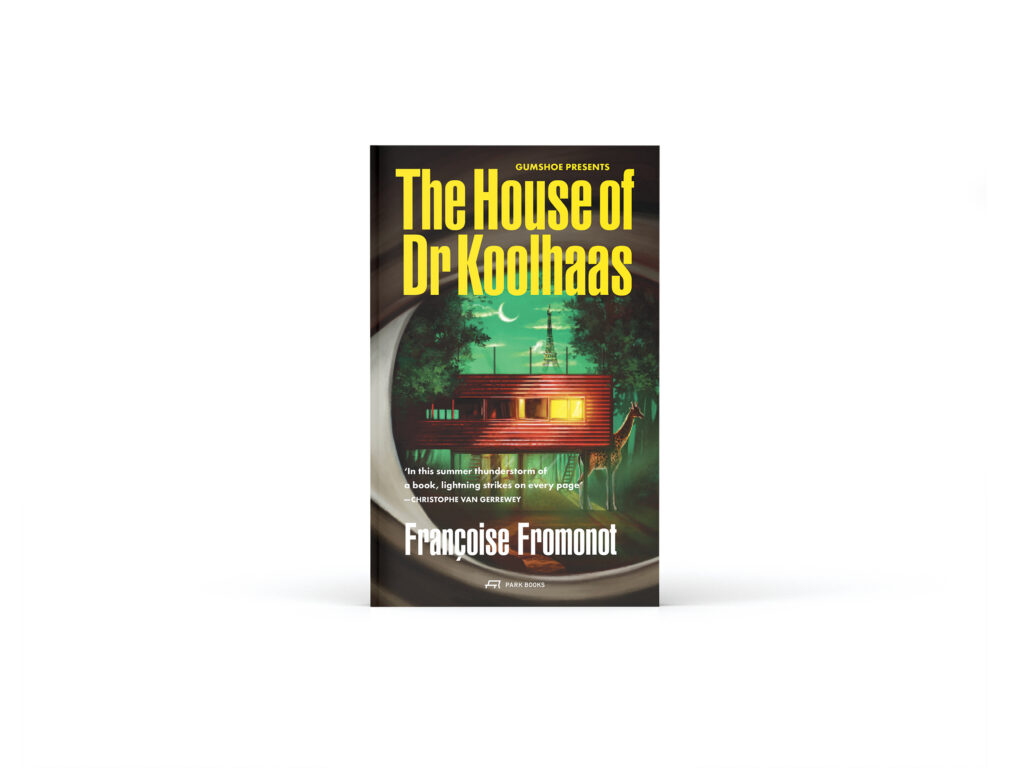
The adage “when you hear hoofbeats, think horses, not zebras” cautions medical interns to consider common diagnoses before rare ones. Practical advice—unless you are attending the autopsy of Office of Metropolitan Architecture’s (OMA) rousing Paris dwelling Villa dall’Ava, where surrealism emerges as the prime suspect. That is precisely the premise of The House of Dr Koolhaas, a provocative, pulpy architectural mystery that reexamines the villa through the guise of a cold-case criminal investigation.
Presented as a post-mortem, the book is The House of Dr Koolhaas, a modest four-and-one-quarter-inch by seven-inch paperback reminiscent of early detective novels. It is the first in the Gumshoe Series of Architectural Mysteries published by Park Books. Conceived by professor of design, history, and theory Françoise Fromonot and architectural writer, educator, and editor Thomas Weaver, the book teems with black-and-white photography, illustrations, references, and enough evidence to build a strong case against surrealism. The question of the purpose is what makes the read exciting, proving that architectural critique is not dead. There are also giraffes.
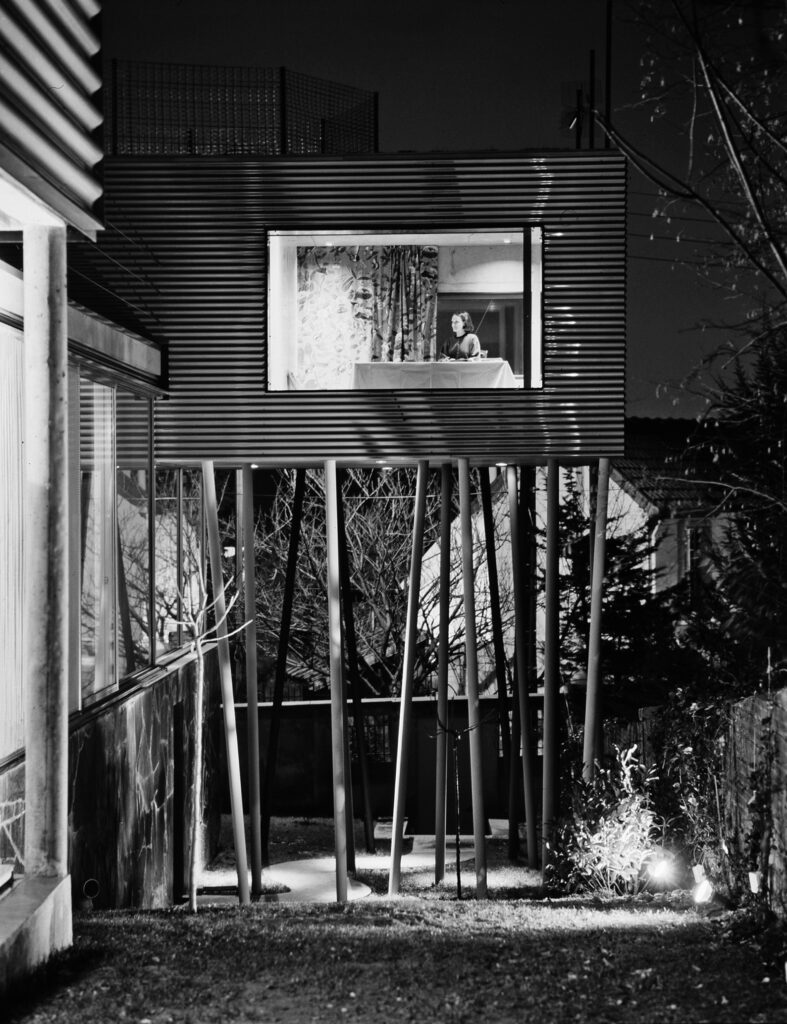
The author opens with a visit to Villa dall’Ava, the striking residence of Dominique Boudet, editor-in-chief of the French design trade publication Le Moniteur. It is Bastille Day in 2009, and Fromonot observes the rooftop pool in its native habitat: a party. From there, a brief overview of OMA founder Rem Koolhaas leads to historical clues and occasional red herrings. Fromonot examines architectural photography and the history of pools with equal glee, drawing conclusions and forming questions that lead to deeper scrutiny. Each new discovery ranges from mildly quixotic to absurd, connecting threads from the seemingly disparate worlds of surrealism, eggs, animals, and even New York City’s popular midcentury pool performance troupe the Aquazanies. Throughout, evidence is bolstered by Koolhaas’s seminal works of architectural writing, Delirious New York and S, M, L, XL, the latter splayed across a two-page spread for forensic study.
Images spill from the pages offering insights into Koolhaas’s avant-garde perspective of blurring authority with irreverence. The 12-minute film that came out of the original architectural shoot of the residence was photographed by Hans Werlemann and filmmaker Chiel van der Stelt and titled 2042: The Villa dall’Ava by OMA. Fromonot juxtaposes the short film against what she describes as the voyeurism of Rear Window, the paranoia of Vertigo, and those films that capture the involuntary burlesque of modern environments like Mon Oncle by Jacques Tati or their underlying pathologies.” The handy references at the end of the book make for a nice list of additional reading and viewing material.
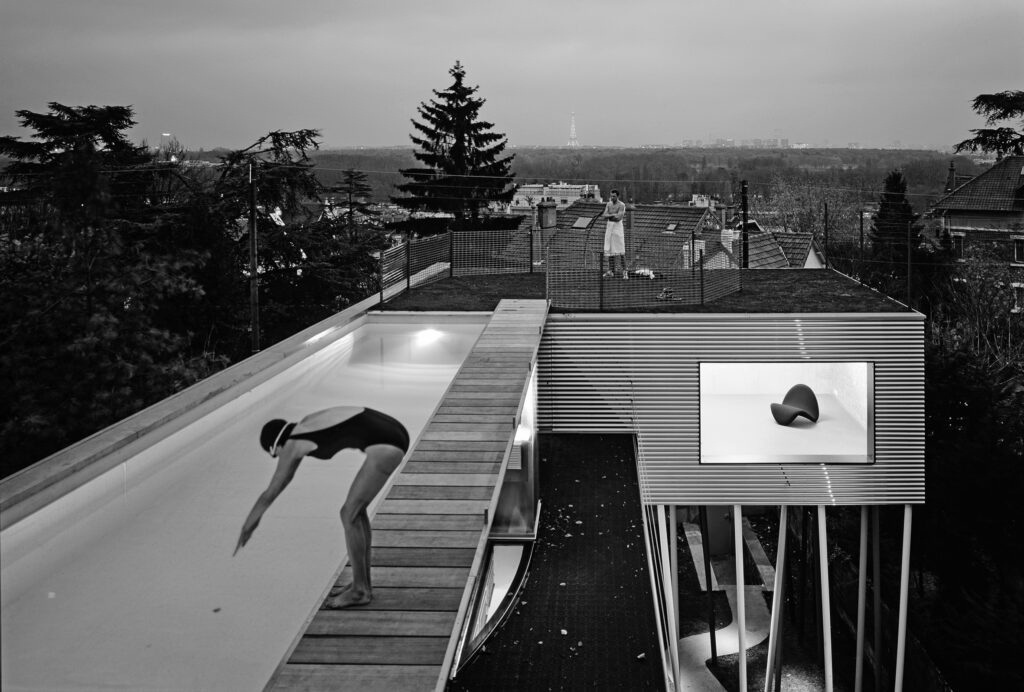
Fromonot is not shy to lean into the stylistic motifs of the detective genre referencing the “raw concrete carcass” of the parting image in S,M,L,XL. “The five points of a new architecture are all present in the Villa dall’Ava,” she writes, “albeit in a distorted form, twisted to the point of irrationality—and it is this spectacle of their systematic misuse that Koolhaas is inviting us to witness.” Fromonot’s commentary is as fascinating as the questions she jots alongside her revelations: “Independent frame?” or “Pilotis?”
Her search plays the authoritative Holmes to her own inquisitive Watson, balancing the personas against a voluminous knowledge of Koolhaas’s body of work. The ploy is mostly successful, making surprising connections that feel as though you are uncovering something new. Anything dug up from such a rich history, however, will eventually start to lose its freshness. Perhaps the weakest component is Fromonot’s zeal for the subject, which bleeds her academic vocabulary into lengthy tangents.
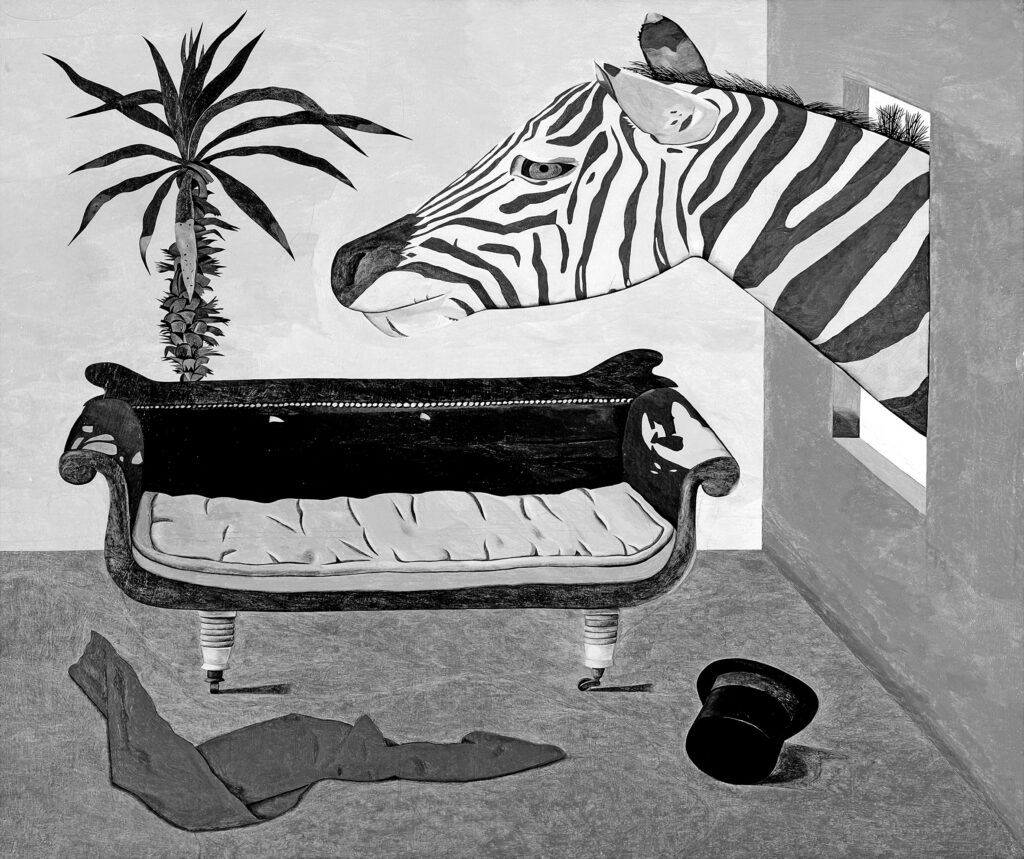
In dissecting Koolhaas’s “salute to Dali,” she begins a dizzying association stating: “There is, moreover, a famous precedent for the idea of fomenting a retroactive plot by means of a covert surrealist operation.” Forgiving these momentary lapses and learning new words in the process are part of the promise of the book, whose true strength, lies in searching for zebras or, in this case, Romeo the giraffe. Fromonot gives the reader time to savor the peculiarities while enjoying the surreal, genre-bending fever dream that is The House of Dr Koolhaas.
As refreshing as a swirl of vermouth in an ice-cold Manhattan, this ambitious book asks more questions than provides answers, opening the door for readers to speculate on when the next Gumshoe book will drop. The seriessuggests new examinations into well-known or unnoticed buildings observing, “All human artifacts are enigmas, some more than others—not least buildings.” A bold methodology that invigorates the field of architectural criticism. Next for the series is Niemeyer and the Mysteries of a Communist Cave.




On the Invisible Forces and Narrative Logics of Art and Design

An East Austin studio rises above the rest.
Redefining Suburban Recreational Architecture
Thermal Delight in Architecture and the Continued Work of Lisa Heschong

A Watering Hole for the Ages
Cinematic drama meets fine cuisine.
Total Design for a New Era

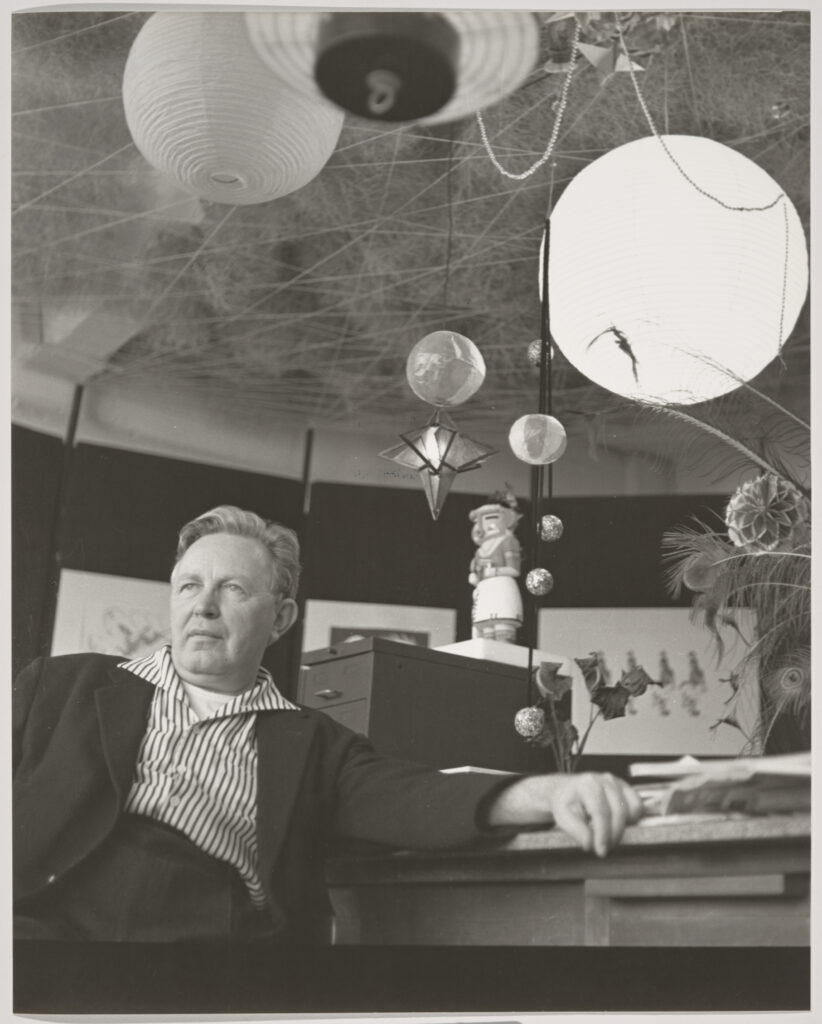
Bruce Goff: Material Worlds
Art Institute of Chicago

The rounded edges of these products align with the growing trend toward incorporating more organic, softer shapes and curves into hospitality interiors.