Mar 17, 2026
In a profession defined by change, gathering is not optional—it is essential. It is how we learn from one another,…
A Houston Garage Remade as a Culinary Destination
The term makeshift—sometimes implied in adaptive reuse projects—carries the unfortunate connotation of being merely sufficient and likely thrown together haphazardly rather than truly satisfactory or aspirational. However, if one can look beyond that stigma, the word also conveys a desire to provide something essential despite not having the ideal conditions, a willingness to work with what is available even when doing so isn’t easy. Architecturally, the word makeshift suggests a need to be resourceful and opportunistic, especially when it pertains to exploring the potentials inherent in what already exists. In working with Chef Shawn Gawle on the design of his new restaurant, Camaraderie, SCHAUM Architects demonstrate just this—an ability to improvise and create opportunity while working within the constraints provided by an existing building and site.
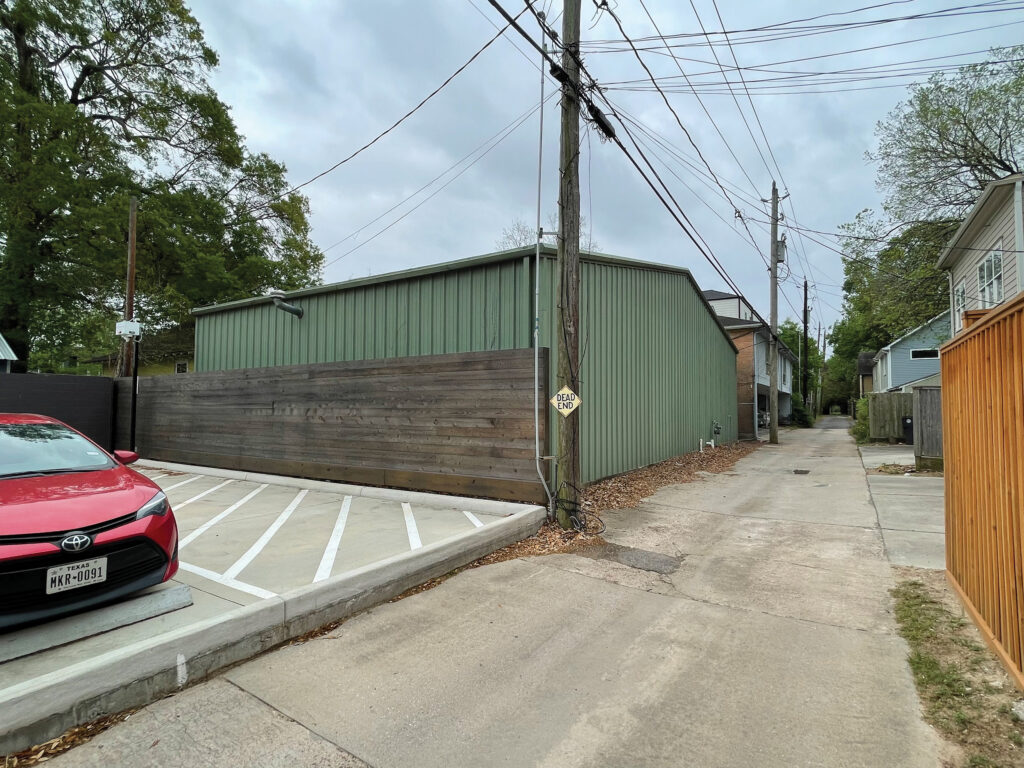
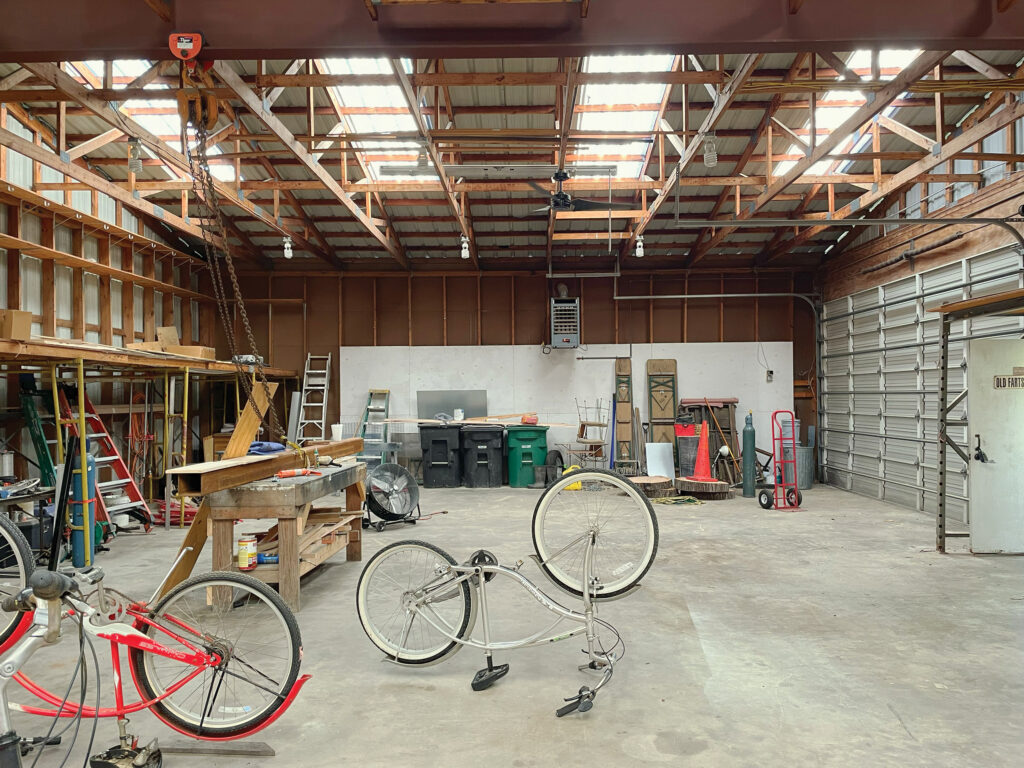
The chef-owned restaurant resides within the shell of a former residential garage and woodshop along 11th Street in Houston Heights. The existing building sits at the innermost edges of a corner lot, opposite a fenced-off bungalow at the street corner. The garage presses tightly against an alley to the west and the fence of an apartment building to the south, leaving just enough space for a drive aisle to connect the gravel parking lots north and east of the restaurant. The limited space tapers to the point that the drive actually informs the inflected angle of the restaurant’s covered patio (the lone addition to the garage). The constraints imposed by the site and the existing structure required a sense of resourcefulness and invention from the design team.
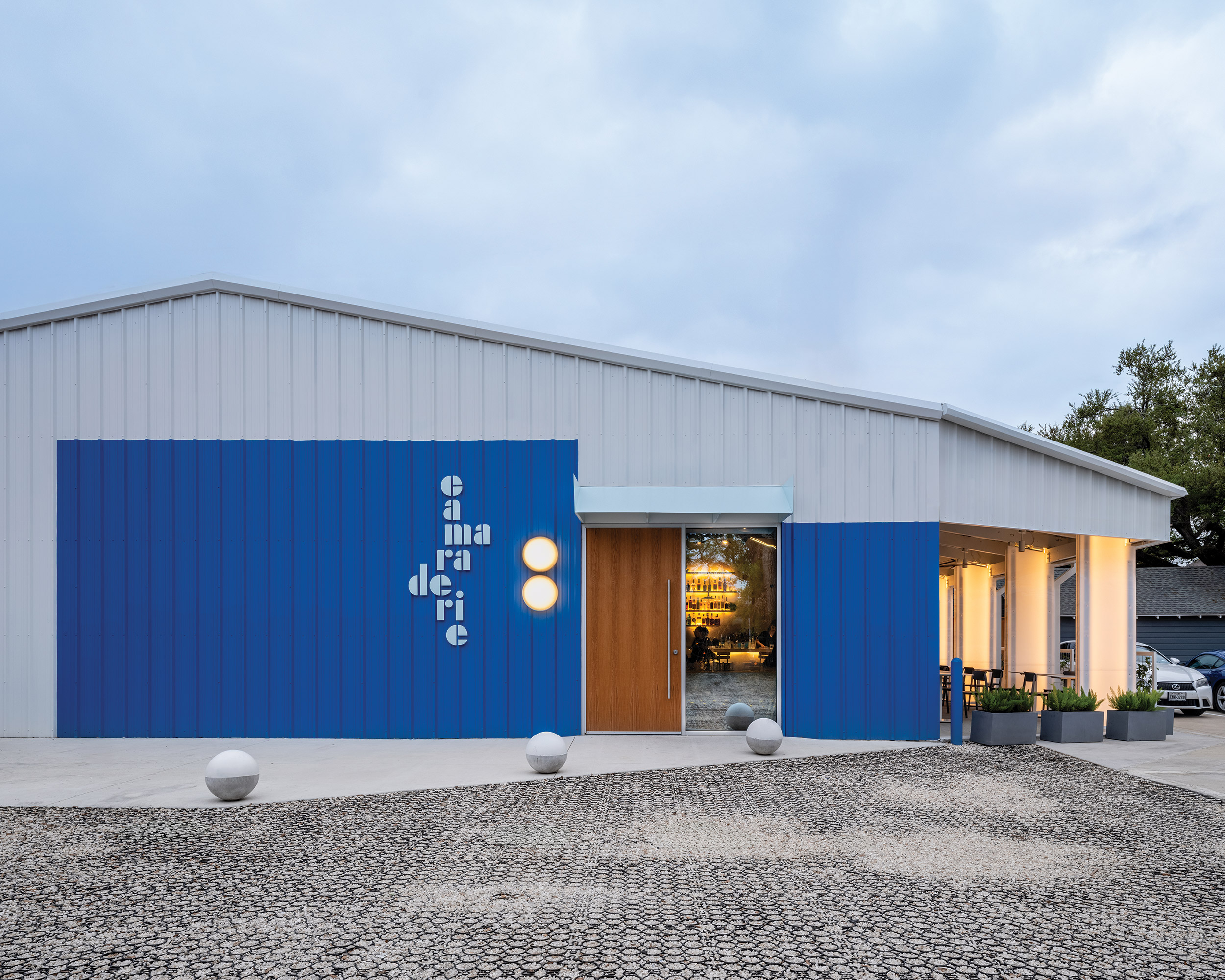
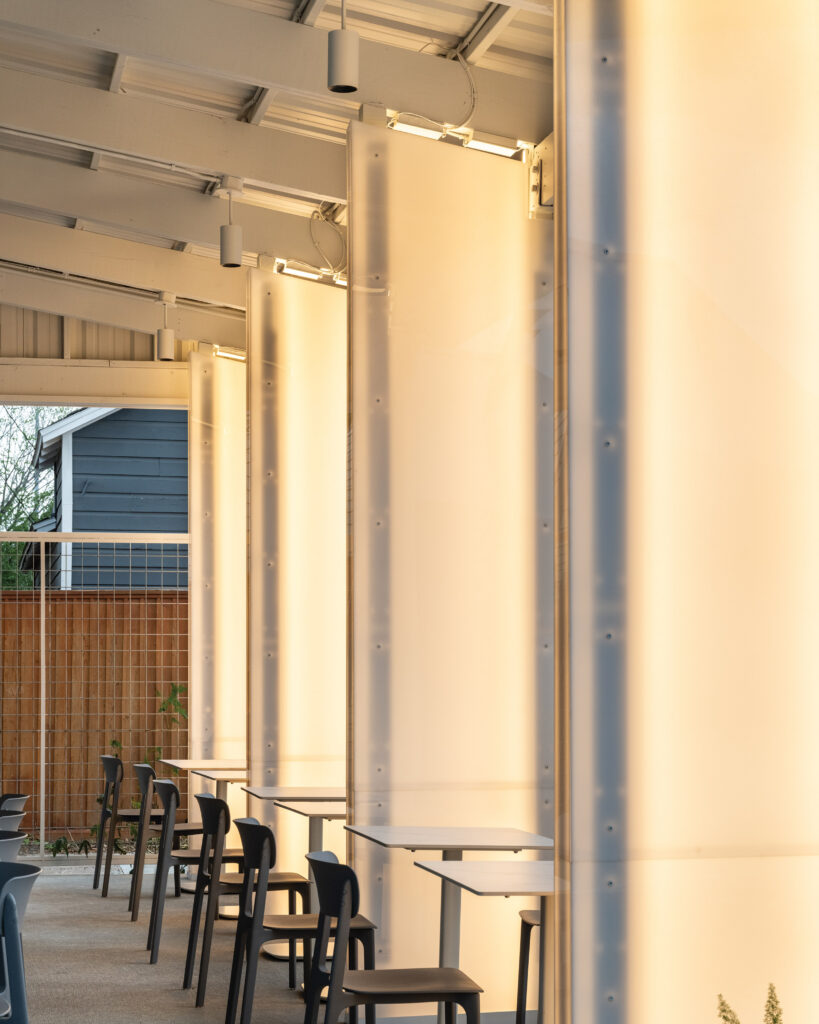
The project retains as much of the existing building as possible and largely accepts it as is. The design preserves the existing corrugated metal panels that wrap the roof and walls, extending the material onto the new covered patio. The space feels as if it was carved from the shell of the existing garage. Other than of a series of illuminated acrylic panels that serve as a subtle beacon in the evenings, the building does little to draw attention to itself. The lack of adornment and the building’s location at the back of the lot enable it to remain relatively anonymous from the street.

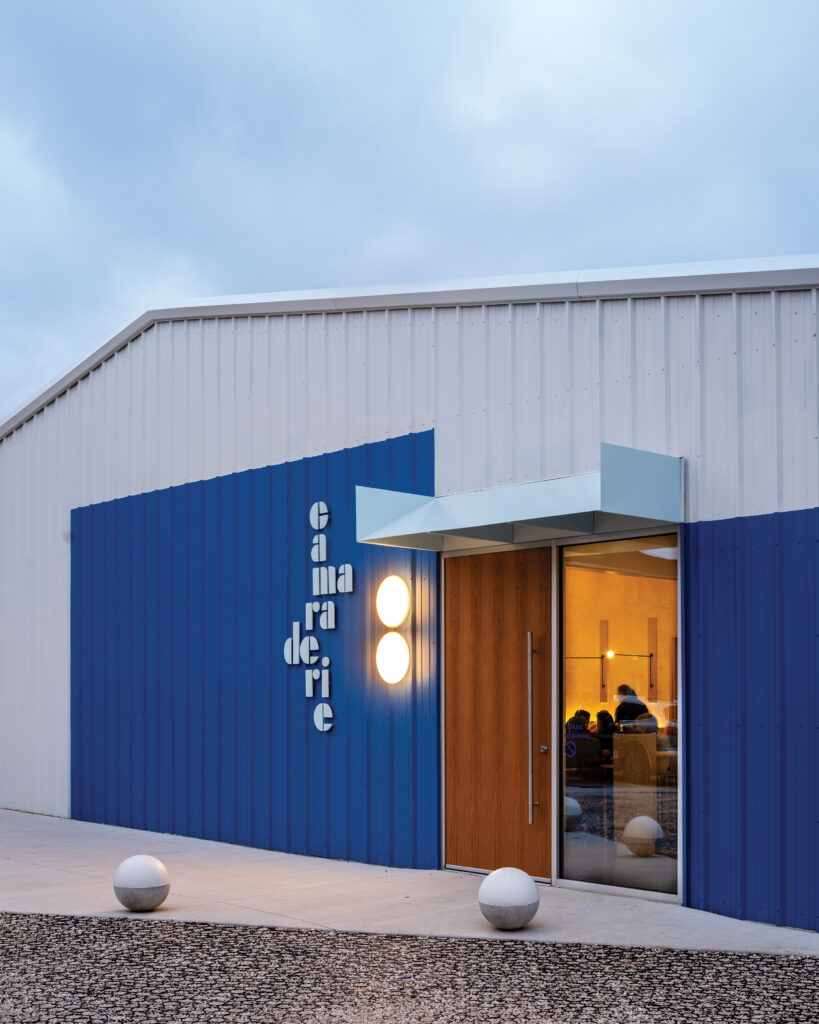
The exterior relies primarily on color to define its character. A white base layer, which reduces the building’s presence, replaces the original green. At the building’s broad side, carefully composed blue rectangles flank the entrance and mitigate the scale of the facade. Clean sky-blue sculptural canopies cantilever slightly above the entrances for both the guests and the staff, and the restaurant’s logo playfully animates the surface adjacent to the main entrance. The warm wood tone of the door stands out against the rest of the facade and foreshadows what lies within.
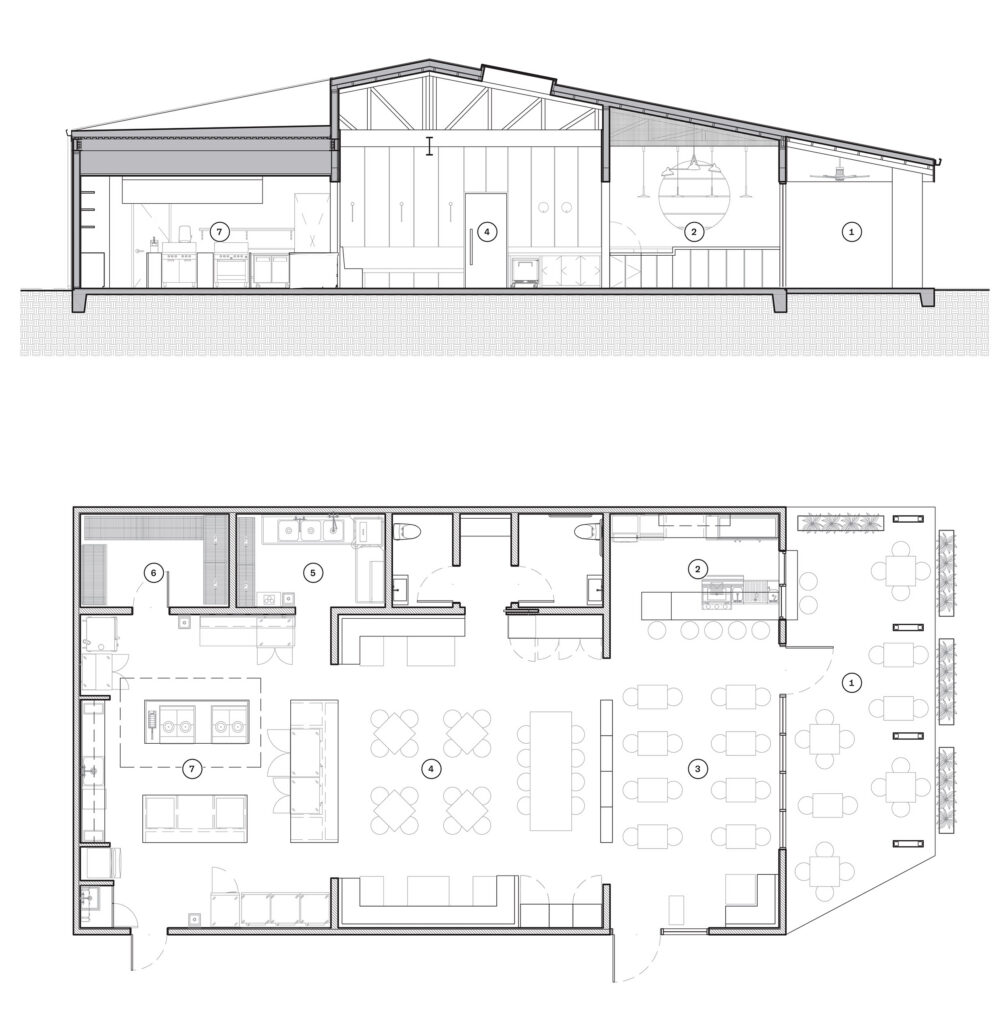
With limited square footage available, the floor plan neatly organizes spaces within the existing shell. Primary walls define consecutive spaces for cooking, dining, lounging, and a covered patio. Along the western edge of the building, a secondary wall conceals pockets of space for dish washing, storage, restrooms, and the back bar, keeping them out of sight. While each of the primary spaces feel distinct, generous openings in the interior walls and floor-to-ceiling glass at the patio provide connections that extend from the open kitchen all the way to the street.
The proximity of the kitchen and dining spaces offers visitors a full view into the working space where chefs prepare each dish. This transparency was a critical part of the experience for Chef Gawle. Troy Schaum, AIA, explains, “It’s important to him that you see the dishes you’re being served and that they’re not hidden away.” Despite the openness and visual connection, the spaces feel distinct. The cool gray of the kitchen’s interior contrasts with the warm tones that wrap the dining space in a way that implies a boundary without physically imposing one.
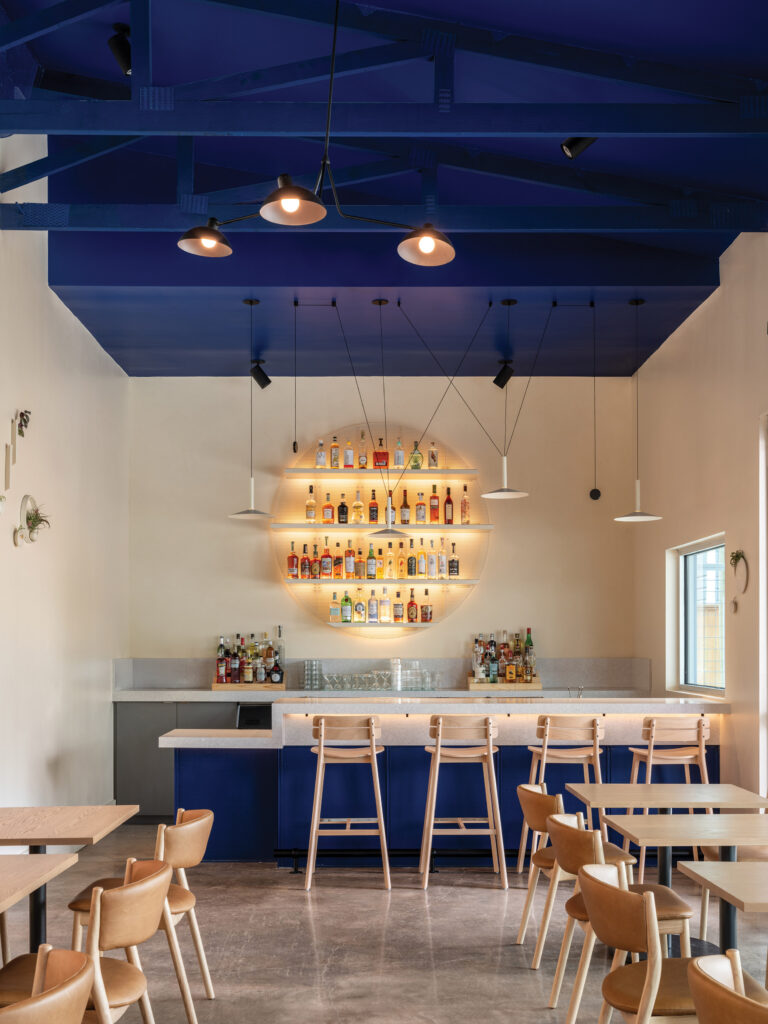
Throughout the interior, clever details conserve space and offer flexibility. The banquette that wraps the perimeter of the dining area conceals boxes of storage that lie beneath. A small ledge behind the backrest of that banquette provides enough depth for servers to place open bottles for each table. The SCHAUM team also designed the rolling millwork planters that provide storage for wine below, allowing the dining room and lounge to be connected or distinguished from each other depending on the occasion. By allowing elements to serve multiple roles, these details enable a tight space to still feel ample if not quite expansive.
Faced with the question of where to place a new, substantial HVAC system required a more significant effort. In a move Schaum likens to the body of a Chevrolet El Camino, a mechanical loft recessed into the volume of the existing building keeps the equipment off the ground and out of sight. The flat bed of the loft rests above the kitchen, where the noise presents less of an issue. Quarantining the equipment here preserves the generous ceiling heights in the dining and lounge spaces.
Of all the existing conditions that the garage offered, Schaum sought to maintain the height as well as the soft light that filters downward from the restored skylights. Birch panels clad alternating pairs of trusses and divide the ceiling above into evenly spaced bands of wood. Those bands conceal the ducts and conduits that pass overhead, while allowing natural light from the skylights to spill between them during the day. In the evenings, fixtures bounce light off of the roof back down into the space. In both cases, it was critical to Schaum that guests experience the light itself instead of its source.
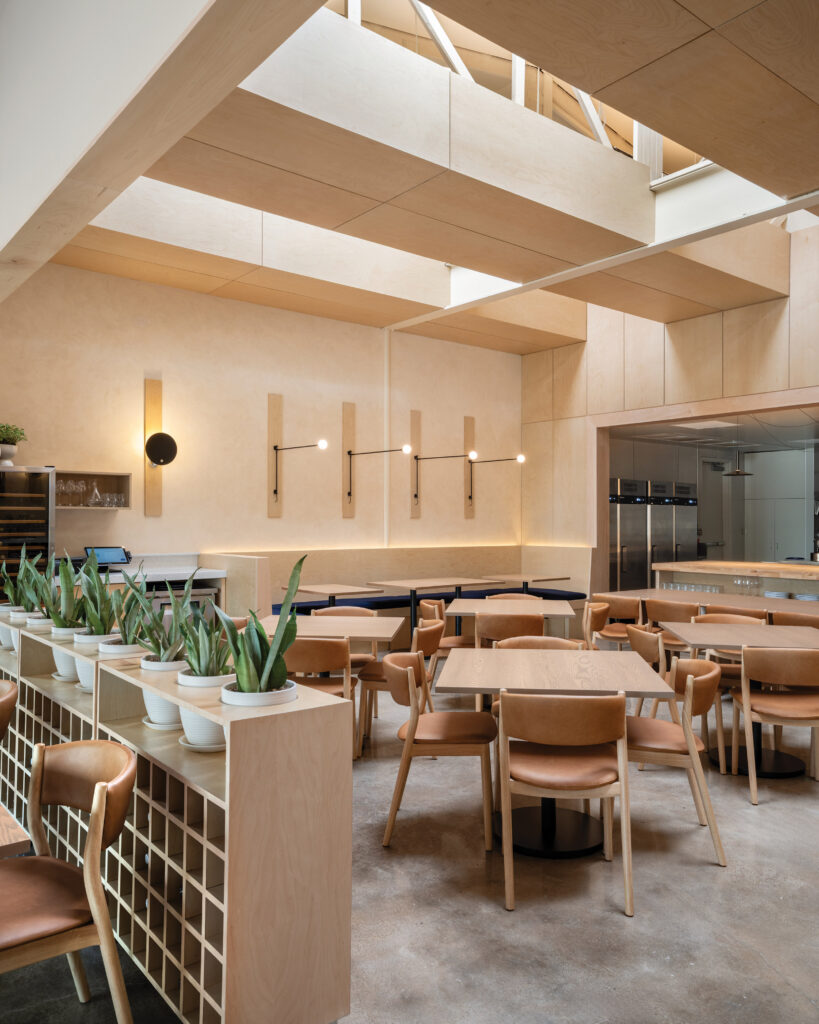
The birch panels wrapping the trusses provide the ceiling with an apparent thickness and depth. That depth conceals the source of the light and projects it downward, allowing it to fade away in a soft gradient as it washes the interior. That light falls onto warm wood walls clad in birch panels that extend the rhythm of the ceiling downward, creating soft striations of light and shadow. While born out of necessity, it is the kind of move that transcends utility and amplifies the presence of something that the existing building already provides.
The warmth and depth offered by the restaurant’s interior belies the thinness implied by the building’s metal wrapper in a contradictory way that seems fitting. This paradoxical pairing of a high-end restaurant within a more utilitarian shell is one of many contradictions that challenge assumptions and thwart expectations of what fine dining can or should be. Among those contradictions is the relaxed atmosphere within the restaurant. Despite the rave reviews and recognition the restaurant has received for both its architectural and culinary qualities, it still manages to feel humble, modest, and unpretentious.
Houston holds its restaurant culture in high regard. It is just as likely to recognize a mom-and-pop staple in a strip mall or an upstart chef working out of a gas station as it is to laud a shiny new Michelin star. The food takes precedence over everything else. The design for Camaraderie seems to recognize this, and Schaum remarks, “We really wanted a space that doesn’t try too hard to grab your attention and just feels comfortable.”
Rather than attempting to be novel or unique, the space seems intent on supporting the restaurant in its effort to provide a special experience. The design offers the elements that are essential and necessary, focusing more on solving problems and creating an atmosphere than making a statement. The project demonstrates that architects can strive to create something special without vying for attention.

Ross Wienert teaches at the University of Houston College of Architecture and Design and practices at CONTENT Architecture in Houston.

Supporting Ecological Evolution in the Anthropocene
A Home Designed for the Decades
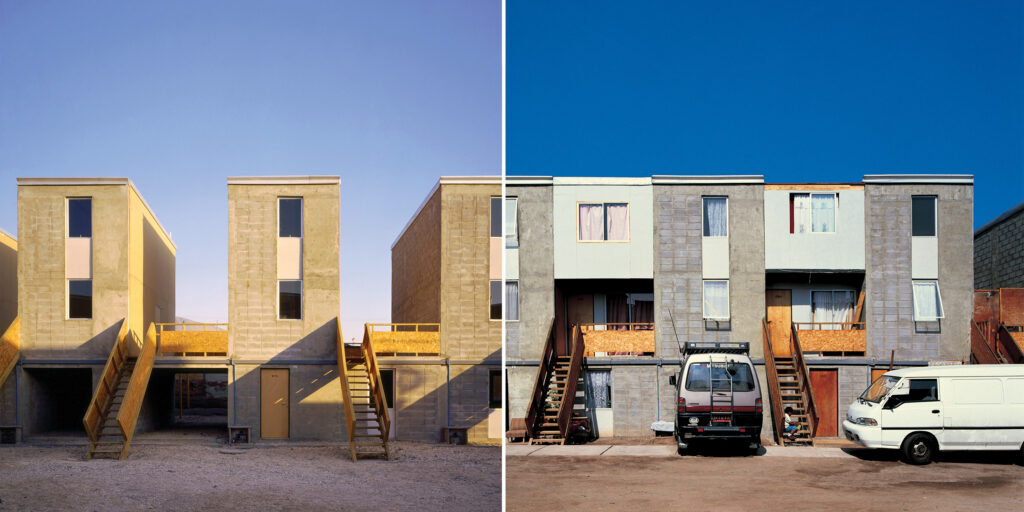
An Argument for Creative Reuse Over Preservation
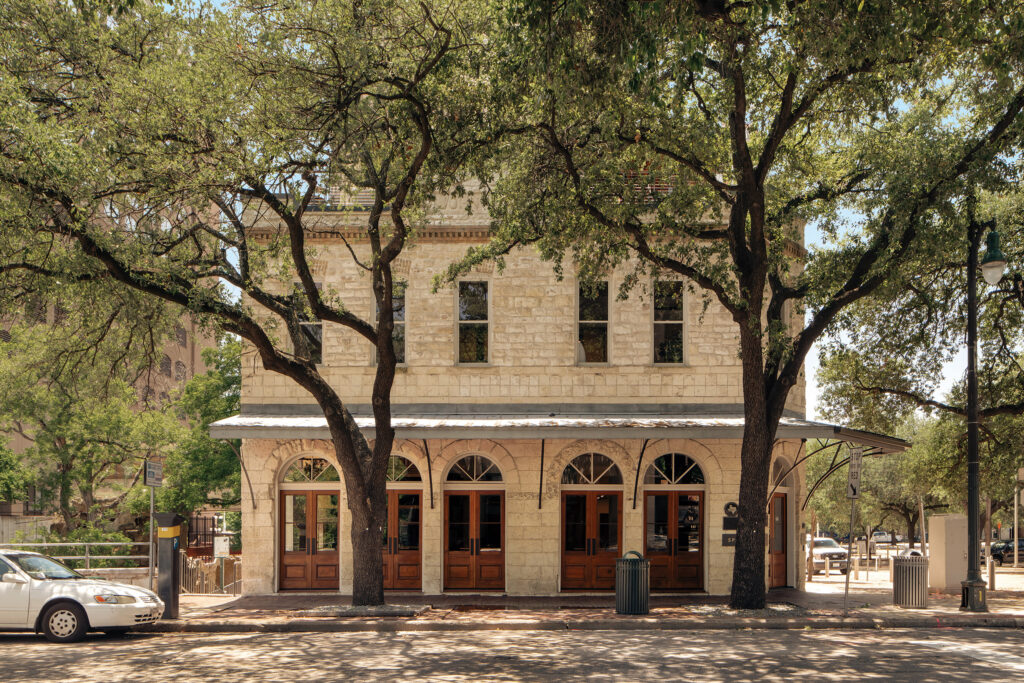
A Historic Structure Updated for Next-Gen Commerce
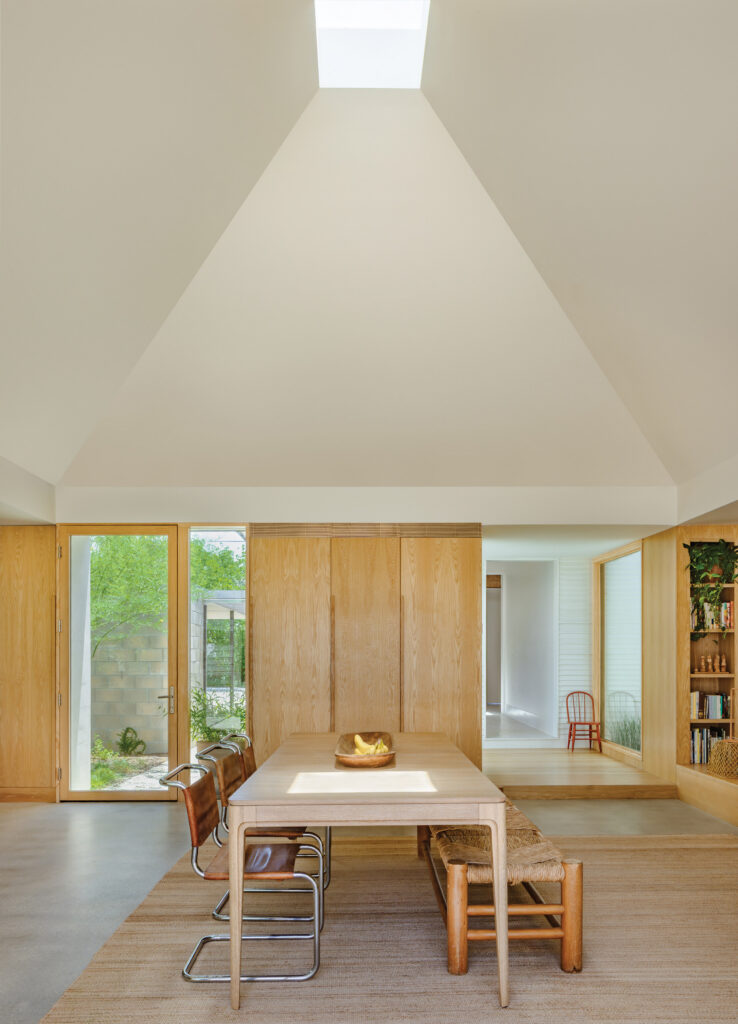
Expanding a 1930s Bungalow for a Modern Family
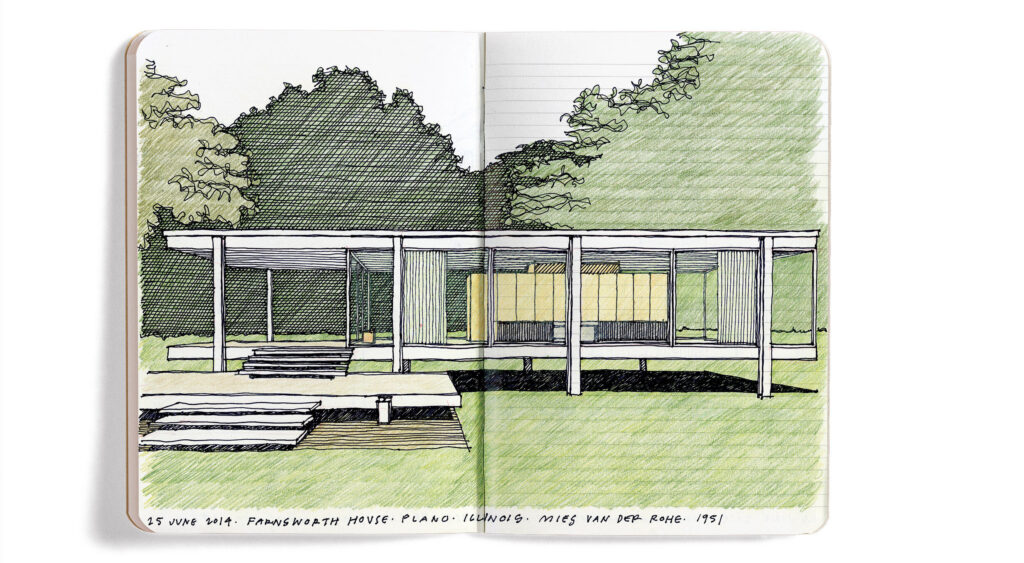
Evolving the Profession for a Changing World
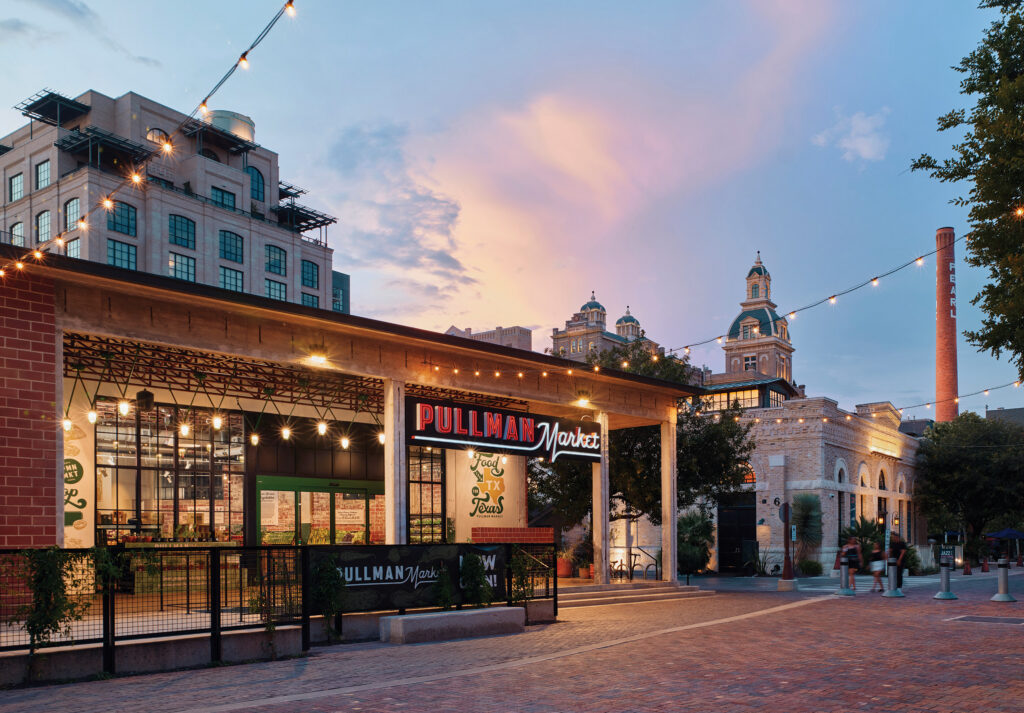
Adaptive Reuse at Pullman Market
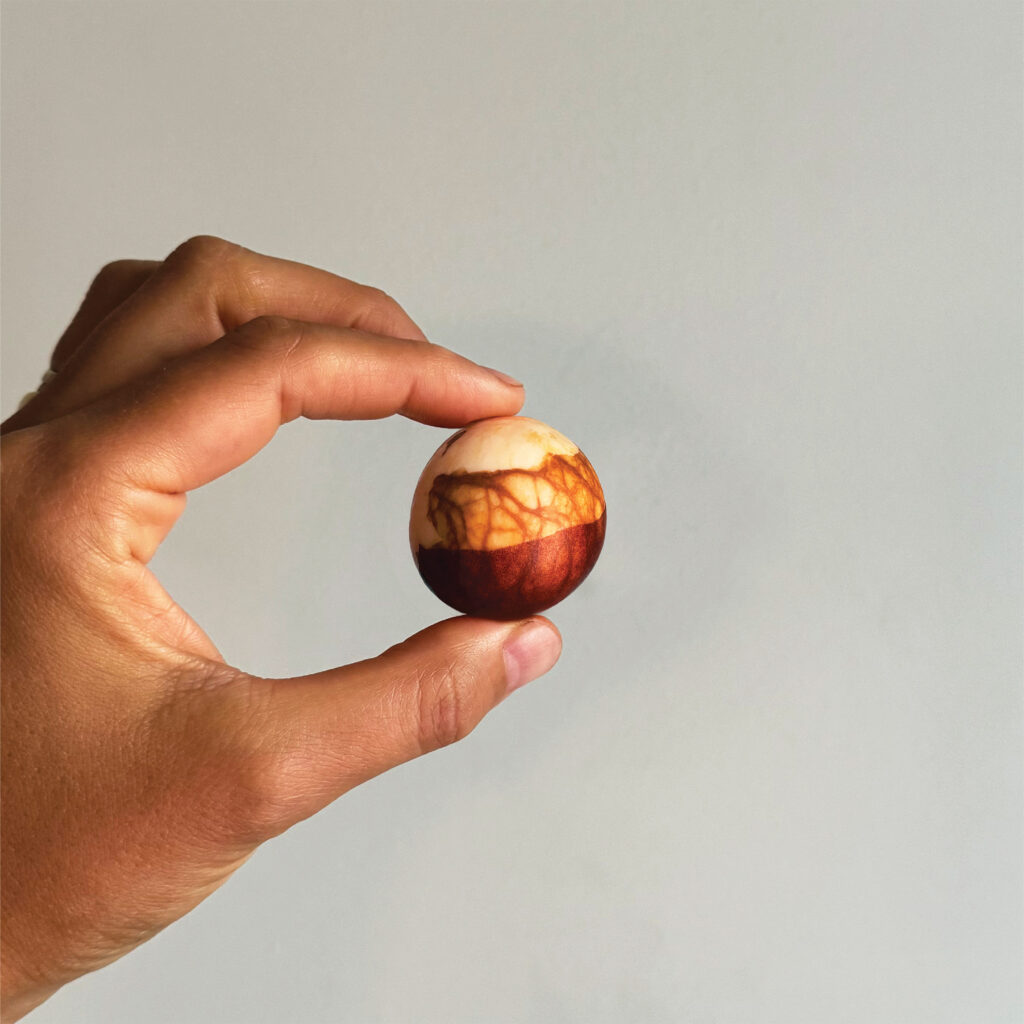
Building With Fruit Waste Matter
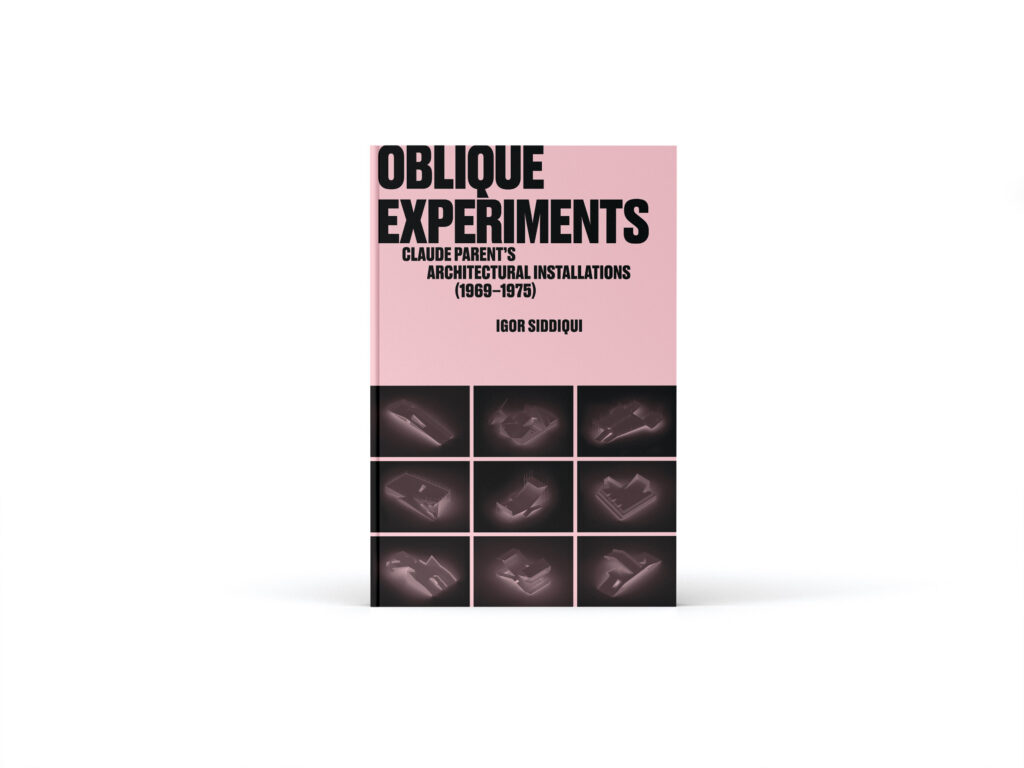
Oblique Experiments
Igor Siddiqui
Applied Research & Design, 2025
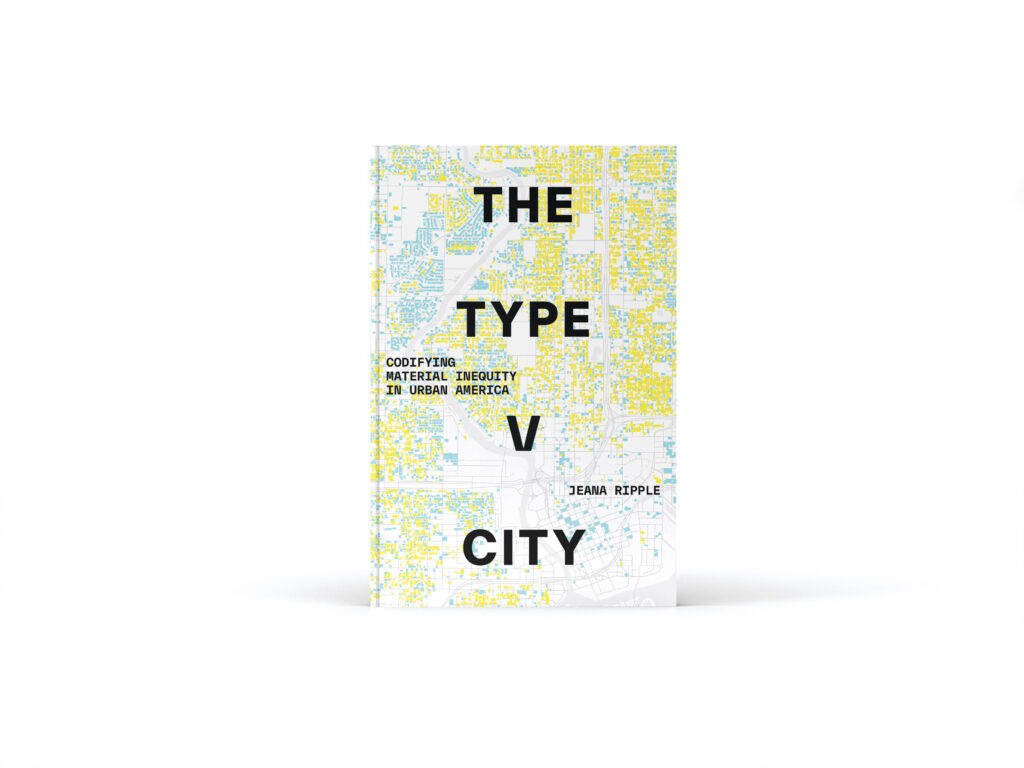
The Type V City: Codifying Material Inequity in Urban America
Jeana Ripple
University of Texas Press, 2025
These new LED lighting fixtures for spaces from tabletops to stairwells offer flexible illumination for residential and commercial spaces.