
Mar 17, 2026
In a profession defined by change, gathering is not optional—it is essential. It is how we learn from one another,…

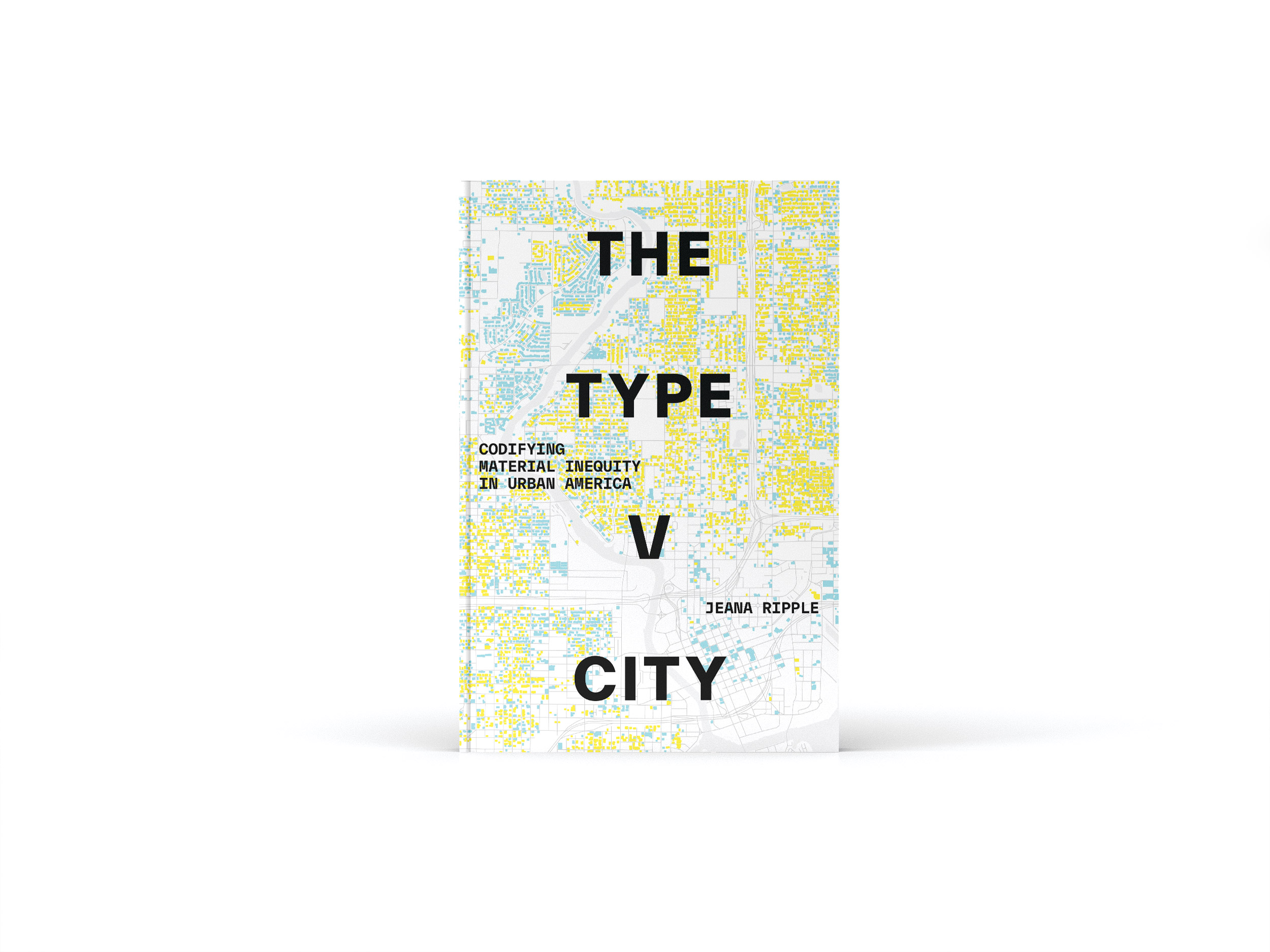
The Type V City: Codifying Material Inequity in Urban America
Jeana Ripple
University of Texas Press, 2025
What are the implications of America’s love affair with wood construction? The Type V City, a neatly organized collection of essays by architect and professor Jeana Ripple, AIA, circles around that question and layers onto it concerns about resilience, ecology, and equity.
Each of the book’s five chapters deals with one city and two themes, starting with “Type V Chicago: Durability and Disinvestment,” and ending with “Type V Seattle: Adaptive Capacity and Lifespan.” New York, Philadelphia, and Tampa make up the intervening chapters. As the term “Type V” is approaching its 100th anniversary, it is appropriate that the book invokes the need for “retrospective analysis of the last century’s regulatory impact.” However, because most of the action in the book takes place before 1927—when the five types of construction were introduced in the first edition of the Uniform Building Code—the frequent use of the term “Type V” can feel anachronistic. Also, “Type V” is used by the author to refer to all wood buildings, even though technically Types III and IV may also be built of dimensional lumber when made sufficiently fire-resistive. Simplifications like this help clarify the narrative for non-expert audiences, though they may serve as speed bumps for the professional reader.
Commendably, the book connects the rules we make to their actual outcomes, rather than to their intentions, which is a perspective that architects, engineers, and planners need consistently to be reminded of. The book shines when it points out ways that the current regulatory matrix is preventing us from building sustainably—for example, through occupancy-based egress requirements that make adaptive reuse difficult. Also, the scope of the book is ambitious, even exhilarating at times. While one could wish for coverage of even more places—where are the cities affected by wildfires, and what about rapidly expanding sunbelt cities like Dallas or Phoenix?—the narrative’s shifts in scale from wood fibers to regional ecosystems and the neighborhoods in between make for a dynamic and engaging structure.
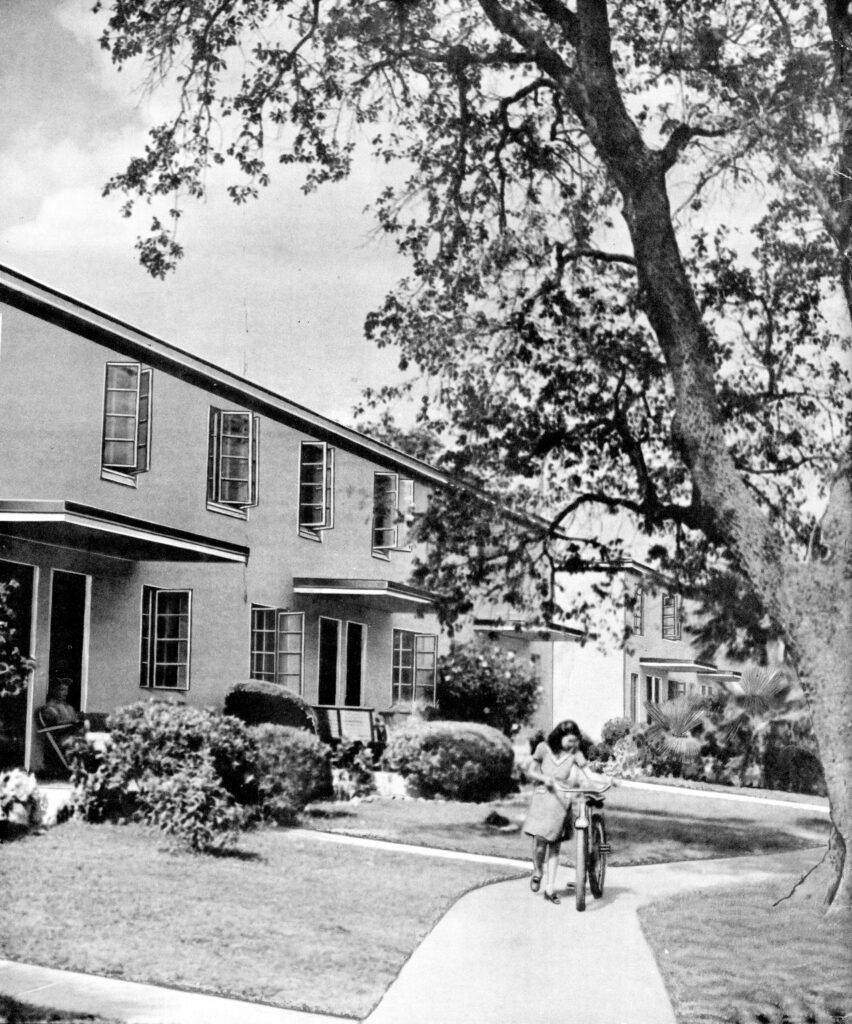
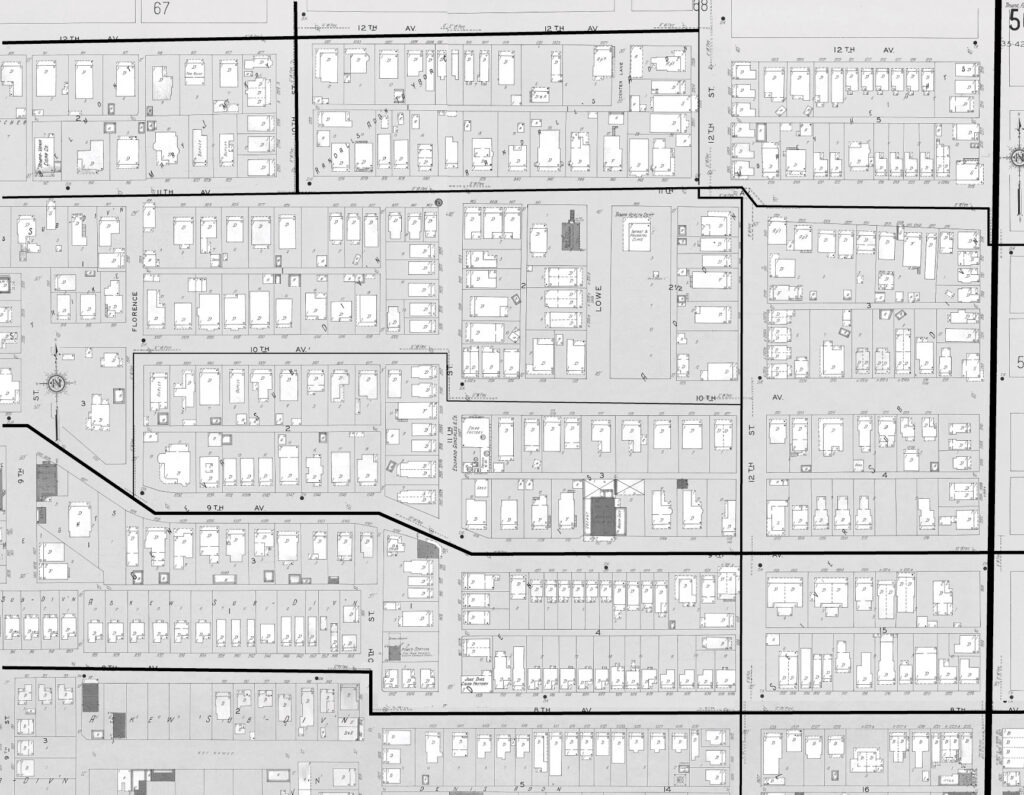
The already broad selection of cities further enriches the book. While the tale of Chicago’s Great Fire and the subsequent reconstruction will be known to many readers, the chapters on the other four cities provide less familiar accounts. New York’s deals primarily not with Manhattan but with the marshy plains of the outer boroughs and the impact of Superstorm Sandy. Philadelphia, a curious choice as it has conspicuously little wood construction, forms the backdrop for a story about labor unions and racial exclusion. Although the narrative of redlining and urban renewal has been told many times before, the setting of Tampa provides fresh specificity, with the deft use of Sanborn maps proving particularly informative. Finally, the chapter on Seattle is perhaps the richest, as the city’s location in the great forests of the Pacific Northwest entwines its history most intimately with wood.
The book’s most admirable quality may be its willingness to traverse the difficult and necessary territory between academia and practice. At a time when we need more research into the social impacts of our discipline’s technical dimensions, this book stands as an important contribution. Hopefully, it will encourage other scholars to take up this subject matter as well.
By the end of the book, readers may be left feeling ambivalent about the role of wood construction in our building culture. Ripple’s critiques rest on a presumed hierarchy of quality, where Types I-IV are “better” than Type V, rather than simply more fire-resistive. Her conclusions imply that wood buildings are themselves evidence of inequity . This framing is difficult to reconcile with the fact that many desirable addresses across the country are, in fact, Type V buildings. Much of the lowest quality housing in America—manufactured homes and old, unimproved public housing—is not Type V at all, while many mansions and high-rent luxury apartments are. Two of America’s most recent natural disasters, the Maui wildfires of 2023 and the Los Angeles wildfires of 2025, devastated high- and low-income neighborhoods alike. It is difficult to articulate the specificities of inequity when wood construction is so pervasive nationwide.
Early in the book, the author does acknowledge the ubiquity of wood construction, quoting Carol Shammas that it “conquered all classes.” Rich or poor, Americans tend to live in wood houses and wood buildings to a much greater extent than in many other countries, developed or developing. But Ripple does not carry this insight forward, choosing instead to admonish building and zoning codes for what they get wrong when they allow—or, in the case of Philadelphia, don’t allow—wood construction.
Unproven disadvantages of wood feel overplayed, while its beneficial aspects are given only scant consideration. Ripple recognizes that it is difficult to “pinpoint specific attributes that determine a building’s longevity” and that we lack data on reasons for building demolition. Yet she then characterizes wood as the least desirable option in terms of longevity and renovation ability, emphasizing its drawbacks—susceptibility to fire and moisture, short spans that result in more structural walls—while not mentioning its advantages, such as ease of workability and modification for ducts and wiring. Anecdotally, I would suggest that proper detailing and the real estate market both have a greater influence on building lifespan than the structural system. A well-detailed wood building will last longer than a poorly detailed concrete one. And, if market dynamics pressure an old building to be torn down and replaced with a new one, demolishing a wood structure will have less environmental impact than demolishing a concrete structure. Ripple would have us assume that, in a preponderance of instances, the concrete building would be adaptively reused while the wood building would be demolished, but there is not evidence to support this position. In the quest to find a wrongdoer in our building culture, it feels that wood has been unjustly… framed .
The book’s critique of wood is closely tied to a broader examination of our city-making practices across the ten sub-themes of durability, disinvestment, saturation, etc. However, if the book’s conclusions are not specific to wood, they start becoming too general to contest. It’s true that building codes offer a “unique lens to view the social impact of American urban architecture,” but what that lens actually reveals is less clear. Yes, there is inequity in the built environment, and the built environment is made of materials—including wood. But a direct connection between our specific codes and our broader social problems feels tenuous. The argument relies on a speculative approach to history, inherently unverifiable, that imagines that alternative building codes would result in significantly improved social outcomes. Perhaps materiality is being asked to bear too much responsibility here for multidimensional urban problems. For one thing, focusing on the agency of building codes lets humans off the hook. Code officials, city planners, architects, engineers, contractors, and developers will find much thought-provoking material in this book, even as it brushes over the intricate calculus of tradeoffs that daily inform their choices and shape the process of city-making.





Supporting Ecological Evolution in the Anthropocene
A Home Designed for the Decades
An Argument for Creative Reuse Over Preservation
A Historic Structure Updated for Next-Gen Commerce
Expanding a 1930s Bungalow for a Modern Family
Evolving the Profession for a Changing World

A Houston Garage Remade as a Culinary Destination
Adaptive Reuse at Pullman Market

Building With Fruit Waste Matter

Oblique Experiments
Igor Siddiqui
Applied Research & Design, 2025

These new LED lighting fixtures for spaces from tabletops to stairwells offer flexible illumination for residential and commercial spaces.
I appreciated the practical points in “Reframing Wood Framing – Texas Architect Magazine.” At The Virtual Estimation (https://thevirtualestimation.com/), we separate framing members, sheathing, blocking, hardware, trim, and waste before pricing. A clear scope keeps the calculator calm and the change-order folder thin. Thanks for putting the steps into plain language.