
Mar 17, 2026
In a profession defined by change, gathering is not optional—it is essential. It is how we learn from one another,…

There is a moment in every architect’s career when preparation stops being theoretical and starts becoming real. It is not marked by a single class, exam, or job title, but by the accumulation of decisions made early, often before anyone is watching.
Emma Johnson, AIA, did not set out to be first. She set out to be prepared. As a working student Johnson pursued both her degree and shouldered a job at BRW Architects in College Station. Becoming the first graduate of Texas A&M University’s Integrated Path to Architectural Licensure (IPAL) Program, was the result of steady momentum, clear intention, and a willingness to jump in before certainty arrived.
Johnson’s interest in architecture began at the intersection of logic and creativity. Strong in math and passionate about art classes, she initially considered engineering. A visit to an engineering firm in Georgetown changed that trajectory when she noticed a landscape architect working just downstairs. “I remember thinking, this is different,” Johnson recalls. “I liked the creative side, but I also liked the technical side. Architecture felt like the place where those two things could live together.”
Once she committed to the field, licensure quickly became part of the picture. “I’m goal-oriented,” she says simply. “If I was going to put in the time for school, I wanted to see it through.”
Discovering the Path
Johnson’s introduction to IPAL was not formal. During her junior year at Texas A&M, the program launched while she was away on a study semester and working at BRW Architects. She heard about it in fragments, group chats, and passing conversations but had not attended any of the early information sessions. It was not until the beginning of her senior year that she walked into the office of Dr. Valerian Miranda, IPAL and AXP advisor and director emeritus at Texas A&M, seeking clarity.
“I asked him to explain what IPAL actually was,” she says. “By the time I walked out, he told me I was eligible and that he was signing me up.”
IPAL, administered nationally through the National Council of Architectural Registration Boards (NCARB), allows students to pursue licensure while enrolled in an accredited degree program. Education, experience, and examination requirements advance in parallel rather than sequence, a structure that demands early commitment and sustained focus. Johnson had already accumulated significant experience hours through her work at BRW Architects, positioning her to begin immediately.
She did not see IPAL as a guarantee of speed but as a framework—one that made expectations visible earlier and asked her to meet them head-on.
Learning How to Learn
Johnson approached the Architect Registration Examination (ARE) the same way she approached design: iteratively. She began with Project Development & Documentation, guided by Miranda’s advice and her experience hours. Her first attempt did not result in a passing score, but it recalibrated her approach.
“I realized pretty quickly I couldn’t rely on just one resource,” she says. While Texas A&M initially provided the ARE preparatory course Black Spectacles, Johnson expanded her study methods, incorporating additional tools such as Amber Book to hear concepts explained from different angles. Testing early, she notes, requires repetition and context, especially without years of practice to lean on.
Her most practical advice to ARE candidates is straightforward: Schedule the exam. “Architects are deadline people,” she says. “Once it’s on the calendar, you show up.”
Practice in Real Time
Johnson credits much of her growth to BRW Architects, where she interned throughout school and now practices full time. The firm’s culture, she explains, emphasizes trust over hand-holding.
“They didn’t wait until I was ready,” she says. “They let me try, then checked my work. That was the learning.”
Surrounded by peers navigating licensure themselves, Johnson found mentorship embedded into daily practice. Conversations about exams, experience hours, and study strategies were normal, not taboo.
Her experience aligned closely with NCARB’s competency-based AXP model, particularly in how exposure, not checklists, shaped her development. Construction experience proved the most difficult to complete while in school, but Johnson found meaningful ways to document involvement through submittals, RFIs, and remote coordination.
The Cost of Momentum
When asked about the most challenging part of the process, Johnson answers without hesitation, “I was burned out.”
To manage the workload, she reserved exam testing for summer and winter breaks. The summer between undergraduate and graduate school, she took three AREs in succession, four weeks of study per exam, without pause. “I didn’t really acknowledge that I had just finished one degree,” she reflects. “I went straight into studying again.”
The result was creative fatigue. Studio work required focus, while testing demanded precision. Rest became secondary to deadlines.
Still, Johnson is candid about the trade-off. “I did the sacrifice early,” she says. “Now I get to enjoy the space on the other side.”
Recognition and Responsibility
At the Texas Society of Architects’ New Architect Convocation in Dallas last October, Johnson stood among peers who had all reached the same milestone through different timelines and paths. “It was the first time I felt fully understood,” she says. “Everyone in that room knew what it took.”
Being the first IPAL graduate from Texas A&M carries both pride and humility. “I didn’t do this for attention,” Johnson says. “It was timing. I happened to be in the position to finish first.”
Still, she recognizes the impact of visibility. Teaching at Texas A&M’s Camp ARCH the past two summers, Johnson has already seen how representation matters. “Students see it and think, maybe I can do that too,” she notes.
Looking Ahead
Johnson is clear about what licensure represents and what it does not. “I’m not stamping projects. I’m not running work yet,” she says. “I just removed a barrier. Now I can grow without limits.” Her advice to students and emerging professionals reflects that clarity: “You’re never going to feel completely ready. Start anyway. If you don’t pass, keep moving. A lot of people have walked this path before you, and more people are rooting for you than you realize.”
In a profession often defined by endurance, Emma Johnson’s story offers another model, shaped by intention, support, and the discipline to begin early and keep going.

Gabriella Bermea, AIA, NOMA, is a senior associate and architect with Perkins Eastman. Bermea is the NCARB experience committee chair and a firm licensing advisor.
IG: @gabbybermea
LI: Gabriella (Gabby) Bermea

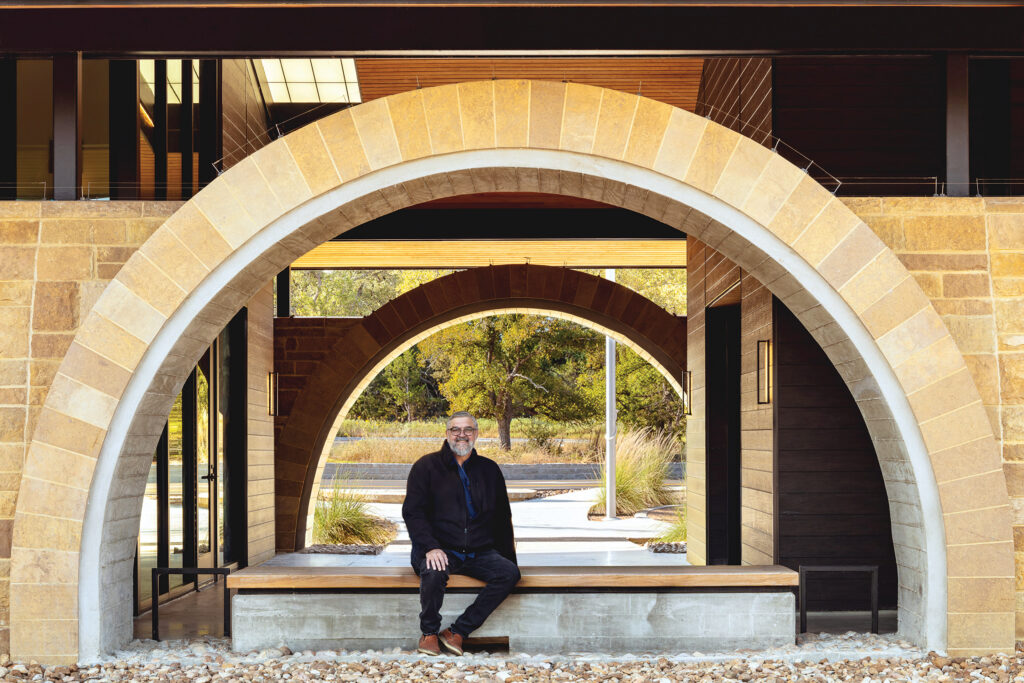


Supporting Ecological Evolution in the Anthropocene
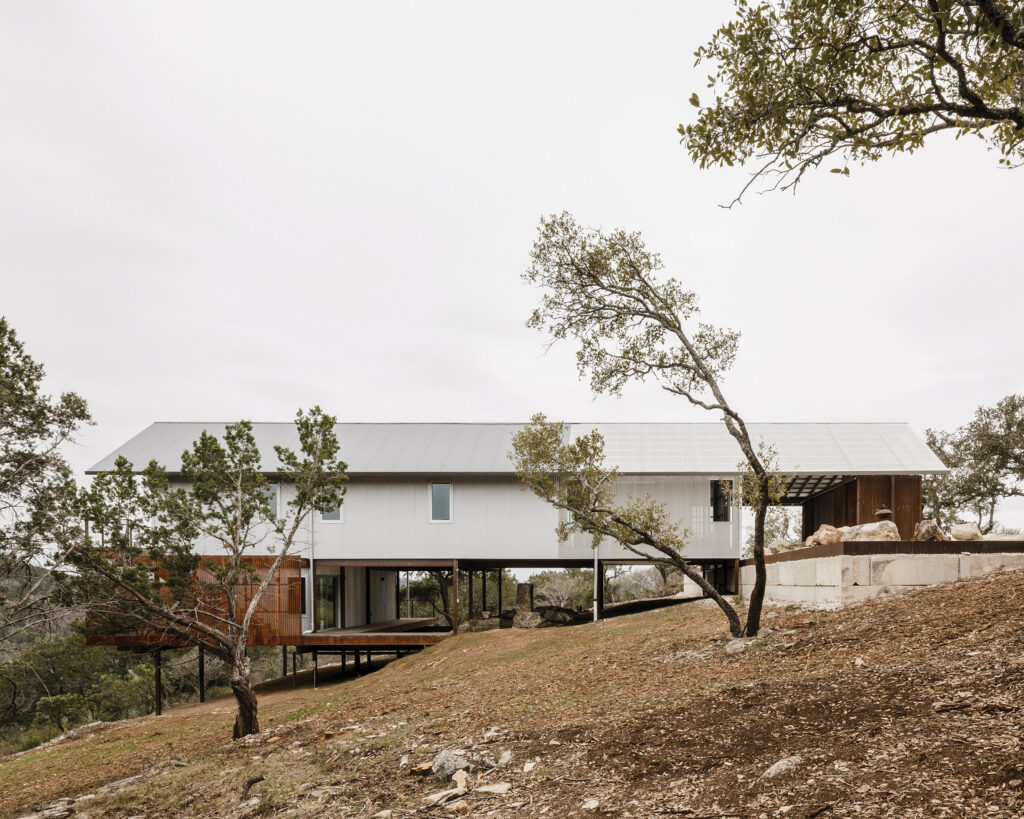
A Home Designed for the Decades
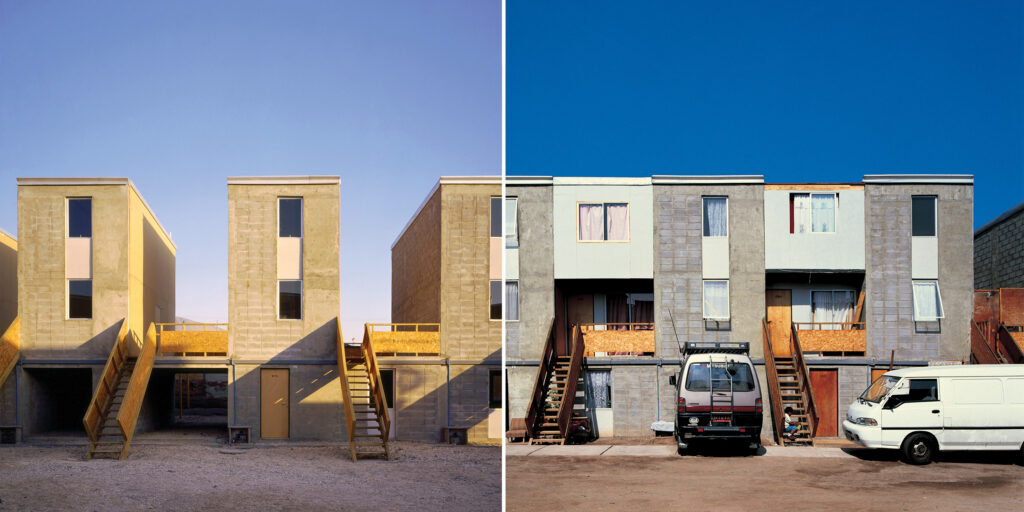
An Argument for Creative Reuse Over Preservation

A Historic Structure Updated for Next-Gen Commerce
Expanding a 1930s Bungalow for a Modern Family
Evolving the Profession for a Changing World

A Houston Garage Remade as a Culinary Destination

Adaptive Reuse at Pullman Market

Building With Fruit Waste Matter

Oblique Experiments
Igor Siddiqui
Applied Research & Design, 2025

The Type V City: Codifying Material Inequity in Urban America
Jeana Ripple
University of Texas Press, 2025

These new LED lighting fixtures for spaces from tabletops to stairwells offer flexible illumination for residential and commercial spaces.