Mar 17, 2026
In a profession defined by change, gathering is not optional—it is essential. It is how we learn from one another,…

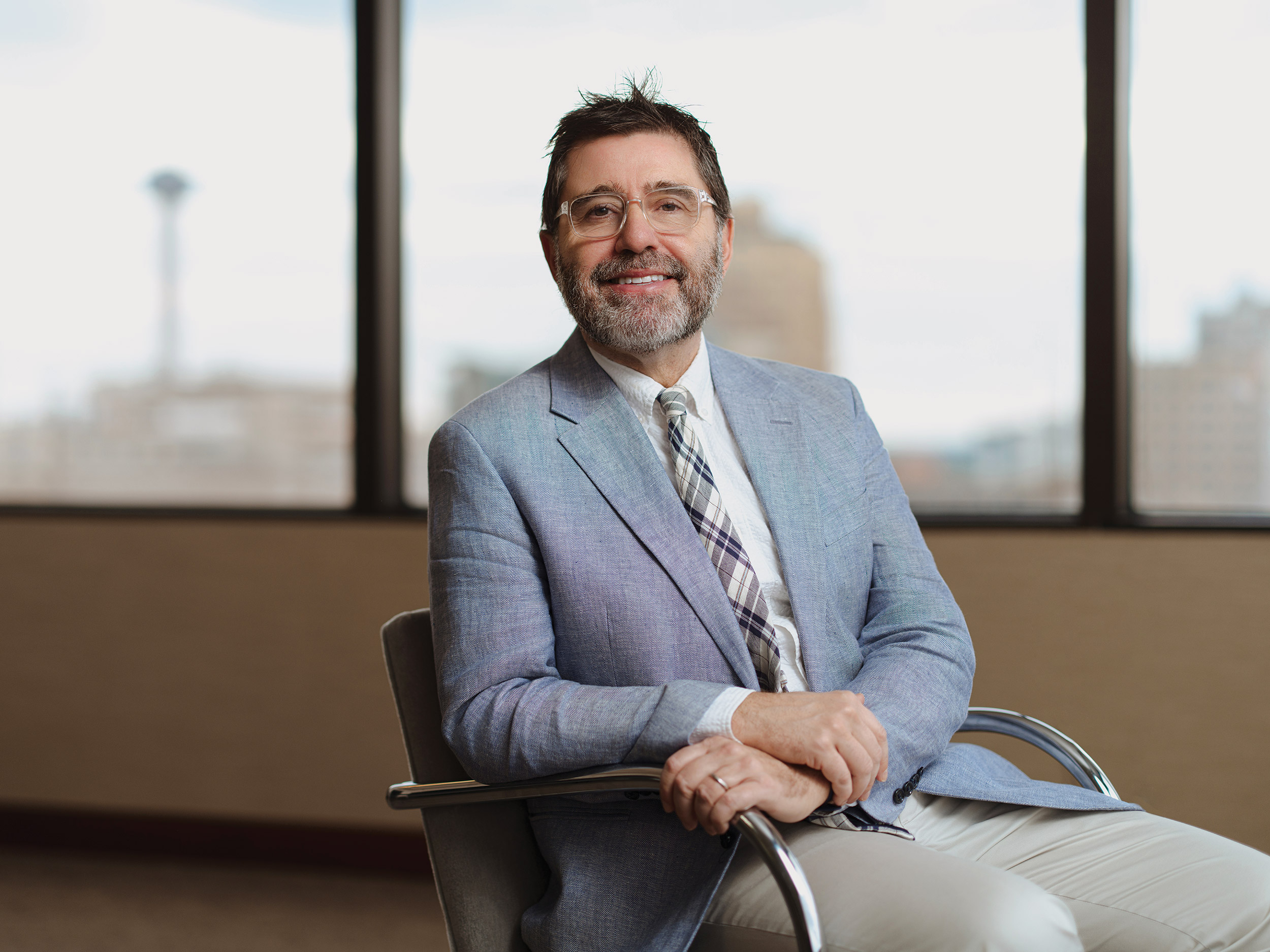
Recently, architectural historian Stephen Fox spoke with Dr. Michelangelo Sabatino, Hon. FRAIC. Sabatino is the director of the School of Architecture + Planning at the University of Texas at San Antonio’s Klesse College of Engineering and Integrated Design and the school’s Roland K. Blumberg Endowed Professor in Architecture. He is a publicly engaged architectural historian, curator, and preservationist whose research and writing focuses on canonical as well as overlooked episodes of modern architecture and the built environment.
For over a decade, Sabatino was a professor of architectural history and preservation at the Illinois Institute of Technology (IIT) College of Architecture, where he directed the PhD program and was the inaugural John Vinci Distinguished Research Fellow. Sabatino’s first book, Pride in Modesty: Modernist Architecture and the Vernacular Tradition in Italy (2010), won multiple awards, including the Chicago-based Society of Architectural Historians’ Alice Davis Hitchcock Award. Recent books include The Edith Farnsworth House: Architecture, Preservation, Culture (2024) and The Global Turn: Six Journeys of Modern Architecture and the City, 1945–1989 (with Tom Avermaete, 2025).
Stephen Fox: What attracted you to the position of director of UT San Antonio’s School of Architecture + Planning? What are your goals for the near future?
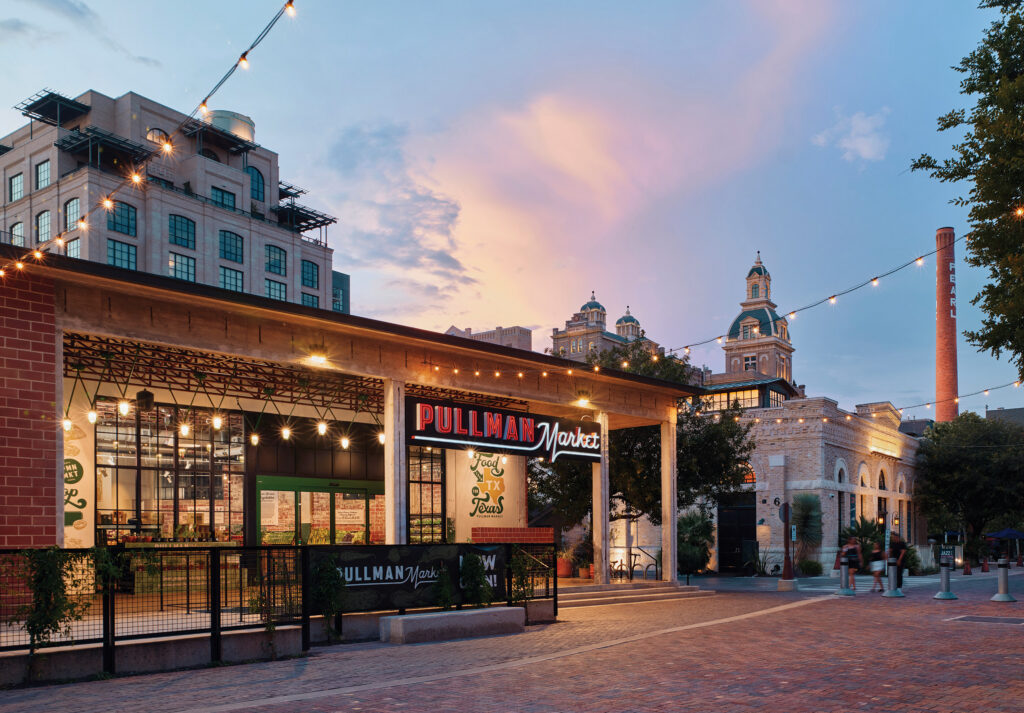
Michelangelo Sabatino: Having first trained as an architect, preservationist, and historian in Venice, Italy, I was attracted to San Antonio because it is among the oldest cities in the US and even has a UNESCO World Heritage Site. Twentieth-century architects in San Antonio—starting with O’Neil Ford, who moved here in the late 1930s to work on the restoration of La Villita—have a distinctive track record of engaging with the past in creative ways. Take the fact that many of our nationally recognized firms, such as Lake Flato, Overland Partners, and Michael G. Imber Architects, operate their studios in existing buildings. Some of San Antonio’s most important destinations—the Pearl District and the San Antonio Museum of Art—are adaptive reuse projects. Our School of Architecture + Planning has recently relocated to a tower designed in the early 1980s by Marmon Mok. It’s located on the River Walk, adjacent to the former Ursuline Academy and Ricardo Legorreta’s iconic San Antonio Central Library. Our new location at One Riverwalk Place is part of an adaptive reuse tradition that makes this Texan city special. It’s a manifesto building!
Our move to the heart of the city is part of a broader strategy of the University of Texas at San Antonio spearheaded in recent years by our visionary president, Taylor Eighmy, and senior vice president, Veronica Salazar. In addition to our building, which is part of a downtown campus anchored by the former Southwest School of Art, such new additions as San Pedro I and II [by Overland Partners] are part of UTSA’s important contribution to the current and future economic prosperity of the city. It is worth noting that following a recent merger with UT Health, UT San Antonio is now Texas’s third-largest public research university.
“Even as we can learn from the best buildings and sites around the globe, I believe in the importance of a place-based educational model that uses our own backyard to test ideas.”
San Antonio has a penchant for adapting historic buildings to new uses. But it also looks to the future by commissioning ambitious projects, such as the Robert L. B. Tobin Land Bridge that connects both sides of the Phil Hardberger Park Conservancy. It’s worth remembering that in recent years, the University of Texas at San Antonio, whose main campus on the North Side was designed by Ford, Powell & Carson and Bartlett Cocke and Associates in the late 1960s, has invested heavily in new buildings downtown. Additionally, several large-scale private/public developments, such as Project Marvel, centered around a new arena for the San Antonio Spurs and a new ballpark for the San Antonio Missions, stand to transform downtown even further in the next few years. At this juncture in time, when so much is at stake for the city, it is essential that the Klesse College of Engineering and Integrated Design’s School of Architecture + Planning facilitates dialogue between different stakeholders while educating future graduates who will contribute their expertise to the process of transforming the city through design and research.
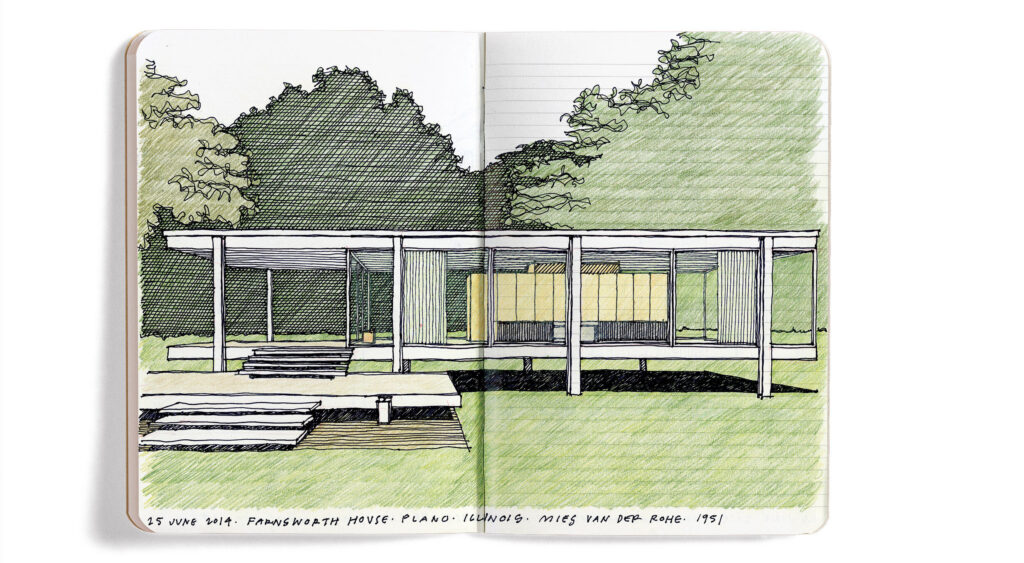
Having moved from the Illinois Institute of Technology in Chicago (known worldwide for its Mies van der Rohe–designed midcentury campus), what opportunities do you believe UT San Antonio and the city are currently facing? How might your school respond?
I am a first-generation student; my parents, who were immigrants, attended neither university nor high school. Illinois Tech opened in the fall of 1893 on Chicago’s South Side to train first-generation students. I am aware of how education can transform underserved young people. Since its founding in 1969, UT San Antonio has promoted access, and it continues to do so as it became the third largest R1 research university in Texas after merging with UT Health. As part of the broader mission of the university, our School of Architecture + Planning seeks to train future architects and planners from a variety of backgrounds. For instance, we have historically admitted large numbers of Hispanic students from San Antonio, South Texas, and the Rio Grande Valley.
San Antonio is among the fastest-growing cities in the US. It requires leadership in formulating the built environment, especially in relation to housing and transportation. As you move farther south toward the border, you encounter other conditions that require architecture and planning professionals. One example: In recent years our urban and regional planning faculty have addressed the rise of “heat islands” on San Antonio’s predominantly Hispanic West Side and have worked with city leaders to find ways to mitigate these health-related challenges. Since moving to our central urban location at One Riverwalk Place, our students experience firsthand the challenges of homelessness because San Antonio has a significant homeless population.
In addition to your time as interim dean of IIT’s College of Architecture, you have focused for most of your academic career primarily on writing books about 20th-century architects in Europe and the Americas. What prompted you to take on this very different role of directing a school of architecture and planning?
I came to San Antonio with the hope of building a “school” in the most profound sense of what this type of project entails. Together with my faculty, we plan to hire a number of new faculty members who can help achieve this goal. The challenge of architectural education today is that there are plenty of schools of architecture but few “schools of thought”—that is, places where students and faculty make time to think and discuss so they can act resourcefully. The curriculum of many architecture schools today offers some of everything, so it ends up being more of a “buffet-style” approach than a “sit-down” meal, so to speak. I am not suggesting everyone should be teaching the same thing, but it seems to me that coalescing around shared values about what the built environment could and should look like is a worthwhile proposition. Think about what Mies achieved at IIT in the 1950s, or Alvin Boyarsky at the Architectural Association in London in the 1970s and ’80s, or John Hejduk at Cooper Union in the 1980s and ’90s. While I’m not a neo-traditionalist, I do believe that students should have a deep knowledge of the histories of the global built environment in order to address the flaws of a certain type of object-driven modern architecture that tends to emphasize form and space over place. I am also interested in training future architects and planners whose work is contextual and who seek collaboration with landscape architects and urban designers. Even as we can learn from the best buildings and sites around the globe, I believe in the importance of a place-based educational model that uses our own backyard to test ideas. I also believe in working toward a greater integration of architecture with other arts. Not too long ago, architects and artists learned side by side—take, for example, Paul Rudolph’s Art and Architecture Building at Yale University.
I have followed a place-based approach in my own scholarship. Over the years, I have lived in three different countries and six different cities, including Houston. The subject matters that I chose to address resulted from where I worked at the time. My first book, Pride in Modesty: Modernist Architecture and the Vernacular Tradition in Italy was my most autobiographical. It came directly out of my experience of growing up with Italian parents in Canada, and of subsequently living and studying in Italy. I have written other books about the Mediterranean and Italian architects. My co-authored books about different parts of the US, such as Making Houston Modern: The Life and Architecture of Howard Barnstone and Modern in the Middle: Chicago Houses 1929-1975, responded to the places I was inhabiting at the time. I’m now working on a collaborative book about the King William neighborhood, San Antonio’s first city-designated historic district (forthcoming from Texas Tech University Press). My partner and I live in King William and do a very non-Texan thing: We walk to work. I am also planning to write a book directed primarily to students about why I believe that it’s important to embrace a place-based educational model in an increasingly globalized world.
As one of the oldest cities in Texas, San Antonio is rich with buildings of all sorts. Who are your favorite architects? Which are your favorite buildings and neighborhoods so far? What buildings do you think your students should be most familiar with?
I admired O’Neil Ford long before I came to San Antonio. Revisiting Trinity University, I am still awed by how deftly he and his collaborators sited the buildings in a former quarry and how he united buildings on the campus with his use of siting, landscape, circulation, and materials. What I also admire about O’Neil Ford (whose professional studio was in King William for two decades) is his profile as a “generalist” architect. Ford moved from restoration projects to adaptive reuse to new construction while maintaining a remarkable degree of design sensitivity. Ford consistently collaborated with artisans and designers, such as his brother, Lynn, the ceramicists and fabric artists Martha and Beaumont Mood, landscape architects Marie and Arthur Berger and Stewart King, and urban planner Sam Zisman. I think students today can learn a lot from this kind of flexible, collaborative approach.
Additionally, I am a big admirer of Mission San José because of its powerful use of stone (the barrel vaults of the church and the granary, for example) and the way the church and convento are integrated with the land by the thick perimeter walls, which were also used as residences. Casa Navarro downtown is an important lesson in how vernacular architecture can be used to create domestic environments in which buildings and the land are integrated in beautiful, but also useful, ways. The River Walk is a truly remarkable combination of architecture, landscape, and infrastructure. I am amazed at how you can descend from the street level to the River Walk and feel like you’re in another city. Finally, I find both Ricardo Legorreta’s Central Library and David Adjaye’s Ruby City to be remarkably sophisticated buildings with their complex sections and their lively embrace of different intensities of red. These two buildings are tangible proof that modern architecture in San Antonio doesn’t have to be about steel and glass.
Texas has eight architecture schools (Texas A&M, UT Austin, UT Arlington, UT San Antonio, Rice, Texas Tech, University of Houston, and Prairie View A&M). What does UT San Antonio’s School of Architecture + Planning share in common with its Texan peers? What sets it apart?
We are immensely lucky to have so many schools in Texas. What sets our School of Architecture + Planning apart is the fact that we are located right in the heart of San Antonio. Such major firms as Lake Flato, Gensler, and Ford, Powell & Carson are within walking distance, so we have an amazing opportunity to serve and interact with the professional community. We are a public university; we have an obligation to share and generate knowledge together. I would love to see more collaboration among the different schools. For example, my colleague at the University of Houston, Rafael Longoria, AIA, and I have edited a new issue of the Journal of Architectural Education entitled Educating Civic Architects (Winter 2025). We started by citing a study by Ernest L. Boyer and Lee D. Mitgang commissioned in the mid 1990s by the Association of Collegiate Schools of Architecture and the American Institute of Architects. Their recommendation is one that the School of Architecture + Planning, under my leadership, continues take to heart: The world needs more scholars and practitioners not only educated to prosper in their own careers but also prepared to fulfill social and civic obligations through the genius of design.
Stephen Fox is an architectural historian and a Fellow of the Anchorage Foundation of Texas.
Supporting Ecological Evolution in the Anthropocene
A Home Designed for the Decades
An Argument for Creative Reuse Over Preservation
A Historic Structure Updated for Next-Gen Commerce
Expanding a 1930s Bungalow for a Modern Family
Evolving the Profession for a Changing World
A Houston Garage Remade as a Culinary Destination
Adaptive Reuse at Pullman Market

Building With Fruit Waste Matter

Oblique Experiments
Igor Siddiqui
Applied Research & Design, 2025
The Type V City: Codifying Material Inequity in Urban America
Jeana Ripple
University of Texas Press, 2025

These new LED lighting fixtures for spaces from tabletops to stairwells offer flexible illumination for residential and commercial spaces.