Mar 17, 2026
In a profession defined by change, gathering is not optional—it is essential. It is how we learn from one another,…
Evolving the Profession for a Changing World
I entered the architecture profession inspired by the idea that I could design and make buildings. My father was an engineer who became a contractor, and he had a surprisingly positive idea of architects, believing them to be gifted, intelligent people who made wonderful things happen. As a younger person, I never thought of architects as doing anything beyond creating building designs, nor did I imagine a broader social or humanitarian agenda. I cannot remember any time in school when anything other than design was presented as what we did, except for the preponderance of discussion about energy conservation and what we would now call solar design. It was the 1970s, and we were all working through the trauma of the Arab oil embargo and the fall of the Shah, and the way those events significantly impacted the American economy.
Not long after I left Auburn, the great Samuel Mockbee, FAIA, an AIA Gold Medal recipient, founded the Rural Studio and became the first widely recognized architect to do projects for folks who were not traditionally our clients—in other words, those who could not afford architectural services. The Rural Studio remains a recognized leader in social responsibility and a powerful example of how our profession can make significant strides toward improving the world. Programs like it, in many different forms and guises, have proliferated and are seemingly everywhere.
In my role as an adjunct professor at the University of Texas at Arlington, I see and understand the students around me and their interests and concerns. The belief that architecture should be engaged in helping the larger community is integral to how students envision using their skills. Many express a desire for a greater sense of purpose than simply designing and building for private or government clients. That set of beliefs—and the understanding of how architects can bring value beyond traditional practice—is the future.
This past summer, I (and I imagine many others) received an email from Angela Brooks, FAIA, president of the AIA Gold Medal–winning firm Brooks + Scarpa, sharing a series of videos developed by the AIA Strategic Council as part of its initiative investigating the idea of an “Architect of the Future.” The initiative proposes a new set of paradigms that speculate on how we as architects might be practicing in 2075. As I watched the videos, I was aware that I will be long gone by then—but many of you, including my own children, will be in your later careers and will be the vanguard of our future profession.
The videos provide an abundance of material to absorb, ponder, and understand. They present narratives by several fictional personas, each participating in the architecture profession in roles very different from my own or that of my peers. To fully appreciate them, I had to set aside my own opinions and consider the optimism and excitement of those who developed these ideas.
In total, seven personas present and discuss their roles as architects in the future. They are introduced as prompts to spark conversation and to suggest possible ways that architects might engage in practice. In the order in which they appear, they introduce themselves as: a public architect, designing with a community rather than for it; an extraterrestrial architect, designing for extreme places where no human has lived before; an architect-builder, part of a team working across traditional boundaries with a focus on equity and collaboration; an autonomous studio architect, creating spaces of clarity and care focused on what it means to be human; a traditional architect, shaping architecture and cities for people rather than cars and reclaiming highway corridors; an architect-educator, testing and iterating ideas across ecosystems and planets; and a digital-places architect, creating immersive environments for people recovering from trauma, grounded in evidence-based approaches to healing.
“Many express a desire for a greater sense of purpose…. That set of beliefs—and the understanding of how architects can bring value beyond traditional practice—is the future.”
These personas are smart, attractive, well-spoken, and diverse; they posit a world where everyone is welcome, valued, and committed to prioritizing the common good. It’s a veritable Star Trek episode of optimistic humans making the universe right. These sentiments are noble and appreciated as a future suggested by AIA. Their short video introductions, spoken directly to the viewer, emphasize that their work is supported by a broad group of collaborators and prioritizes the use of data, circularity, architecture as a civic act, the promotion of well-being, and opportunities for pro bono efforts. The messages are cheerful and upbeat, suggesting a more inclusive and supportive future in which people of goodwill work together to undo the problems they inherit from those who came before them, including outdated attitudes about the profession. They see practice as directly addressing pollution, environmental degradation, and displacement caused by environmental and digital forces, with a realignment of values in which healing and equity are of primary concern.
Taken together, these videos have a “New Frontier” vibe that reminds me of the optimism so characteristic of the late 1950s and early ’60s—the belief in what the future could hold and how it might feel. That spirit is perhaps best captured by Donald Fagen’s album The Nightfly. It was the upbeat, positive world of my childhood, filled with rockets to the moon, cities below the sea, the benefits of the Green Revolution (in food, not energy), an expanding economy, and advancements in Civil Rights. That future was largely sidetracked by the Cold War, Vietnam, and the subsequent economic havoc caused by the energy crisis, and the post-Reagan future looked—and became—much different.
As a child of those times, who is often nostalgic for the “can-do” spirit of postwar America, the videos are thrilling to watch. The ideas presented for the profession, and for how it might emerge as a more collaborative and community-focused way of working, are exciting. I was not threatened at all by them, as I imagine some of my peers might be, perhaps because I know that future is not mine to inhabit or shape. Sadly, the videos do not look like my world, nor are they entirely comprehensible as a model for the next 25 years I may still have on earth—hopefully many of those years still spent in practice.
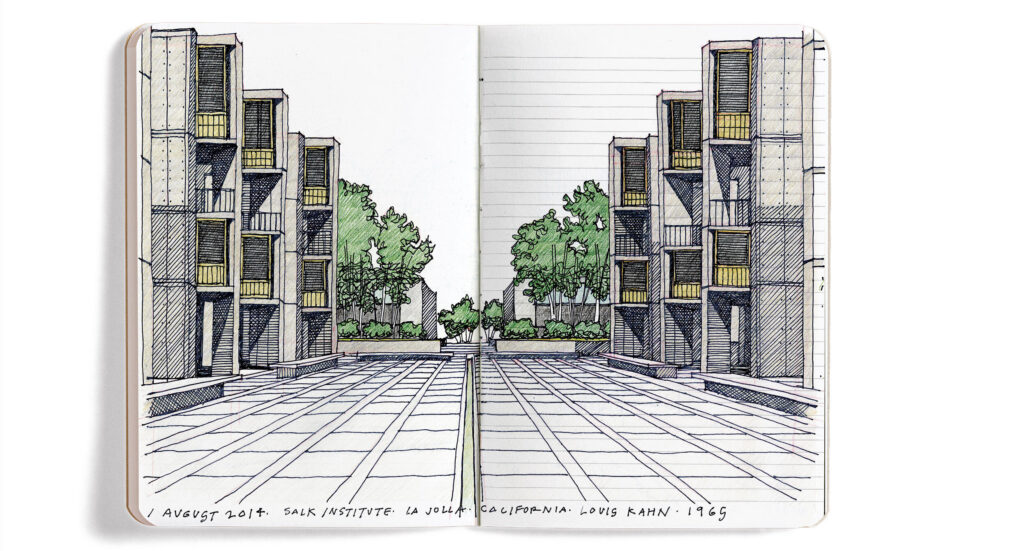
When I was a student in the 1970s, architecture was in a period of transition, and in school I had a front-row seat to all the debate (and acrimony). My professors were an intriguing cross section of people shaped by—and inspired by—the immediate postwar era and its embrace of the heroic architecture championed by the four “Masters” (Wright, Le Corbusier, Mies, and Gropius). They were loosely followed by second-wave modernist adherents (disciples of Kahn and Rudolph), as well as by the completely apostate younger faculty who stood at the vanguard of Postmodernism. It was a heady and often conflicting mix of ideas—and, though they would have hated to suggest it, styles.
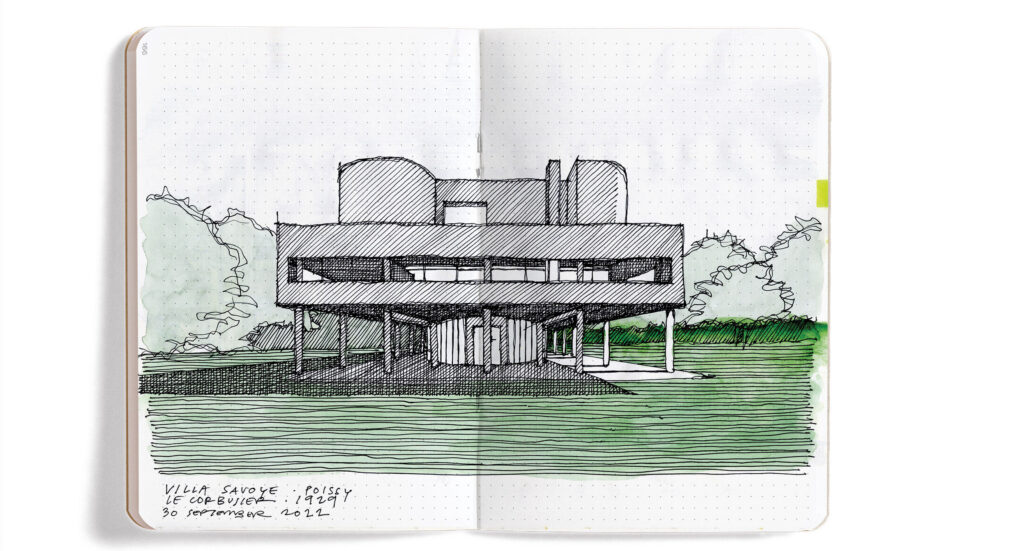
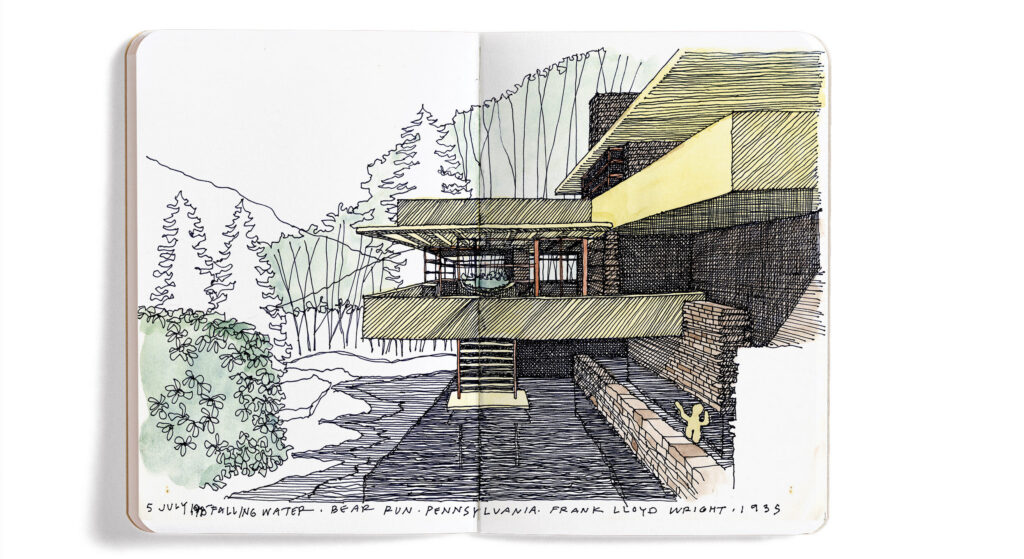
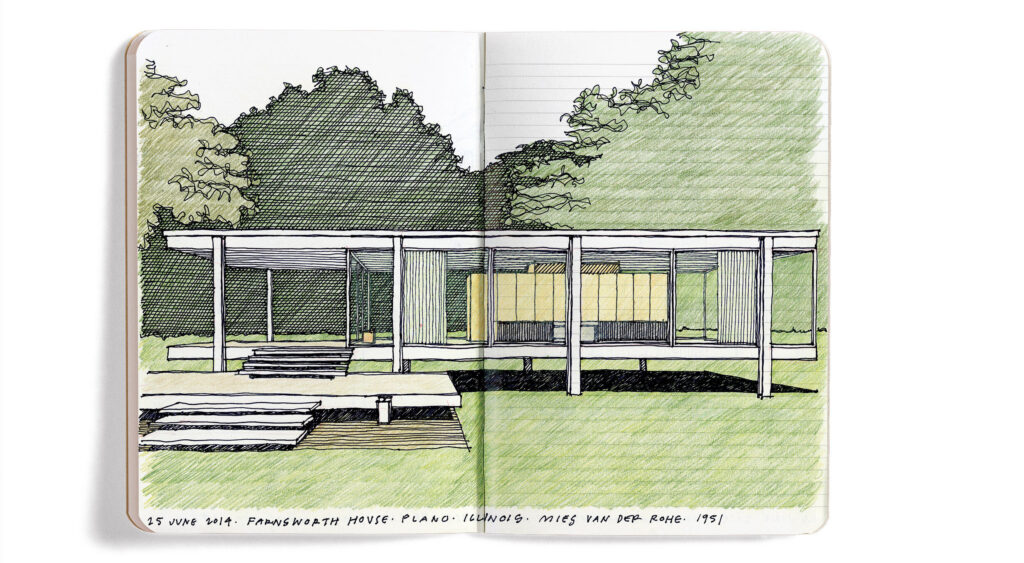
One thing drilled into us was that the work of the “Masters” was meant as a guide for the future of architecture. These projects were presented as polemical solutions to many of the ills of modern man, made manifest in the built environment. The ideas those great men espoused and articulated—and that were later boiled down to simple concepts, often artlessly copied by lesser architects—were framed as the key to an architectural future. The notion that the Villa Savoye or the Farnsworth House might serve as templates for the housing of the future was central to the thinking of Le Corbusier and Mies, even though it seems ridiculous now.
Until the energy crises and the economic turmoil they created, I believe most of the profession regarded the work of those architects as a blueprint for the future. That it was elitist proved to be a major factor in its downfall. Elitist is clearly not what the AIA is going for in the “Architect of the Future” personas and videos.
One thing nagged at me while watching the videos: Who will be the clients? This question is paired with another: Who will pay the architects doing this work? Today, we work primarily for private clients, institutions, or governments, and they usually have specific needs and narrowly defined programs. While we occasionally encounter exceptional ambitious clients, most do not prioritize broader community or environmental agendas. It falls to folks like us— concerned architects and firms—to assimilate and advocate for those more expansive agendas within our projects.
I reached out to Angela Brooks to ask whether she envisions a time when these humanistic and environmental issues are more fully integrated into our work—and whether they become necessities or mandates. I felt certain her committee’s discussions addressed these questions, but I was curious how they imagined these aspirational futures unfolding and who might drive us toward them.
“The work of the ‘Masters’ was meant as a guide for the future of architecture. These projects were presented as polemical solutions to many of the ills of modern man.”
She responded: “Yes, I see a future where our client might be expanded…. We have been hired by both small cities, non-profit art galleries, schools (both private and public), and one of us architects may run for a political office … or be hired by a council member or mayor (i.e., not the ‘city’). Many times it is our firm that proposes the ‘project’ which may be a zoning study rather than a building….I really wanted to work on contracts and fees, but it seems like it is all related.”
When I speculate on the future and what it might hold for our profession, I can only interrogate my past. Did I ever imagine that the world I would inhabit as an architect would be so different from the one I knew in school in the 1970s? At that time, I simply wanted to design and be part of the process of making buildings. It was an era of economic retrenchment in the United States, the first since World War II, and the institutions around me were in flux, engendering challenges that affected the mood and optimism of daily life. Graduating in 1981, I came to Texas primarily because it was the only place I could find a job. It worked out well for me, and I have no regrets, but Texas became my home because of opportunity, not because of any sense of destiny or desirability of its geography.
I have lived my life in a place where resource extraction has fueled the economy and provided opportunity for me—and for my clients. The politics of the state acknowledge, and in some ways demand, a future where this will always be true. Was I a coward to come here, espouse a liberal set of social values, and express a preference for sustainability in a place where my financial well-being is tied to a very carbon-present economy?
I do know that the current political environment in our country trends toward selfishness and denial. Anything ambitious—ending poverty, improving educational outcomes, or supporting environmental remediation—is, for the most part, not a present priority. We do not value a future in which going into space or undertaking significant scientific endeavors is anything more than a topic of discussion, and we deny the resources required for the research and exploration needed to make meaningful leaps in almost any area of human concern.
It seems to me that the science of computer and digital technology—certainly the growing importance of AI—is fundamentally different from that of the life sciences focused on health and well-being, which seemed to power discovery in my youth. I am hopeful that somewhere there is a young (and financially secure and supported) Jonas Salk striving to help humanity adapt to climate change and a carbon-intense atmosphere. Maybe that will change. I believe we all know, at least privately, that it must.
That the AIA has articulated a vision of who we, as architects, might become in the future gives me comfort and hope. If the AIA’s speculations are correct, my peers who are in practice now, as well as those whose careers are already well underway, will find themselves addressing these future possibilities and broadening their scope of work to include a range of concerns not normally considered our responsibility. The younger architects among us need to get to it; there is a lot of work to be done.
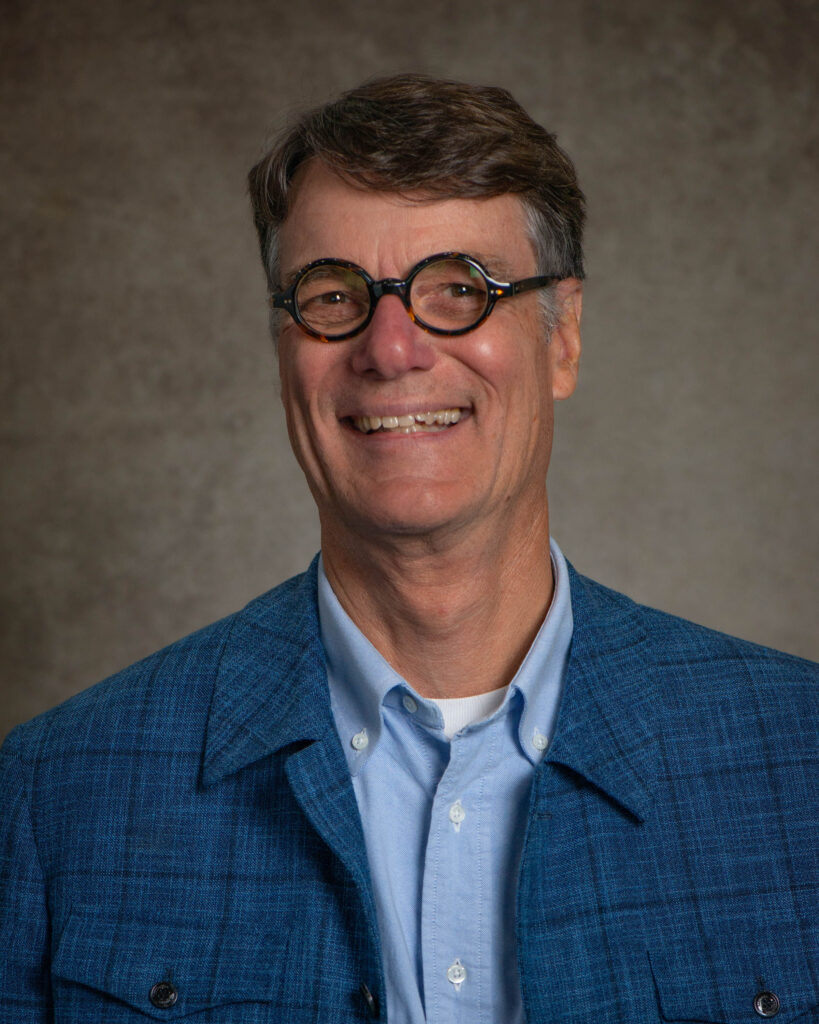
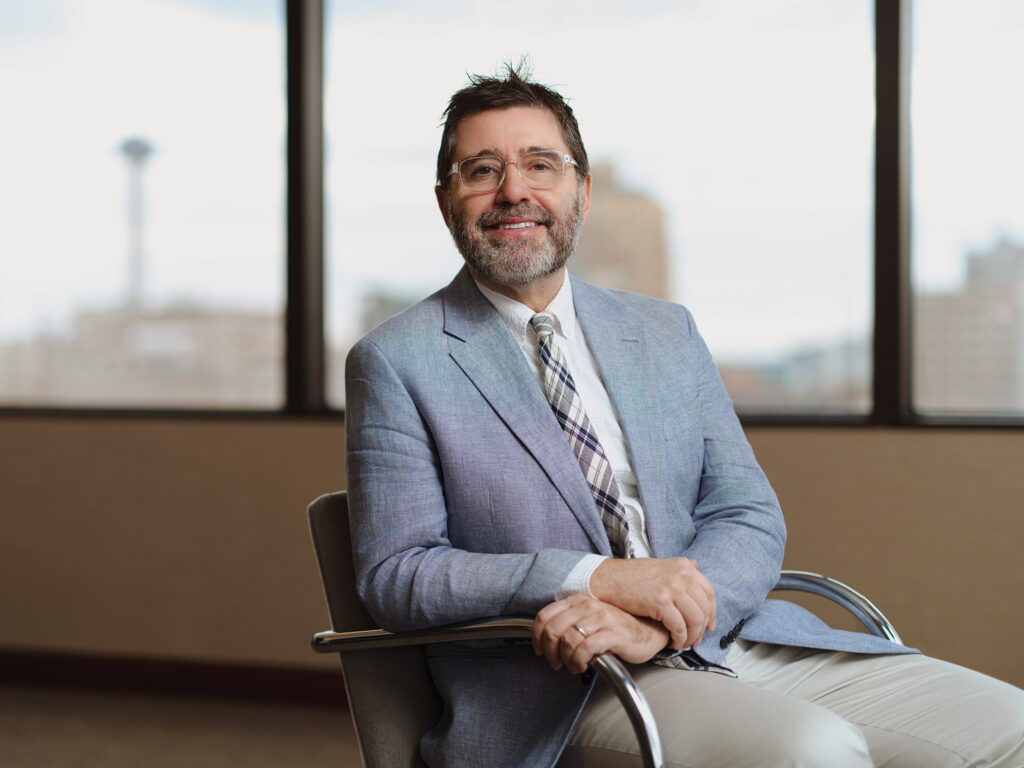
Michael Malone, FAIA, is the founding principal of Michael Malone Architects and an adjunct assistant professor at the School of Architecture at the University of Texas at Arlington.
Supporting Ecological Evolution in the Anthropocene
A Home Designed for the Decades
An Argument for Creative Reuse Over Preservation
A Historic Structure Updated for Next-Gen Commerce
Expanding a 1930s Bungalow for a Modern Family
A Houston Garage Remade as a Culinary Destination
Adaptive Reuse at Pullman Market

Building With Fruit Waste Matter

Oblique Experiments
Igor Siddiqui
Applied Research & Design, 2025
The Type V City: Codifying Material Inequity in Urban America
Jeana Ripple
University of Texas Press, 2025

These new LED lighting fixtures for spaces from tabletops to stairwells offer flexible illumination for residential and commercial spaces.