Mar 17, 2026
In a profession defined by change, gathering is not optional—it is essential. It is how we learn from one another,…
Building With Fruit Waste Matter
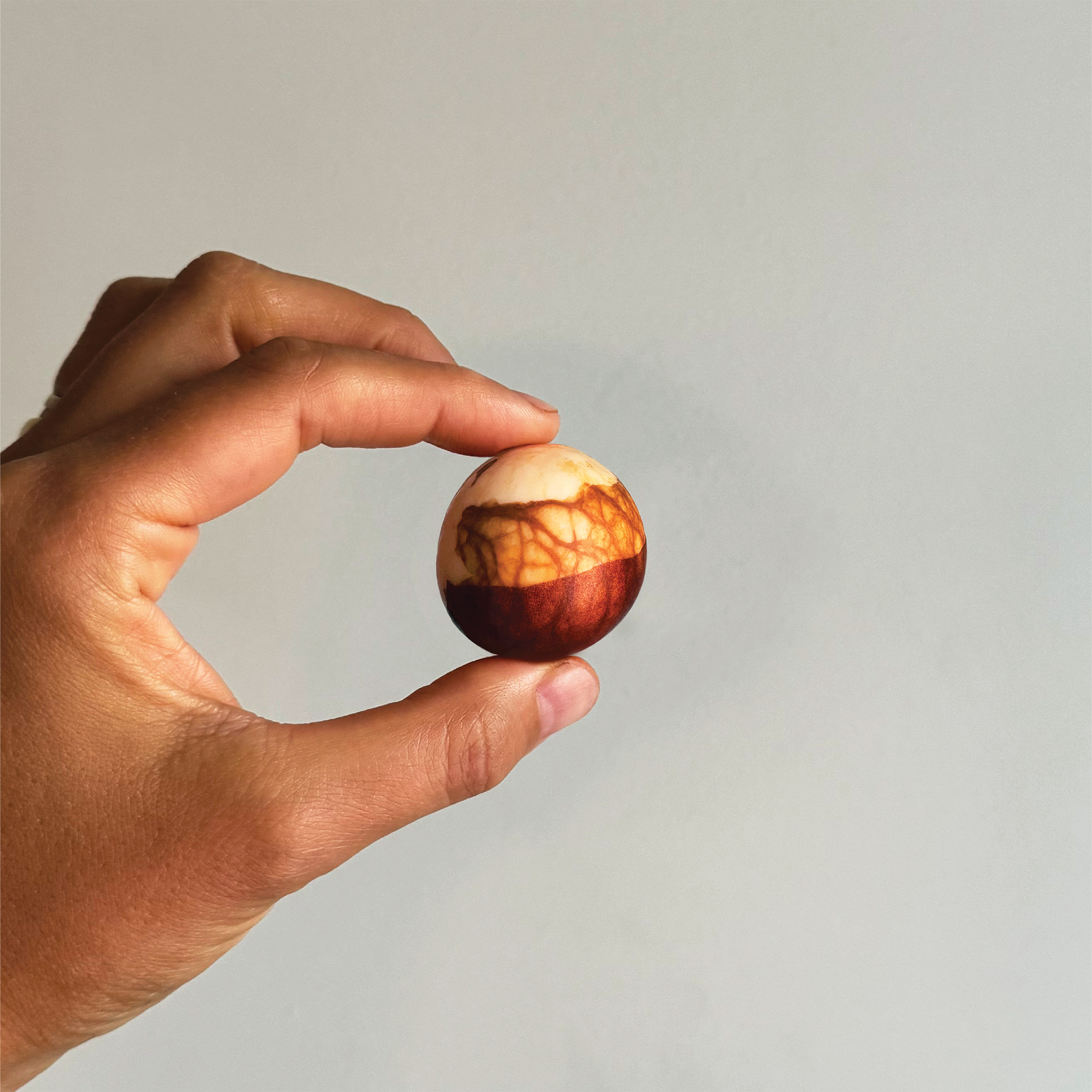
I am a sister to Mother Earth. I foster her fruit remnants, awakening them into a second life. In my humble kitchen, I have adopted the role of second mother to these nonhuman discards. Through my work, this matter becomes the ingredients of a new material recipe for architecture.
Our impact as inhabitants of this world has driven the extraction of sand, the cutting down of trees, the mining of stone, the contamination of soils, the production of VOCs, the spilling of chemicals, and the accumulation of microplastics in our water streams. Yet Mother Earth continues growing, continues giving, continues gifting.
Fruit plants are intrinsically designed with a propensity to grow and produce—gifts for us. What, then, is our act of reciprocity toward the Earth? Indigenous cultures carry close to their hearts the Honorable Harvest guidelines: Take only what you need and use everything you take. In her book Braiding Sweetgrass, author and Potawatomi Native Robin Wall Kimmerer writes, “By using materials as if they were a gift, and returning that gift through worthy use, we find balance.”
So I ask: How might the Honorable Harvest way of life introduce a new material framework for architecture? What does an indigenously inspired architecture look like—one that transforms culinary waste streams into a material culture? Can we create an architecture of gratitude by working with remnant food waste? By consuming and then repurposing the inedible, could tectonic matter be sourced from scraps?
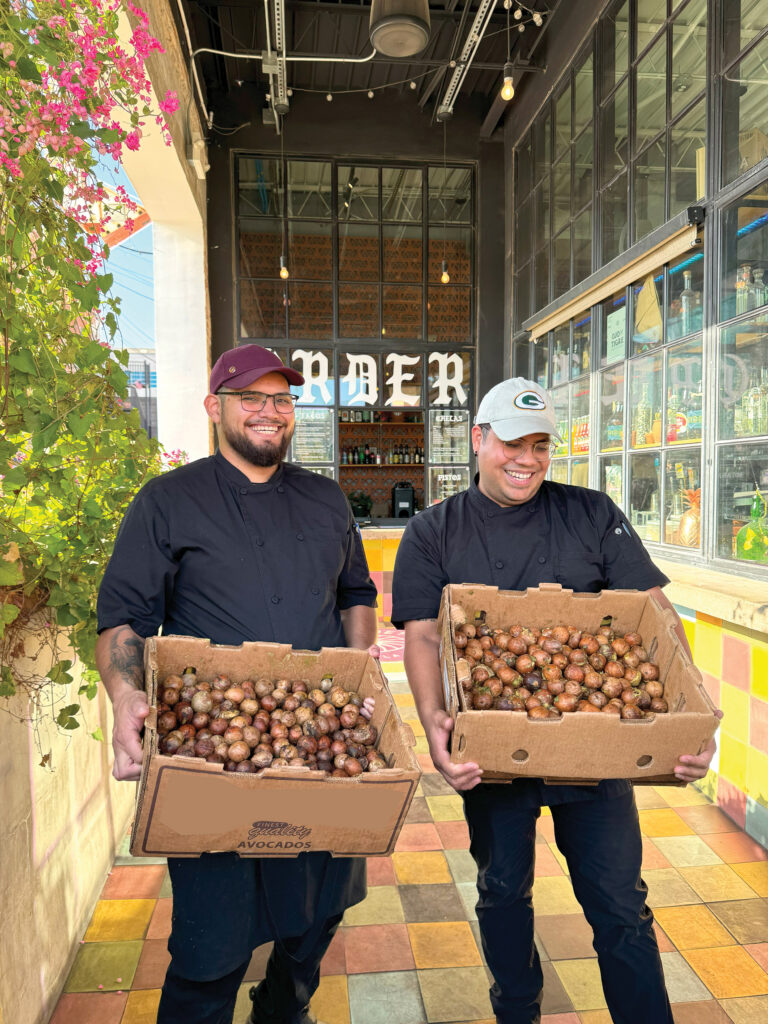
Food waste is a global issue. Approximately one-third of all food produced globally is wasted, and nearly 50 percent of harvested fruit is discarded due to their short shelf life and susceptibility to bruising. The fruit waste we generate post-consumption, however, is largely unintentional and unavoidable. In my binational city of El Paso, a single Mexican restaurant can go through eight 84-count boxes of avocados in a single weekend. Each discarded avocado seed—weighing between 10 and 60 grams—often ends up in landfills, where it decomposes anaerobically and releases methane, a potent greenhouse gas.
Process
The avocado seed brick project began in my humble kitchen after making guacamole. The sheer number and size of the discarded seeds sparked a question: How can we repurpose this waste? It was a combination of curiosity and the guilt of throwing away such a substantial volume of material that set the project in motion.
After a conversation with a close friend and co-owner of the popular El Paso restaurant Taconeta, we agreed to collaborate on this research endeavor. Their kitchen staff collected the extracted avocado seeds in boxes, which I then retrieved and processed in the lab. By sourcing seeds from this local restaurant, I found a way to work with a readily available, no-cost resource that would otherwise contribute to landfill waste.
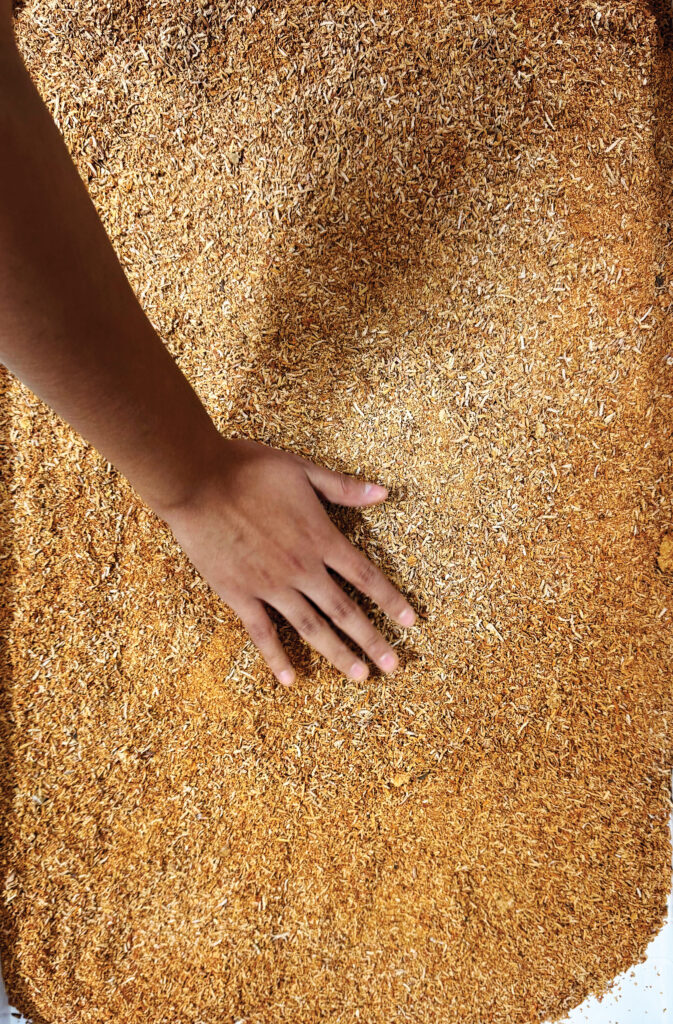
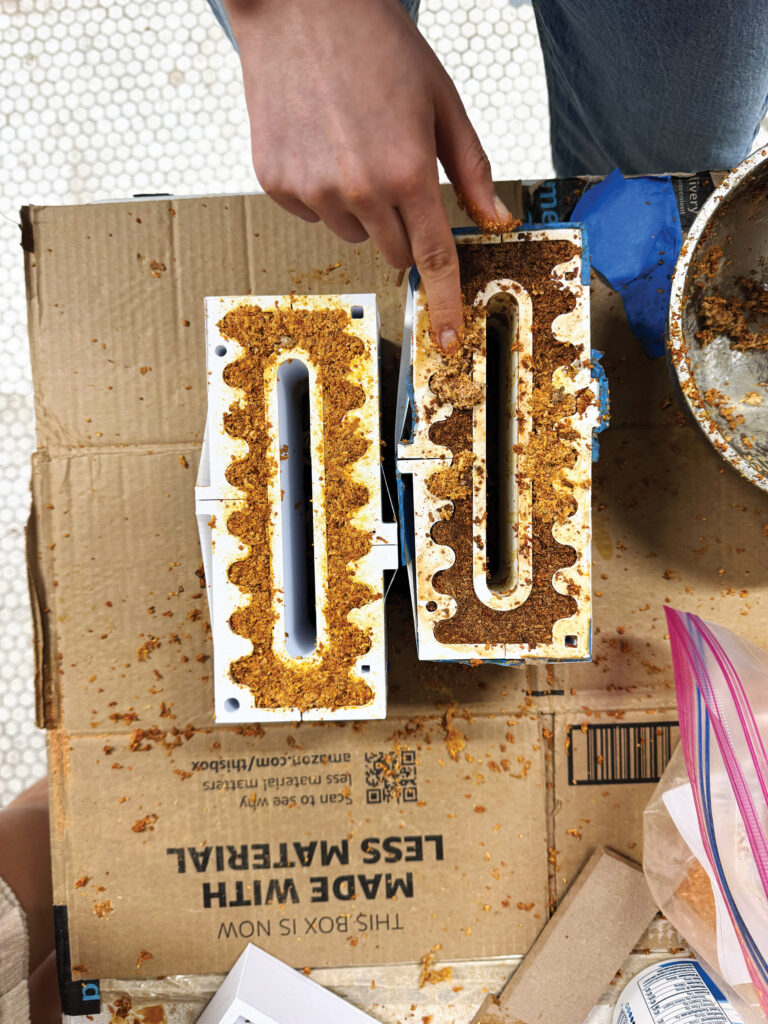
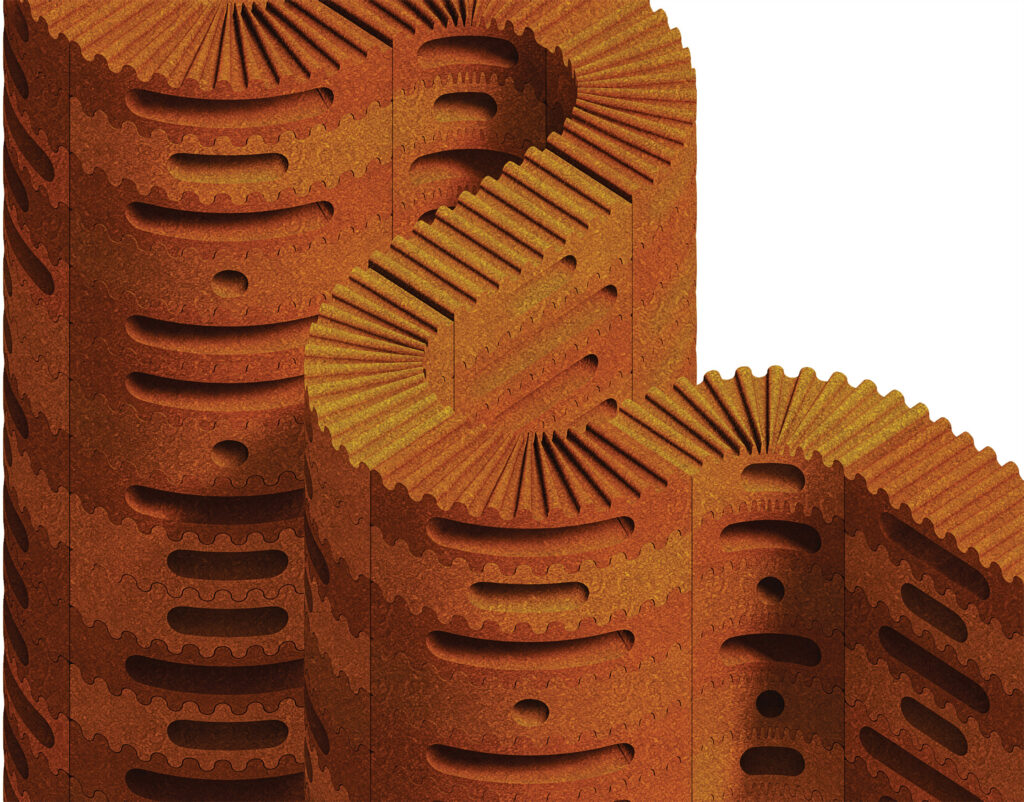
What, then, is possible with this abundance of avocado waste? Over the past year and a half, I have dissected, analyzed, and fabricated with avocado seeds. The process of transforming these seeds was both intuitive and experimental. After carefully cleaning each seed, I began examining the material’s friability through various forms of manipulation. Carbohydrates make up approximately 65 percent of an avocado seed’s mass, giving it a molecular makeup similar to that of a potato. Anyone who has grated a peeled potato knows the effortlessness of that action. Using a low-tech, manual kitchen box grater, I processed each seed. The material was then sun-dried, becoming lightweight, starchy particles that could be compacted and shaped within molds when mixed with an adhesive.
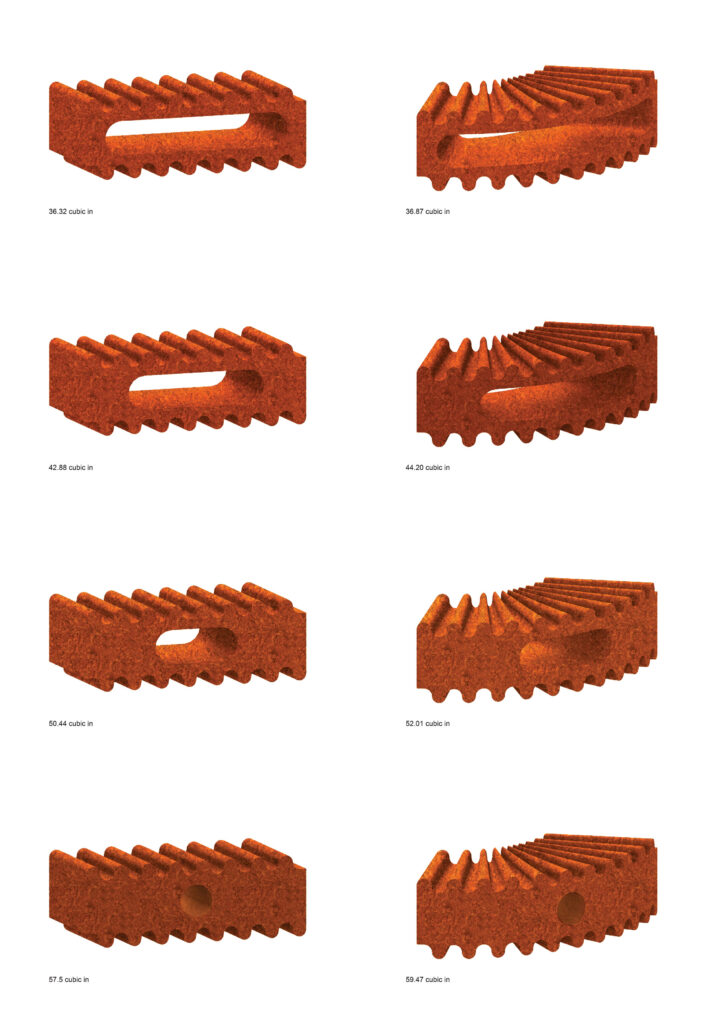
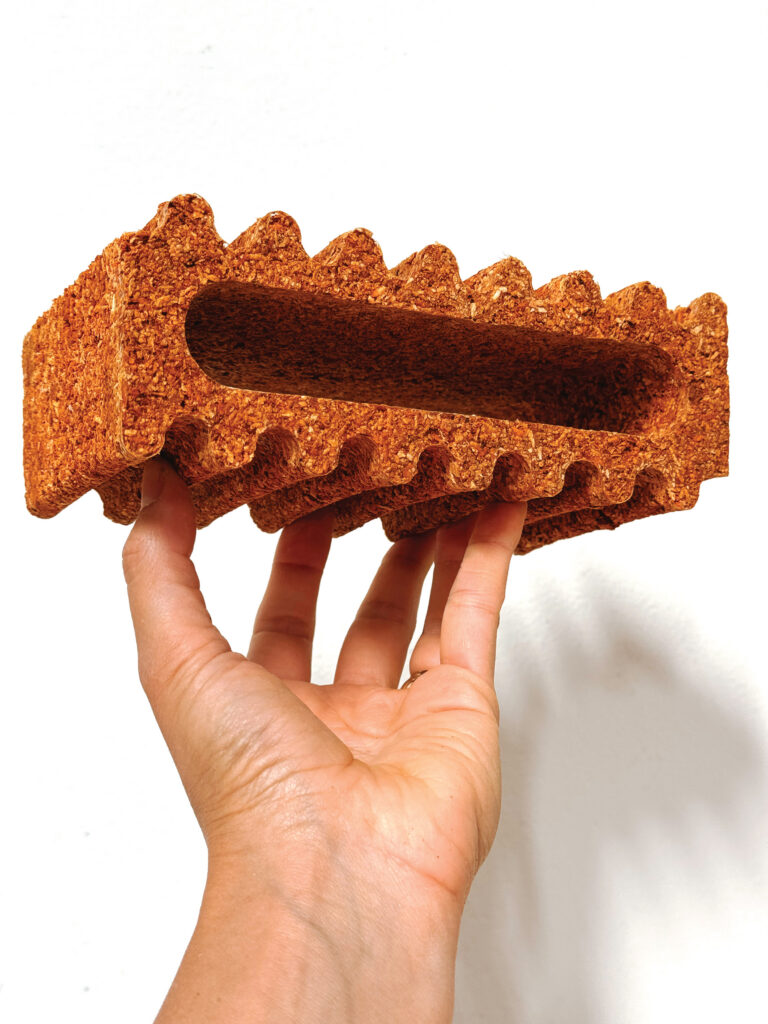
The avocado bricks were designed as linear and curved elements that could be arranged into a variety of wall configurations. Ridges at the top and bottom of each brick were calculated to allow modular stacking without the use of mortar. The bricks also incorporate apertures of varying sizes, ranging from smaller perforations to larger central openings. The molds used to cast the avocado particles were 3D printed in in various segments with polylactic acid (PLA) material to allow for easy removal.
Conclusion
The avocado seed brick project is rooted in reciprocity, respect, regeneration, and mutual flourishing between the built environment and the natural world. What ignites my creativity is the urge to manifest an architecture that does not extract from the Earth, but instead returns to the soil—decomposing, restoring, and replenishing Mother Earth. It is a material system that gives back. Architecture as a ceremonial offering: from Earth, for Earth.
As designers and shapers of the physical world, we bear a profound responsibility to question the material life of every element we build with. The construction industry, as it stands, continues to extract from the Earth, building for linear permanence on a planet defined by cyclical renewal.
Indigenous cultures, by contrast, have long understood how to live in harmony with nature. Their wisdom invites us to reimagine architecture not as a monument to endurance, but as a temporal, responsive gesture—something that lives out its natural span and then returns to the Earth in a way that nourishes rather than depletes. What if buildings, like leaves, were designed to decompose, enrich soil, and close the loop?
At Matter Matters, we explore this vision—an architecture that does not impose, but nurtures. For every project, we aim to create materials that embody cycles of reciprocity. Currently, we are continuing to investigate how avocado seeds might be adapted for a range of applications, from hybrid composites paired with PLA-printed modular frames to architectural elements such as sheathing, cladding, panels, tiles, and flooring. This approach redefines material life cycles, moving away from extractive supply chains toward a model of reuse and regeneration—shaped by love, consciousness, and deep respect for the living systems of which we are a part.

Supporting Ecological Evolution in the Anthropocene
A Home Designed for the Decades
An Argument for Creative Reuse Over Preservation
A Historic Structure Updated for Next-Gen Commerce
Expanding a 1930s Bungalow for a Modern Family
Evolving the Profession for a Changing World
A Houston Garage Remade as a Culinary Destination
Adaptive Reuse at Pullman Market
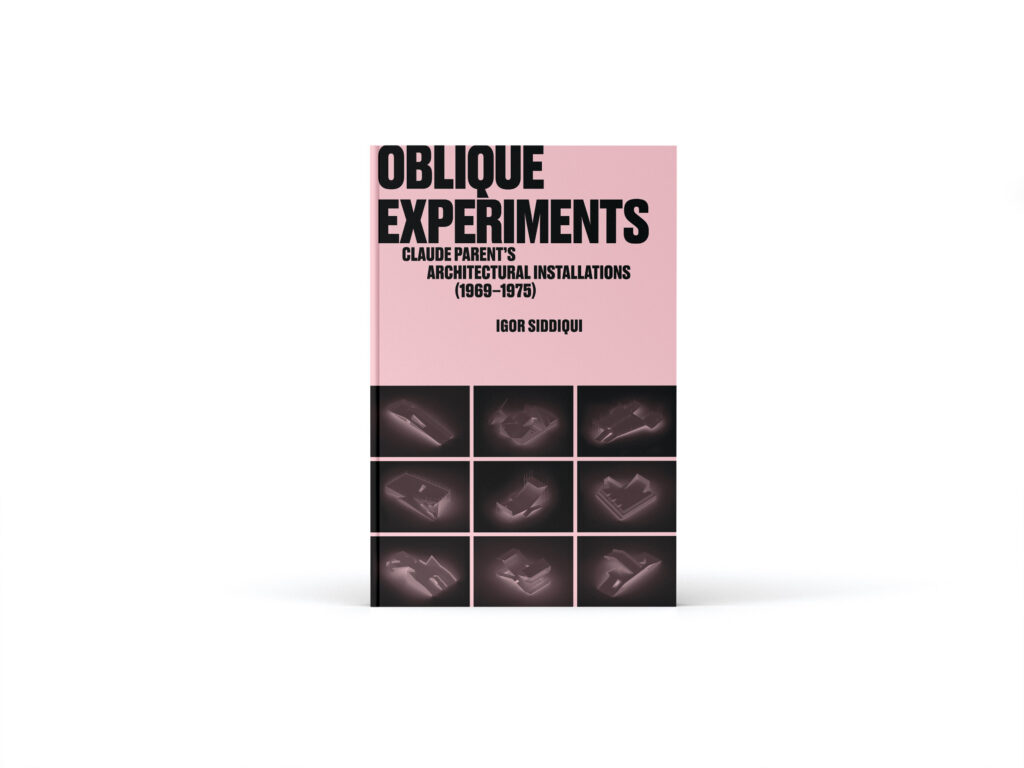
Oblique Experiments
Igor Siddiqui
Applied Research & Design, 2025
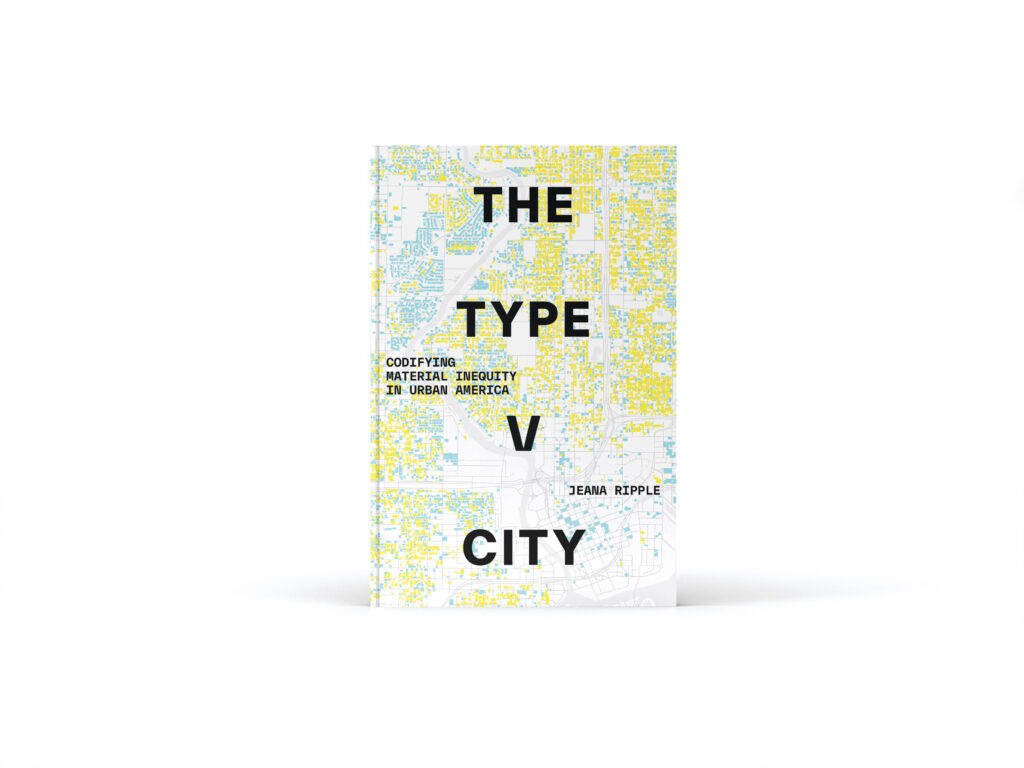
The Type V City: Codifying Material Inequity in Urban America
Jeana Ripple
University of Texas Press, 2025
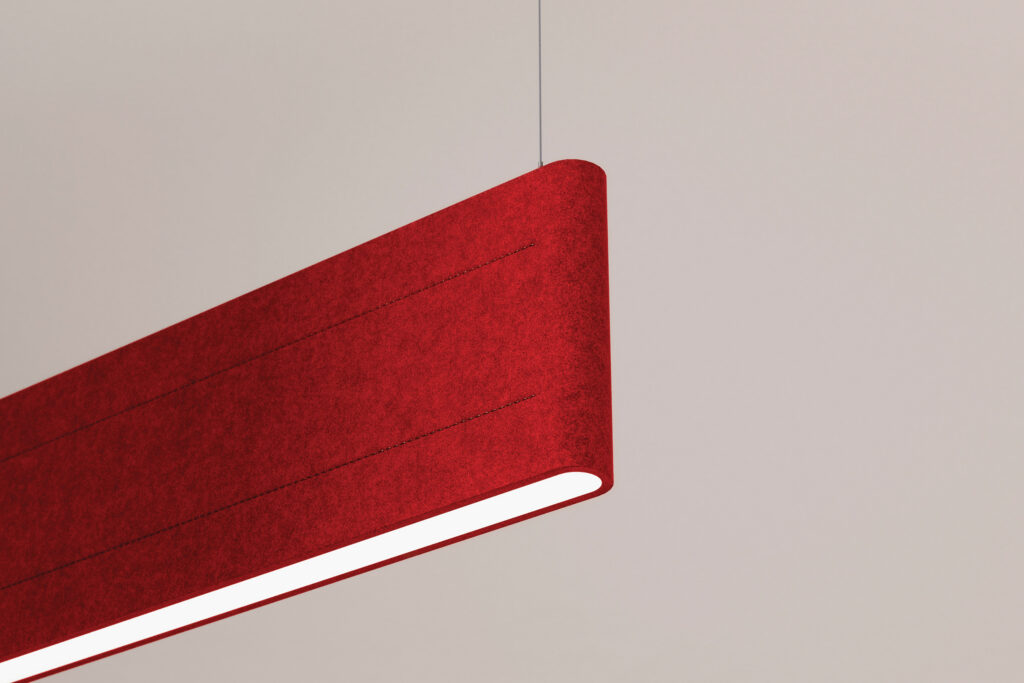
These new LED lighting fixtures for spaces from tabletops to stairwells offer flexible illumination for residential and commercial spaces.