Mar 17, 2026
In a profession defined by change, gathering is not optional—it is essential. It is how we learn from one another,…
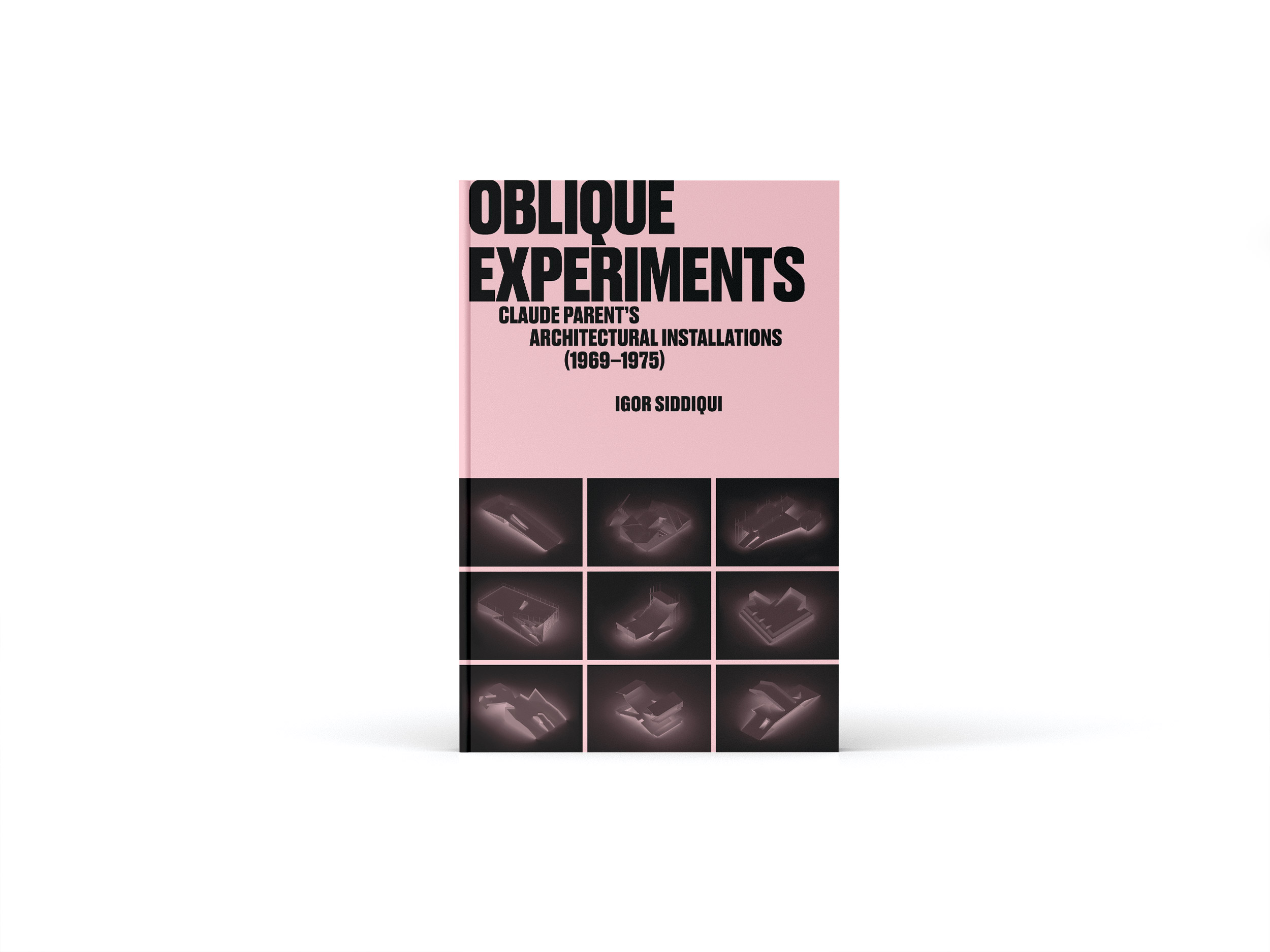
Oblique Experiments
Igor Siddiqui
Applied Research & Design, 2025
Oblique Experiments follows French architect Claude Parent on a multiyear tour during which he engaged the public with a provocation to imagine life on sloped surfaces. In this carefully researched book, Igor Siddiqui, an architect and professor at the University of Texas at Austin, draws on extensive archival material to examine a pivotal but lesser-known aspect of Parent’s work: a series of temporary installations known as practicables, constructed between 1969 and 1975. Siddiqui examines the practicables with a focus on their relationship to interiority and advocates for understanding obliqueness as a model for practice. Oblique Experiments ultimately resonates beyond its archival content as a contemporary meditation on obliqueness as a mode of architectural practice.
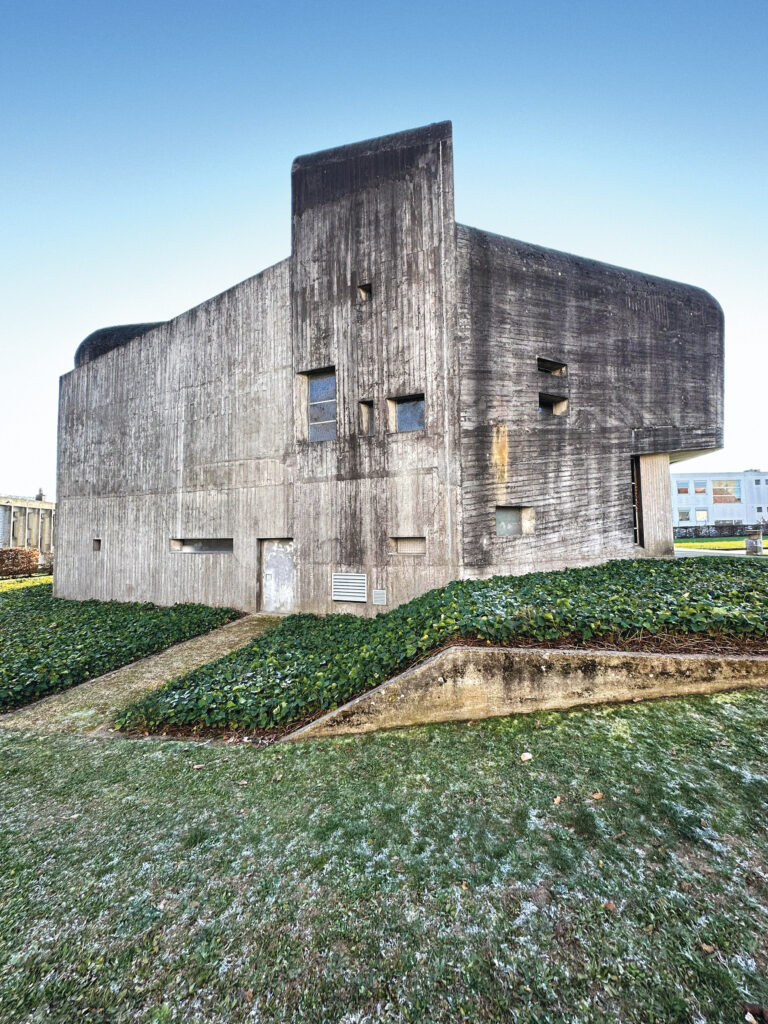
The roots of “la fonction oblique” trace back to Parent’s partnership with theorist and urban planner Paul Virilio. Together they formed Architecture Principe, a think tank and architecture office, in 1963. Virilio’s research into German World War II bunkers along the French coast influenced the firm’s most significant built work, the Church of St. Bernadette in Nevers, whose concrete exterior evoked bunkers. Its interior rejected orthogonality, replacing level floors with sloped slabs. Siddiqui includes photos from Parent’s other built work, such as a strip mall in Sens which stands out as a reminder that commercial typologies can also be sites of spatial experimentation.
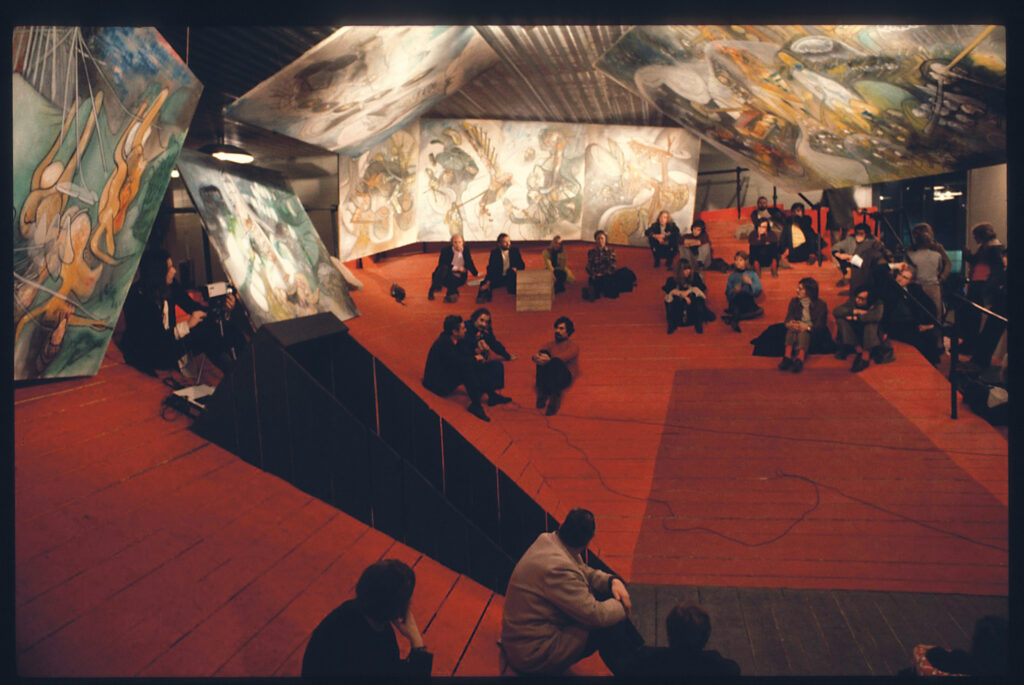
The oblique was conceived as a means of intensifying engagement with the built environment, and Parent pursued this ambition earnestly. Architecture Principe launched a magazine in anticipation of the church’s completion, an early example of Parent’s multidisciplinary output. Siddiqui recounts the duo’s proposal to inhabit experimental sloped apartments while undergoing psychological evaluation to study the effects of oblique living. The intended site for this experiment, a university campus, however proved untenable. The student protests of May 1968 ultimately fractured Parent’s partnership with Virilio as Parent, dismissing the protests as mob mentality, insisted that the oblique was not a political project. He later self-published “Vivre à l’oblique” in 1970, articulating his belief that sloped surfaces cultivate user agency through an “architecture of effort.” While the political unrest ended the partnership, it also opened new avenues: New public arts funding enabled Parent’s traveling installations.
The heart of this book, demarcated by pink pages, documents the tour of the practicables, oblique installations sited in existing buildings. These temporary oblique installations were typically inserted into maisons de la culture, France’s decentralized cultural centers intended to distribute arts programming beyond major cities. Between 1969 and 1975, the tour brought Parent’s work to small cities across France, with an additional appearance at the 1970 Venice Biennale. Siddiqui’s careful curation of archival drawings, photographs, posters, and newly produced plans provides a vivid account of each installation and its context. We follow, through text and visuals, Parent and his merry band of collaborators through practicables at various scales and settings, each with different programming documented in detail. Siddiqui carefully contextualizes the venues, processes, and context for each town visited.
Siddiqui’s comparison of the plans of the practicables shows the differences between them, most designed to fit in existing interiors, with an exception in the entirely outdoor practicable in Douai. Parent also formally solicited feedback through workshops, but ambulation on a sloped surface was the principal way the tour fostered subjective experiences. In the exhibition text for the tour’s first stop at the Nouveau Musée du Havre, Parent identified movement as the fourth dimension of architecture, beyond the three orthogonal axes of space. Parent’s practicables hosted mime shows, paintings, gymnastic routines, and screenings, each attempting to blur the line between life and art (or architecture). Rather than treating this programming as ancillary, Siddiqui convincingly frames it as integral to Parent’s experiments.
Interiority is a central analytical thread throughout Siddiqui’s book. The practicables were interior in a literal sense, designed for enclosed spaces, but they were also methods for exploring interior states of perception and subjectivity. Parent imagined these installations as prototypes for domestic life, a vision that led him to critique the furniture industry for perpetuating 19th-century material cultures incompatible with oblique living. His own apartment contained two oblique objects, designed for dining and living. For frequent Parent collaborator and artist Andree Bellaguet’s non-orthogonal apartment, Parent produced a certificate of authenticity designating it as the first oblique dwelling, calling back to his earlier desire to put oblique life to scientific study.
For many readers, Parent will likely be a familiar figure; his work has been much discussed by architects such as Rem Koolhaas, Zaha Hadid, Frank Gehry, and Jean Nouvel, who once worked in Parent’s office. Siddiqui observes that although experimental installations are far more common in architectural practice today than they were in the 1970s, Parent’s own experimental installations, and his socially engaged strategies, were influential and perhaps prescient. Certainly, Parent’s workshops for soliciting feedback through participants’ direct engagement with the practicables and their programming stand out as an inspiring method.
In the book’s final chapter, Siddiqui identifies three enduring strands of influence from Parent’s work: the ground as a composite construct, the performance of the architect, and obliqueness as a mode of practice. Siddiqui pulls compelling contemporary examples such as Olafur Eliasson’s Riverbed at the Louisiana Museum Of Modern Art, Alex Schweder’s performance architecture, and the author’s own use of participatory methods during public lectures. Through careful archival research and close analysis, Oblique Experiments offers a clear account of the significance of the practicables within Parent’s oeuvre. Siddiqui’s analysis, as well as his delightful curation of drawings, photographs, and ephemera from Parent and others, inspires designers to think critically about obliqueness, interiority, and the body. The book takes installations, exhibitions, events, and publications seriously as sites for architectural thought. In doing so, Siddiqui extends Parent’s legacy beyond the literal proposition of life on an incline, offering obliqueness as a durable and generative stance toward practice, one that remains relevant amid contemporary architectural discourse.
Maya Shamir is a graduate of the University of Texas at Austin, where she majored in architecture and minored in history. She is currently pursuing her master of design studies at the Harvard Graduate School of Design.

Supporting Ecological Evolution in the Anthropocene
A Home Designed for the Decades
An Argument for Creative Reuse Over Preservation
A Historic Structure Updated for Next-Gen Commerce
Expanding a 1930s Bungalow for a Modern Family
Evolving the Profession for a Changing World
A Houston Garage Remade as a Culinary Destination
Adaptive Reuse at Pullman Market
Building With Fruit Waste Matter
The Type V City: Codifying Material Inequity in Urban America
Jeana Ripple
University of Texas Press, 2025
These new LED lighting fixtures for spaces from tabletops to stairwells offer flexible illumination for residential and commercial spaces.