Oct 22, 2026
Some of the most meaningful moments of recognition are not our own. They come when someone we admire is celebrated…
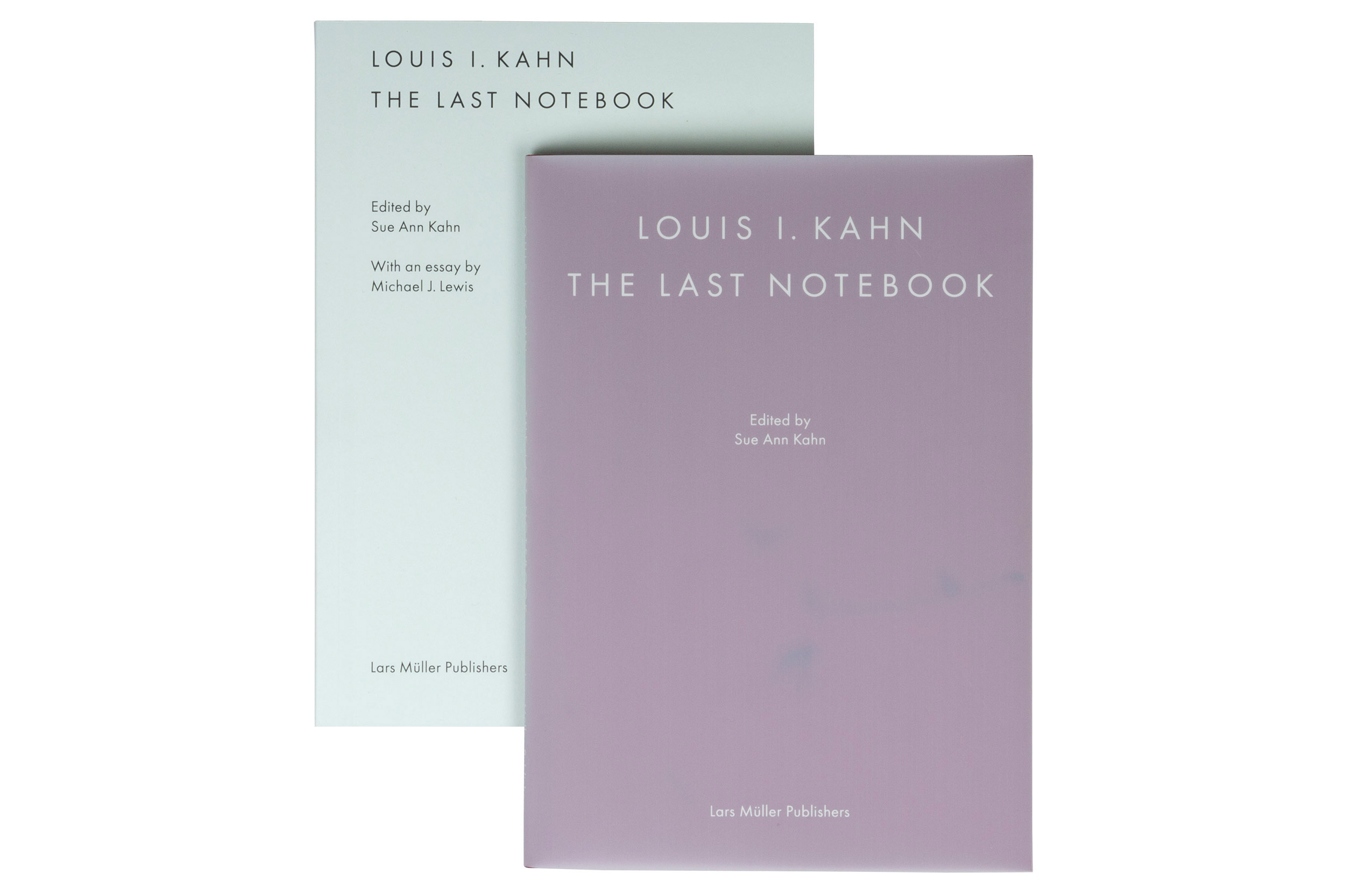
Louis I. Kahn: The Last Notebook
Louis I. Kahn, edited by Sue Ann Kahn
Lars Müller Publishers, 2024
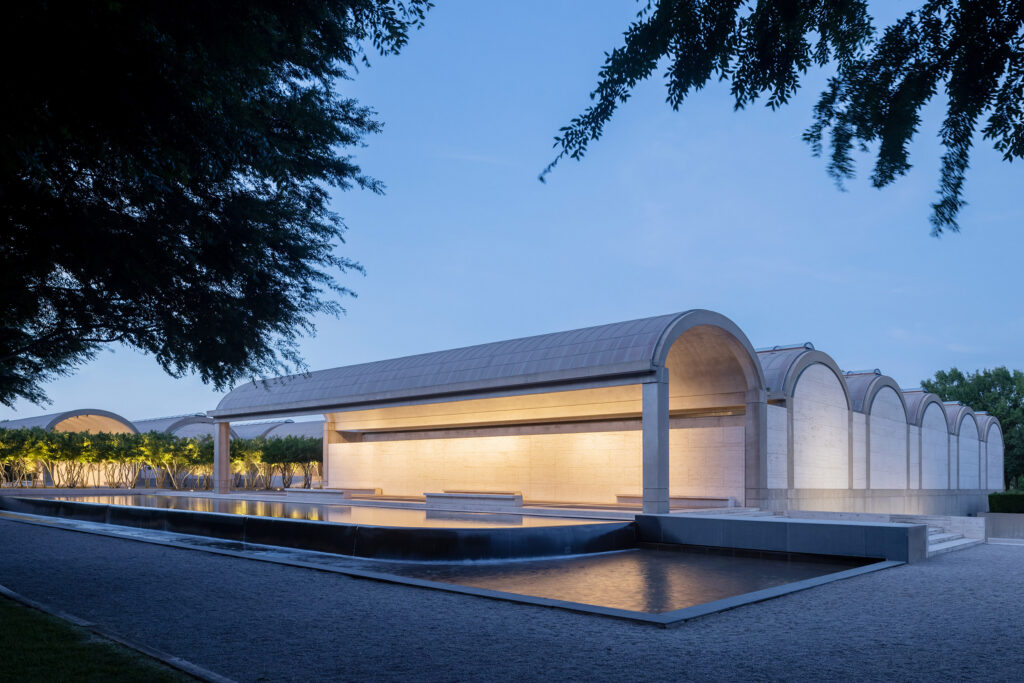
The great American architect Louis I. Kahn was remarkable both for how late he started the most productive era of his career and for how much he managed to accomplish in the last few years of his life. Between 1972 and 1974, he completed or was nearing completion of the Kimbell Art Museum in Fort Worth, Exeter Library in New Hampshire, the Arts United Center in Fort Wayne, Indiana, the Korman House north of Philadelphia, and a whole campus for the Indian Institute of Management in Ahmedabad. He was making significant progress on the National Assembly Building in Dhaka, Bangladesh (his magnum opus, begun in 1962), and construction had started on the Yale Center for British Art. He was working on active design projects for the Hurva Synagogue and Government Hill Development in Jerusalem, the Bicentennial Exhibition in Philadelphia, the Graduate Theological Union Library in Berkeley, the Pocono Arts Center in northeastern Pennsylvania, large development projects in Rabat, Morocco, and Tehran, Iran, and both a Holocaust Memorial and the Franklin D. Roosevelt Memorial in New York City.
Kahn was traveling constantly, all over the world, and was frequently separated from his office, his drawing board, and his beloved rolls of Bienfang Canary Tracing Paper that so perfectly accommodated his unique drawing style. The medium for developing his ideas in this phenomenally productive period of his life was often one of the dark red, hardcover Winsor & Newton sketchbooks that became his constant and flexible companion. He used his familiar drawing utensils—graphite pencils, charcoal pencils, and vine charcoal, as well as colored pencils and pens—to render images on the wafer-thin, translucent paper. He often used the sketchbooks not just for drawing but also for developing concepts verbally and taking everyday notes about people and places.
It is such a privilege to now be able to get a very personal glimpse into Kahn’s life and design thinking in this critical period of his career through the recent publication of Louis I. Kahn: The Last Notebook,edited by Kahn’s daughter Sue Ann Kahn. Clearly a labor of love, this little publication consists of two thin volumes. One is a remarkably authentic facsimile of the last of the 18 surviving sketchbooks Kahn used. The other is a tidy paperback companion containing an insightful essay by Michael J. Lewis, along with a series of supplemental illustrations and interpretations that provide clarification, background, and texture to the reading of the facsimile.
The technical reproduction of the facsimile is extraordinarily impressive. Great credit is due to the German firm that produced the book, Lars Müller Publishers, for its meticulousness in creating an authentic reproduction in both materials and detail. Images from one side of the diaphanous paper telegraph through to the other side just as they did in the original book. Smudge marks from the charcoal are faithfully represented on the sketches themselves as well as where they transferred onto opposite sheets. The front cover has some very endearing black ink stains that register the little book clearly as an everyday, utilitarian object—a tool of the trade for its famous owner. The blank pages at the end, which constitute more than half of the volume, document the abruptness of Kahn’s unexpected death on March 17, 1974, and the heartbreaking incompleteness of his accelerating career.
There is so much insight to be gained into both Kahn the man and Kahn the designer by a careful investigation of this precious artifact! Though he draws beautifully and prolifically, it is clear that this architect conceives projects primarily in his head, not on paper. As Michael J. Lewis observes of a detail for an outdoor space at the Yale Center for British Art, “He already had completely designed the fountain in his head—in plan, section and construction.” He then captured that mature conception in the sketchbook. If one is expecting many “trial-and-error” iterations of each design study, they will not find them here. Most of the sketches are singular representations of a mature design idea. Drawing is a means of holding onto ideas that are already fully baked in Kahn’s deep, rich imagination.
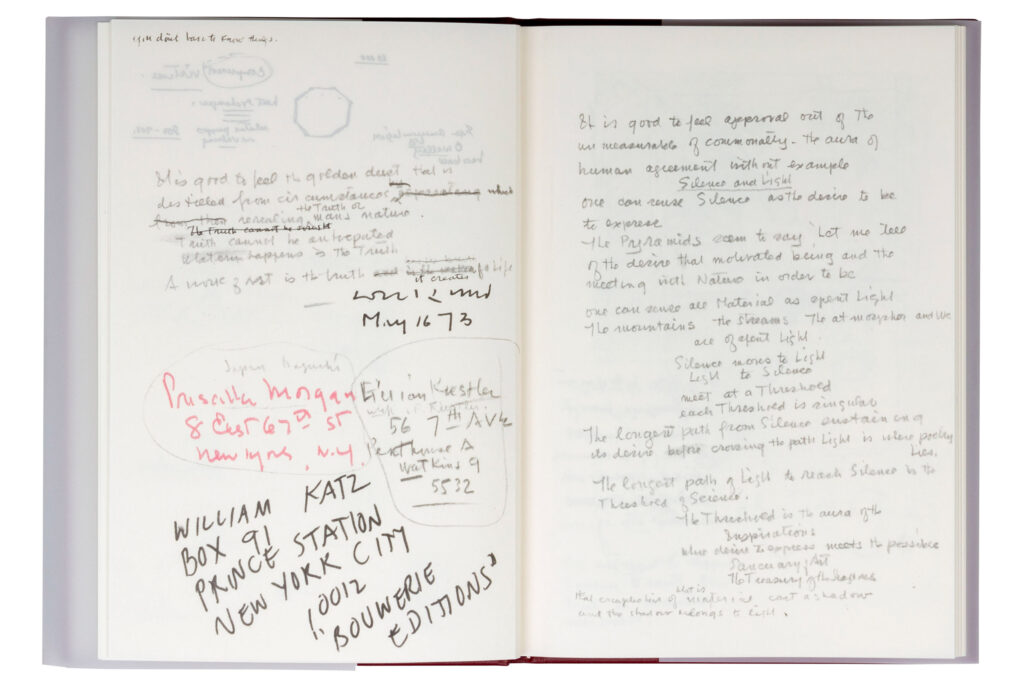
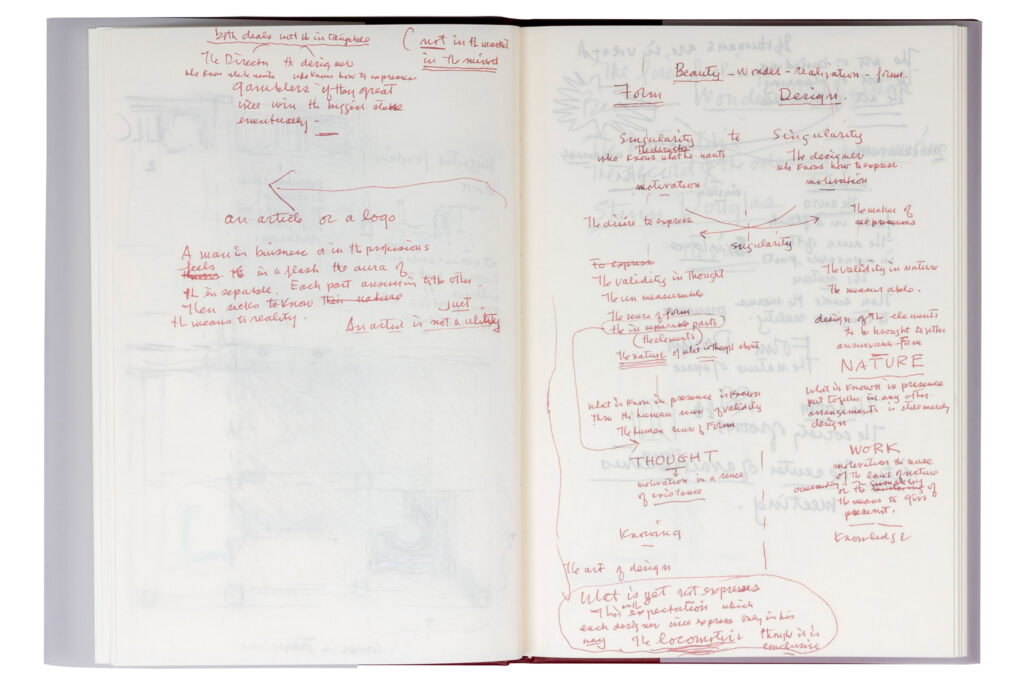
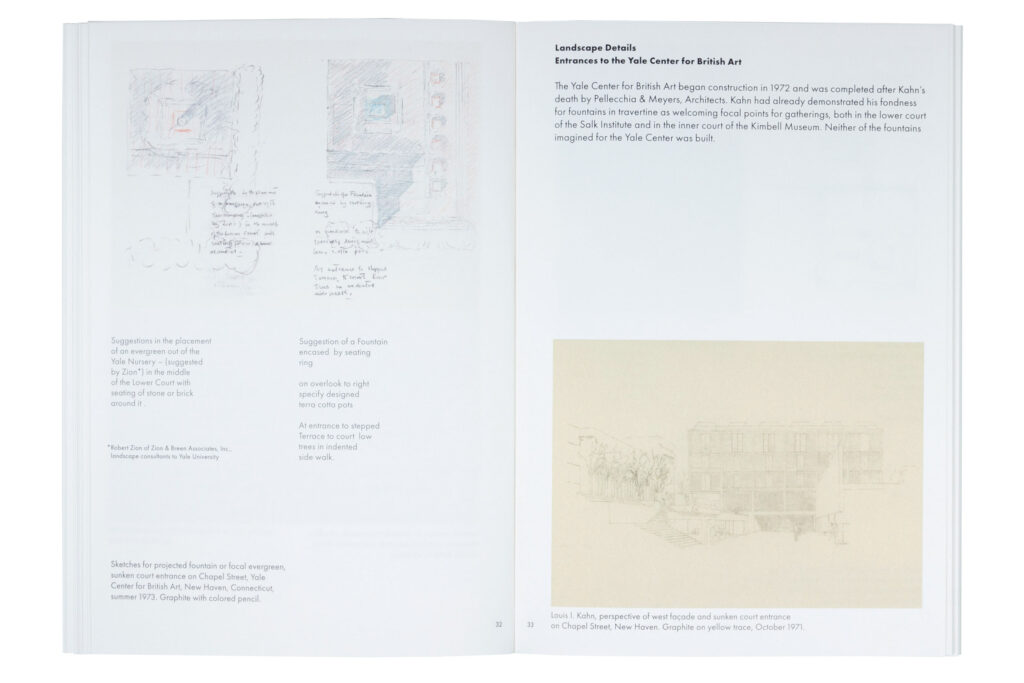
It is also impressive how reliant Kahn is on verbal tools, as well as images, in conceiving design. I have seen dozens of architects’ sketchbooks, but I do not remember ever seeing one with as many words as this one. Many of the words outline philosophical positions and are meant as notes he would use in giving talks, but words are also used to complete the depiction of the experience of the place he is designing, noting materials, accoutrements, and context.
Kahn’s distinctive theories come through loud and clear in the sketchbook. In the lecture he delivered at Wharton School of Business in October 1973, using notes in the book, he describes the “desire to express as being an aura which sits within us, all of us, in some form or another. The farmer has it, the architect has it, the business man has it, the painter has it.” This is a profound notion that is certainly poignant in an era of AI. Part of what is so powerful about Kahn’s work is how personal it is—how much it came from deep urges and deep beliefs. He shook the world of late Modernism and established himself as a leading voice in the mid-20th century because he was able to harness his “desire to express” in a powerful and inspiring way.
And yet, this is not the sketchbook of an arrogant or self-centered architect. Kahn’s graciousness, ease, and humanity are expressed beautifully here. In her editor’s note, Sue Ann Kahn highlights a page with comments from a party Kahn attended in New York. She reminisces, “What tickles me about this page is that it captures what a social animal my father was and how he charmed everyone around him….” Humor, irony, delight and pathos fill these pages. There is also very clear evidence of how responsive and collaborative Kahn was. Michael J. Lewis notes that clients “seem to have appreciated his low-key demeanor and humility. Here was an architect who did not dictate but listened.” Kahn managed to assert his “desire to express” while also listening to and absorbing the input of other players in the design process.
That kind of collaboration, however, was not always a smooth or easy process. The sketchbook is remarkable for its recording of the full cycle of the design for the Roosevelt Memorial—from sketches of its first version to its ultimate form. While one would like to think that such an accomplished architect at the peak of his career might be in full control of the design of a project so personally important to him, that is clearly not the case. Through a long process that was, at some stages, “savage and humiliating,” Kahn persisted, going through the “melancholy process of paring down his design” repeatedly. Like any good architect, he struggled to get the very best result out of even very difficult situations.
Go out and buy this book! It is likely to feel both familiar and revelatory. It is, perhaps, the most accurate and authentic representation of the way a great architect works that I have ever come across.
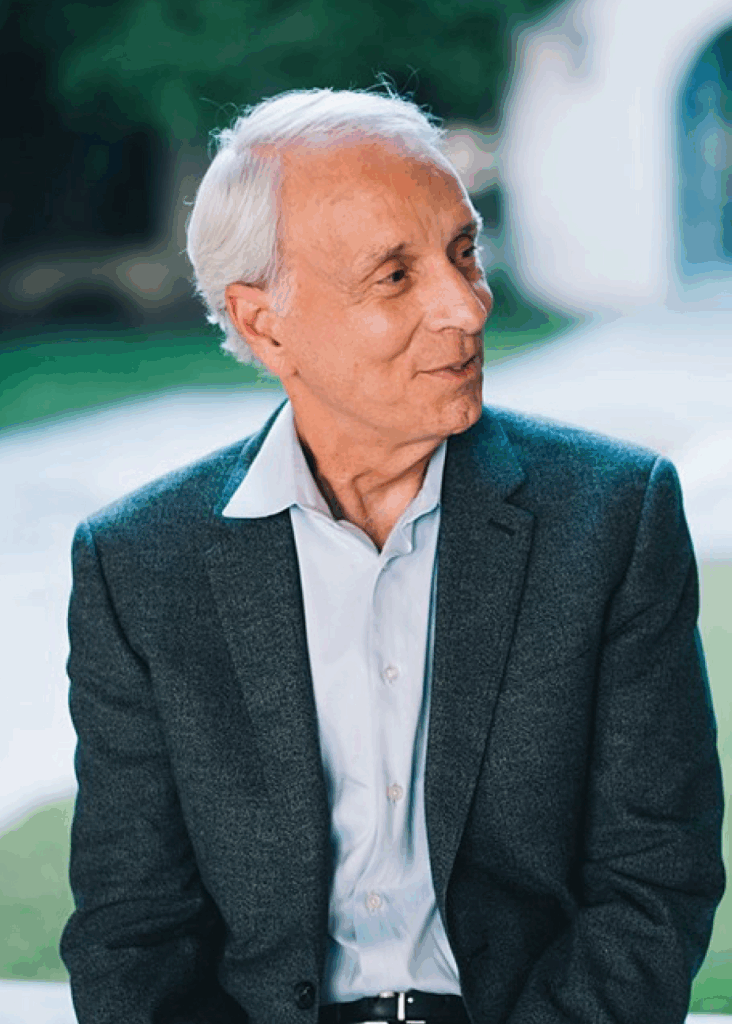
Lawrence Speck, FAIA, is a practicing architect at LPA Design Studios and a professor in the School of Architecture at UT Austin.





Jobe Corral Architects
BGK Architects + Perkins&Will
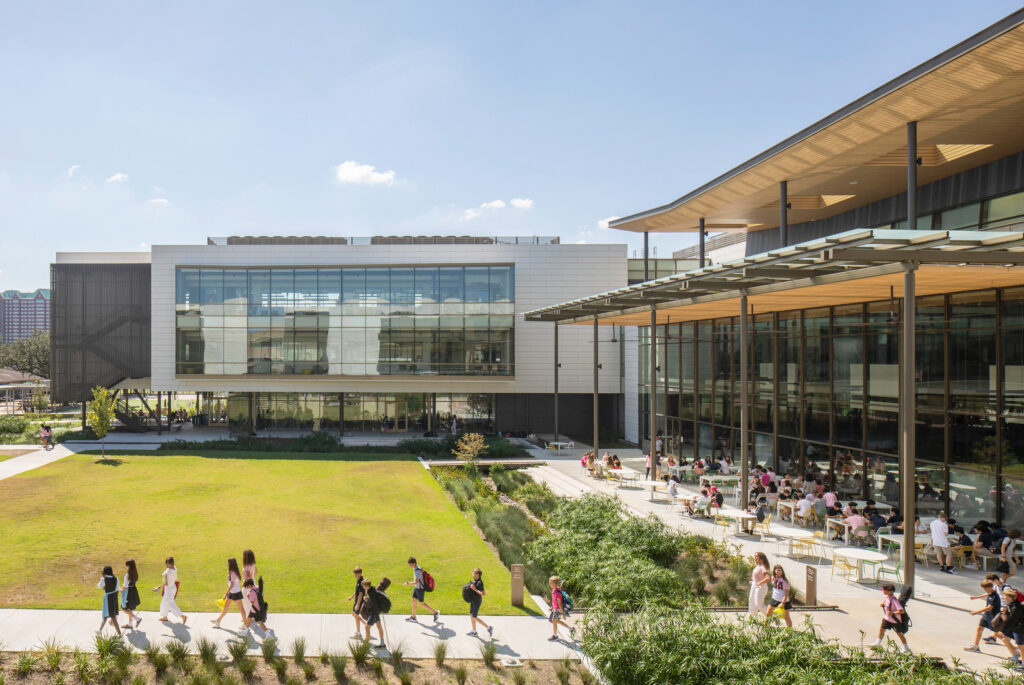
Lake Flato Architects
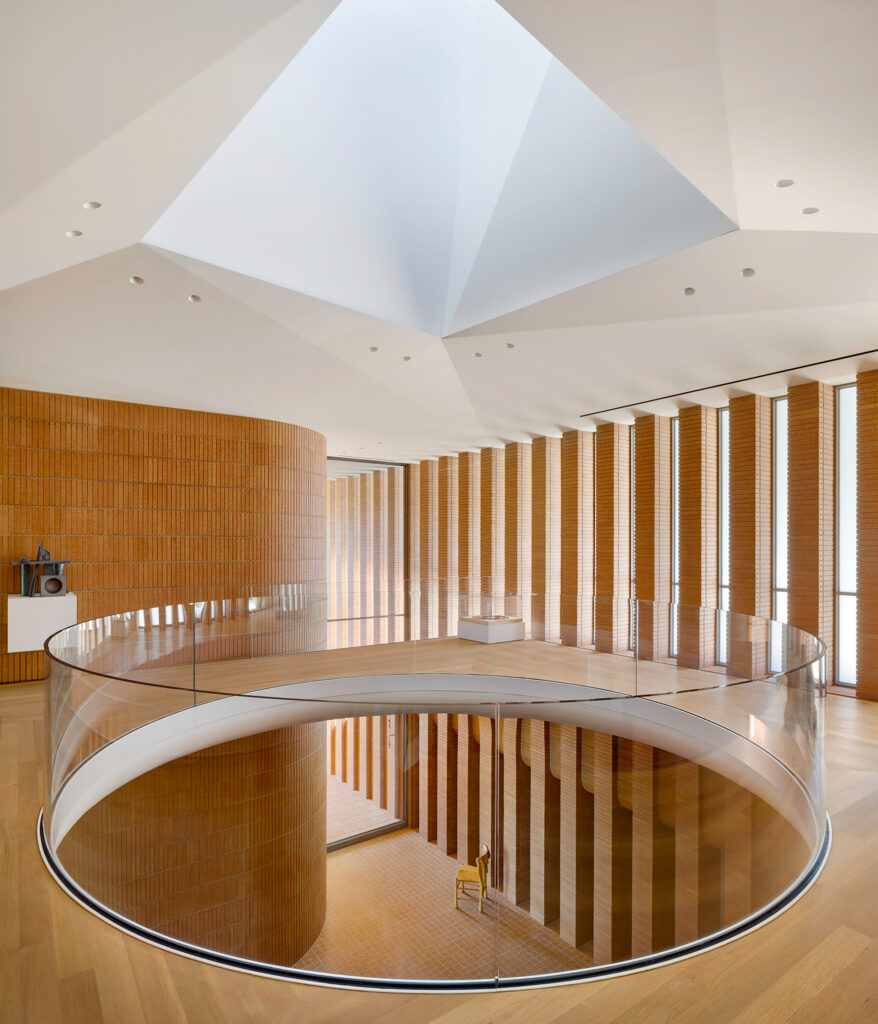
Miró Rivera Architects
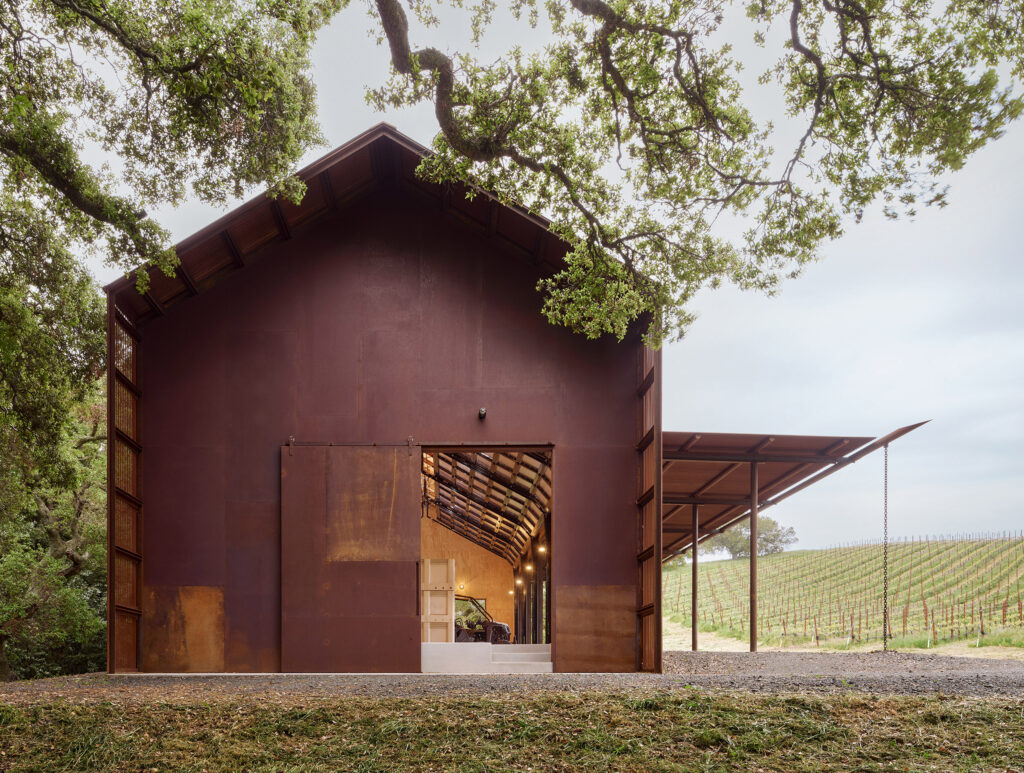
Clayton Korte
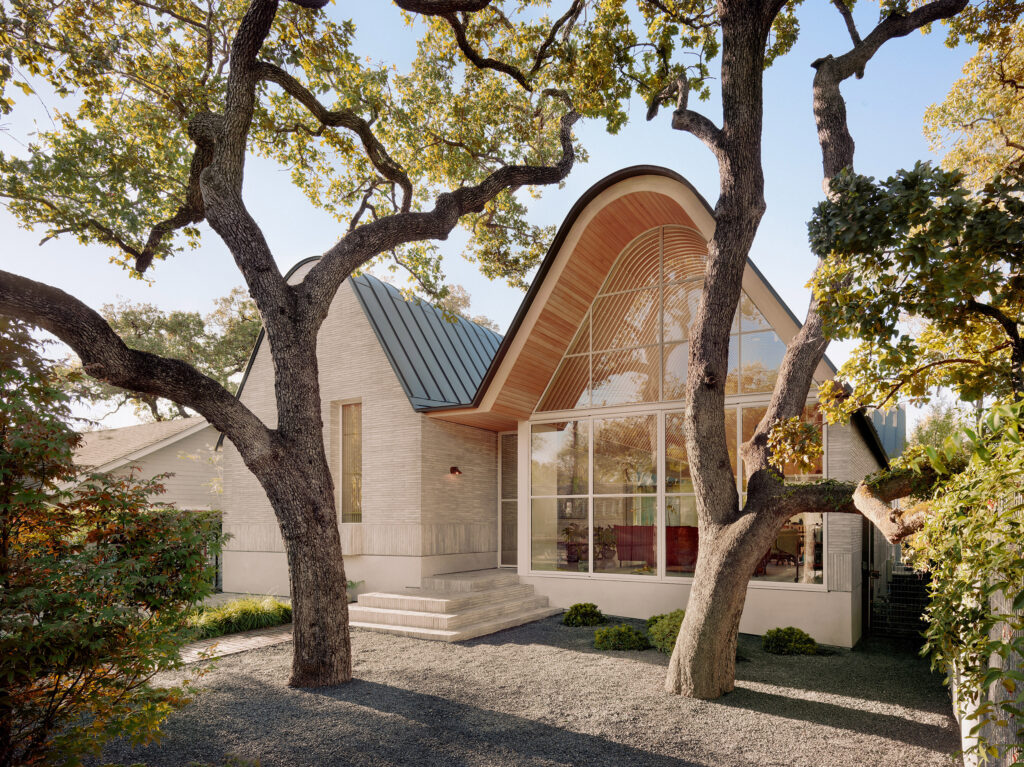
Michael Hsu Office of Architecture
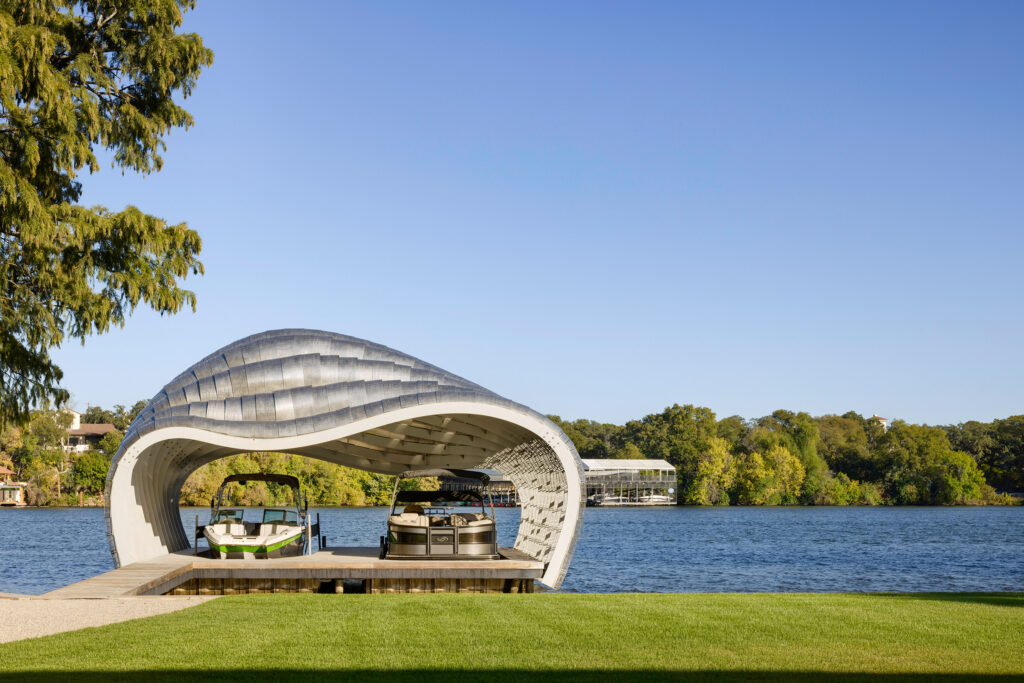
Miró Rivera Architects
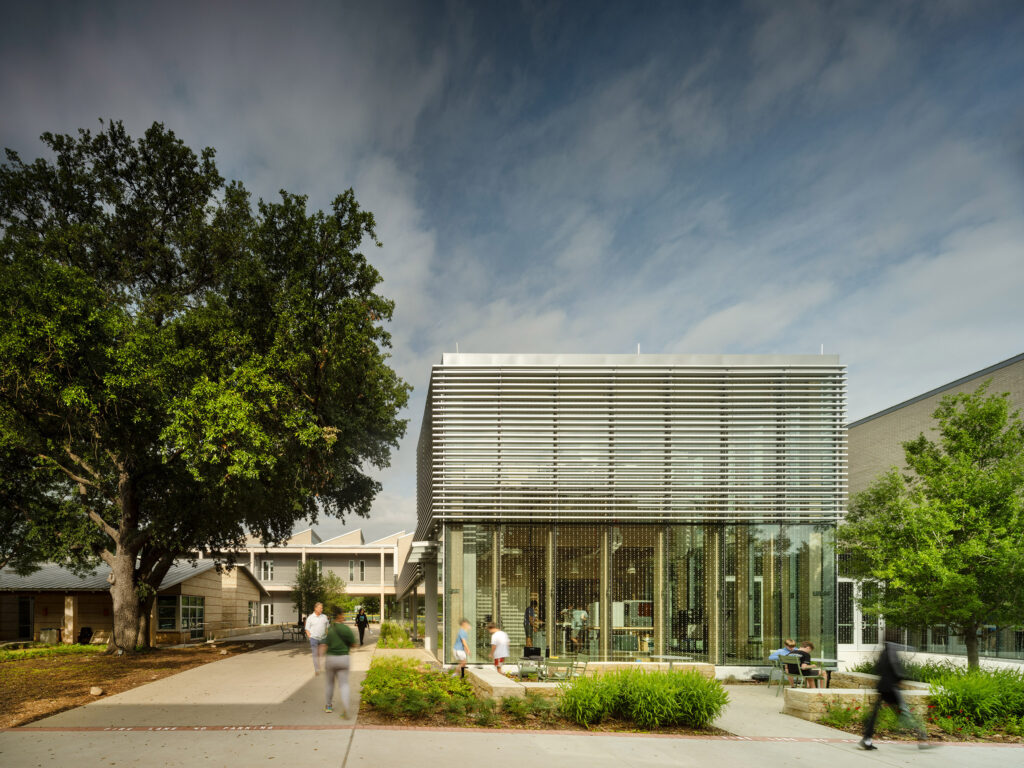
Bohlin Cywinski Jackson

Lake Flato Architects

Perkins&Will
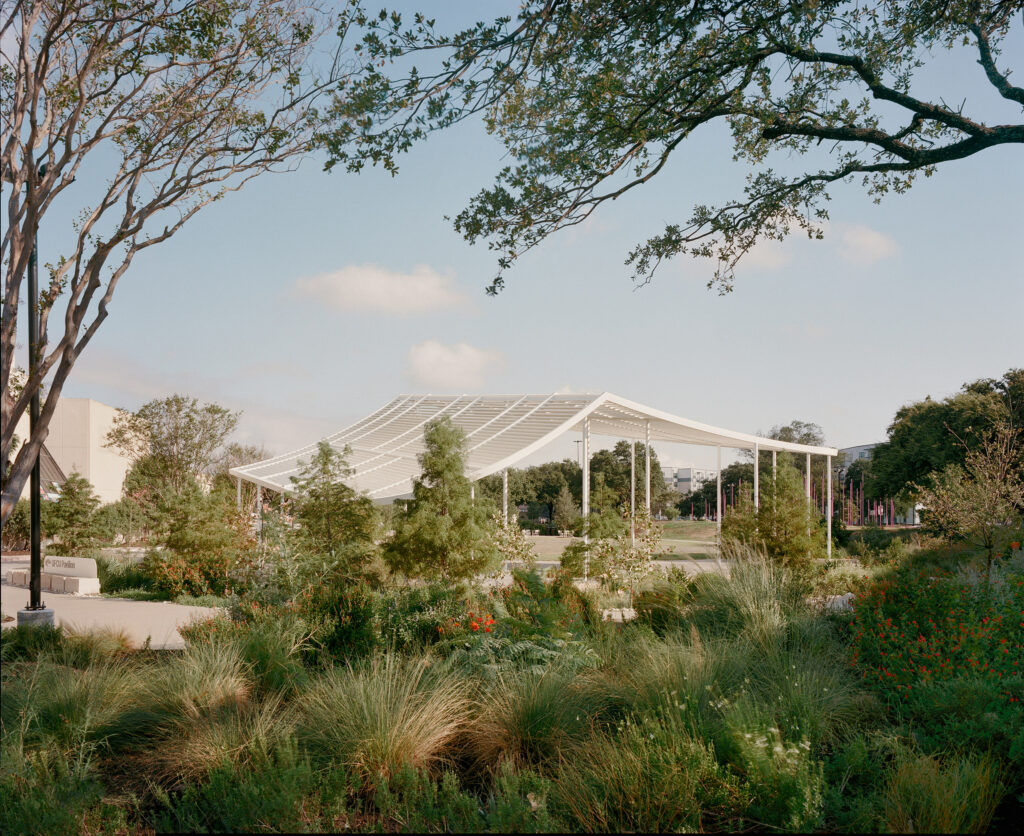
Agenda Architecture
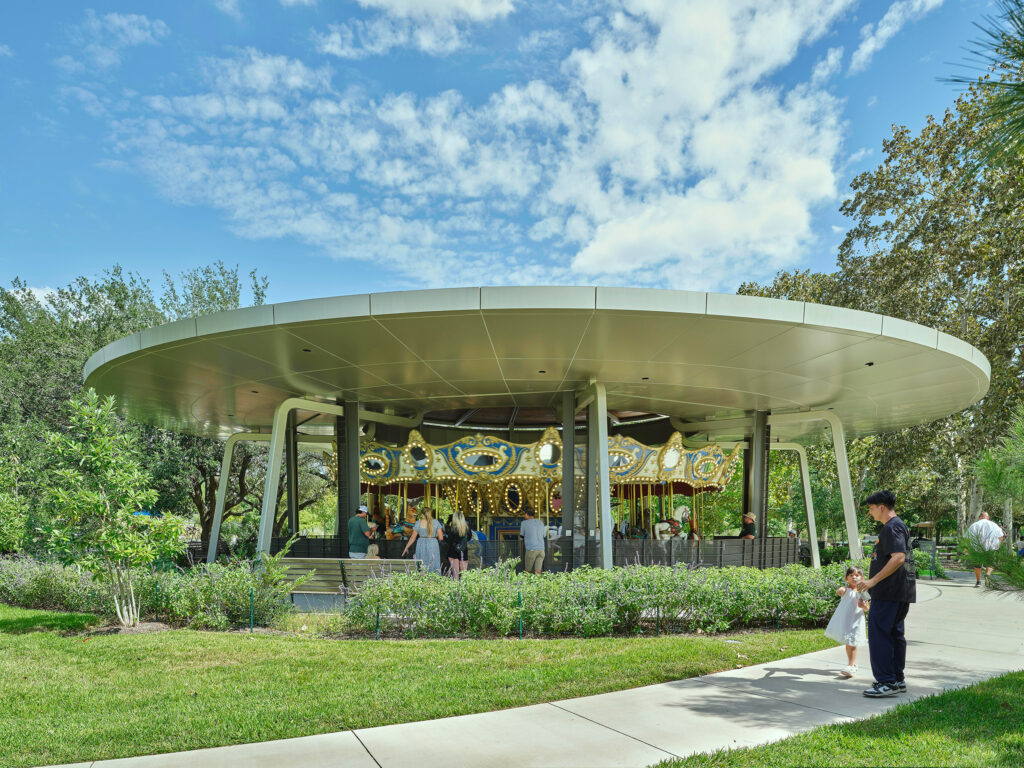
Marlon Blackwell Architects
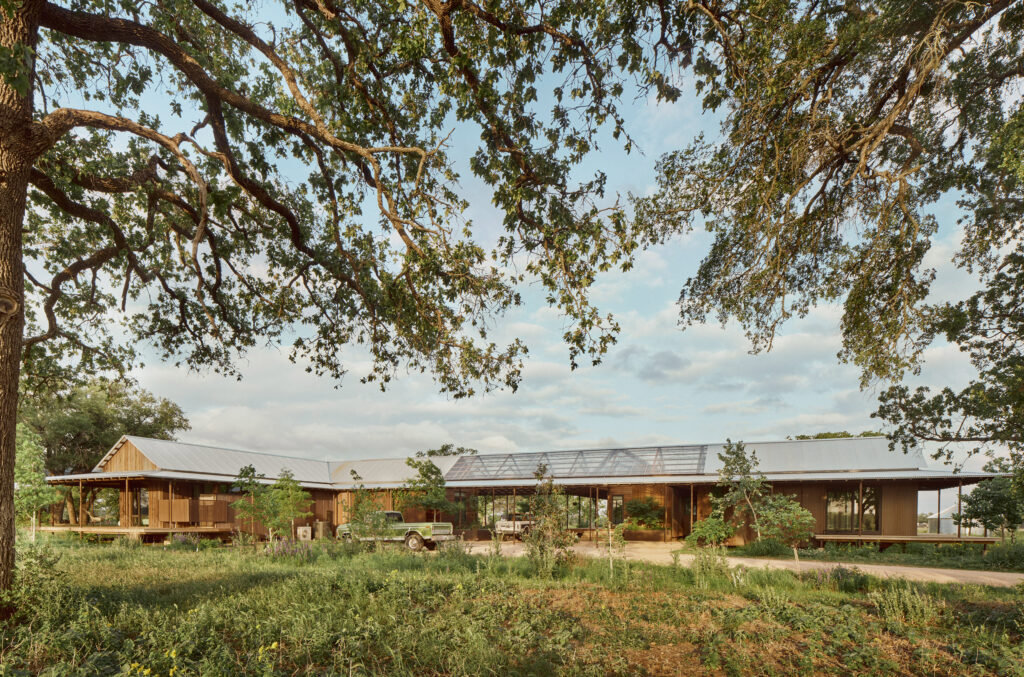
Baldridge Architects

RWA
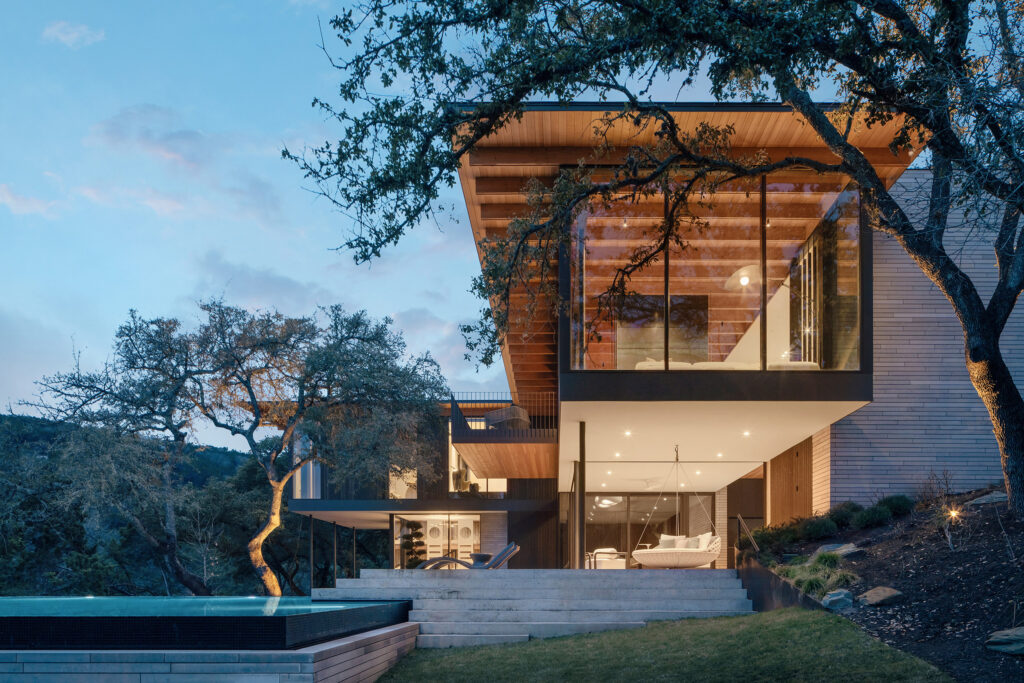
A Parallel Architecture
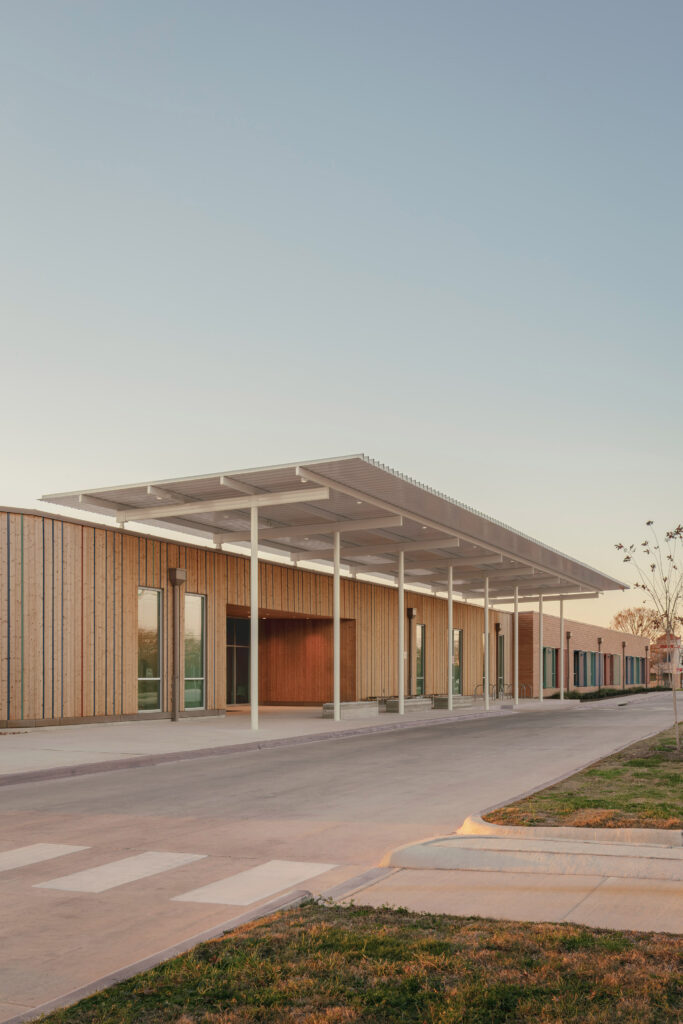
LPA Design Studios
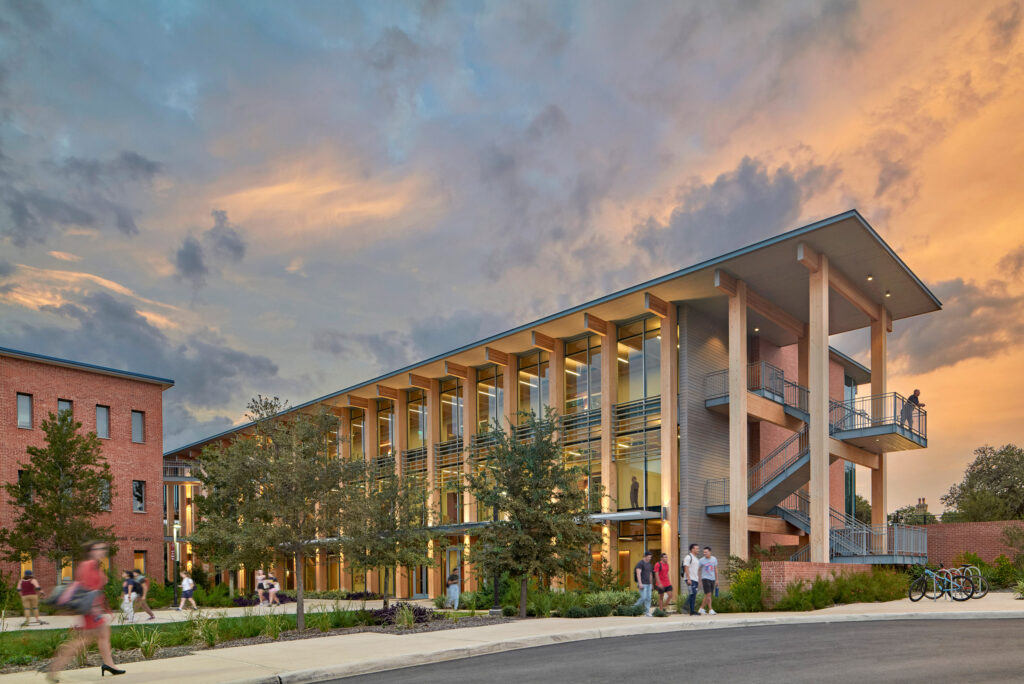
Lake Flato Architects
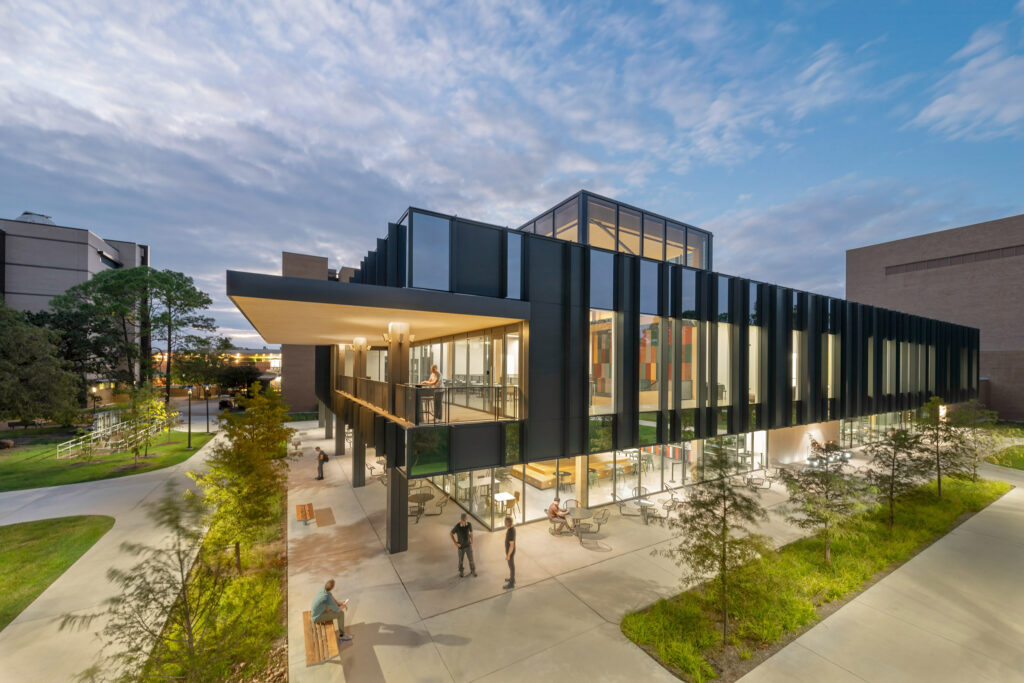
Perkins&Will

Perkins&Will
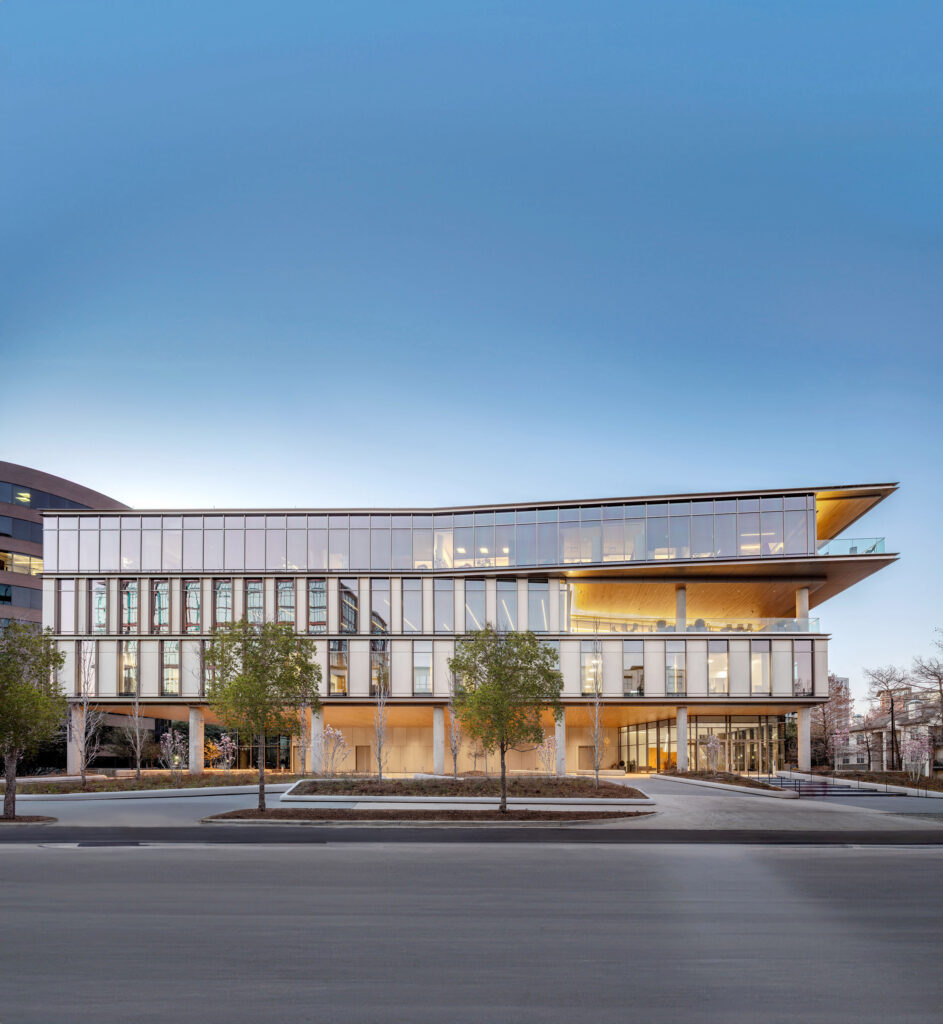
Beck Architecture
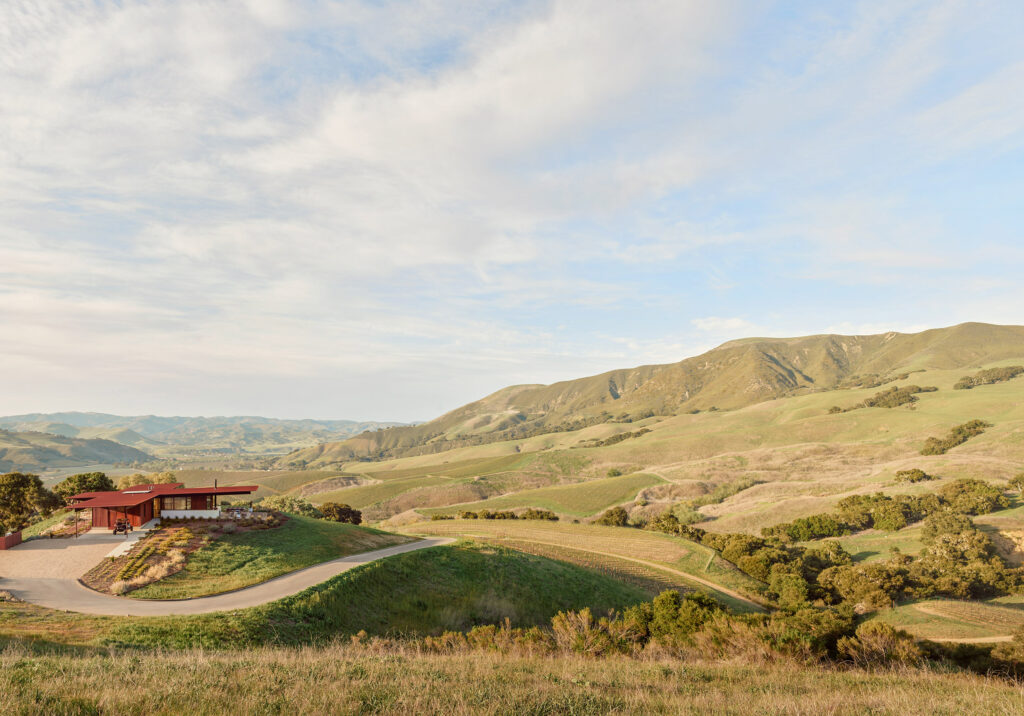
Clayton Korte
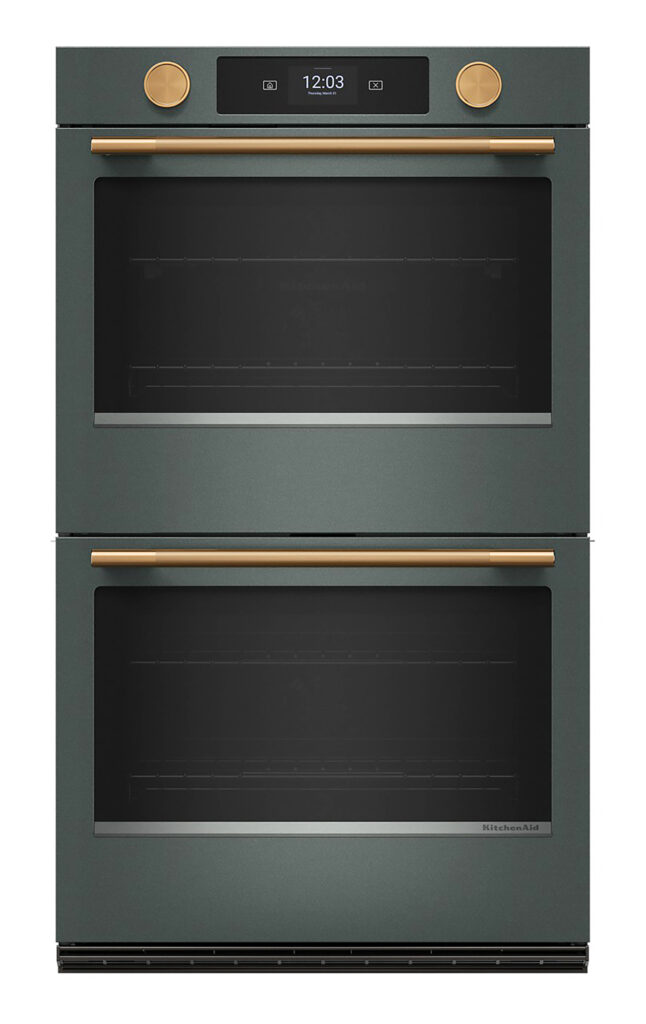
In this issue, we highlight a few of the “Best in Show” products from this year’s trade events, including the Kitchen & Bath Industry Show in Orlando, NeoCon in Chicago, and Clerkenwell Design Week in London.