
Dec 17, 2025
As I reflect on my year serving as president of the Texas Society of Architects, I am filled with gratitude—for…

A new model for neonatal care
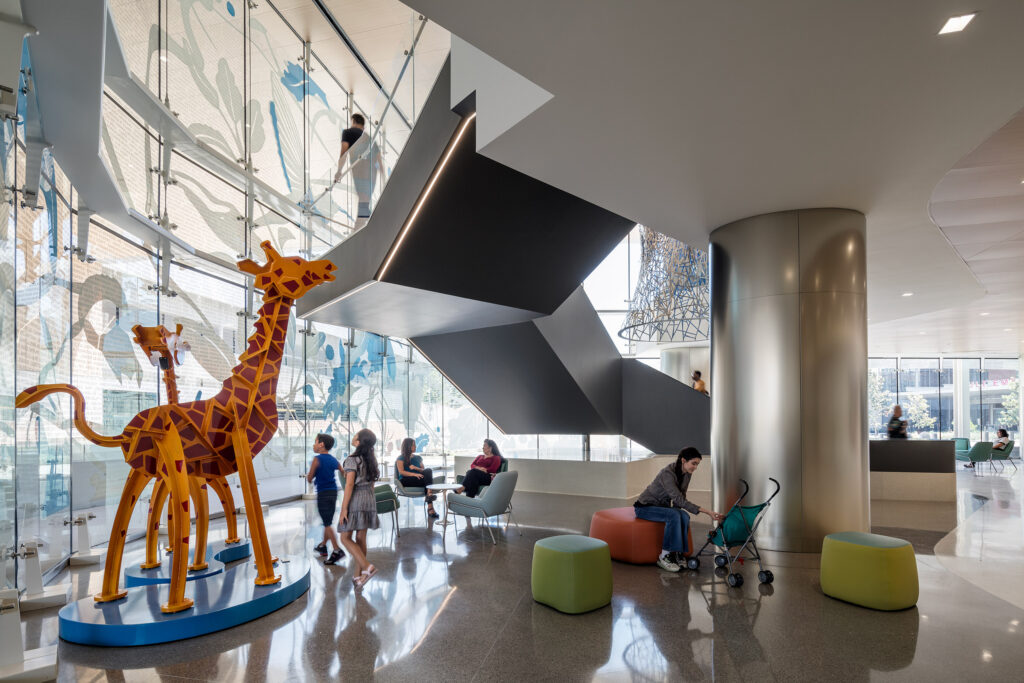
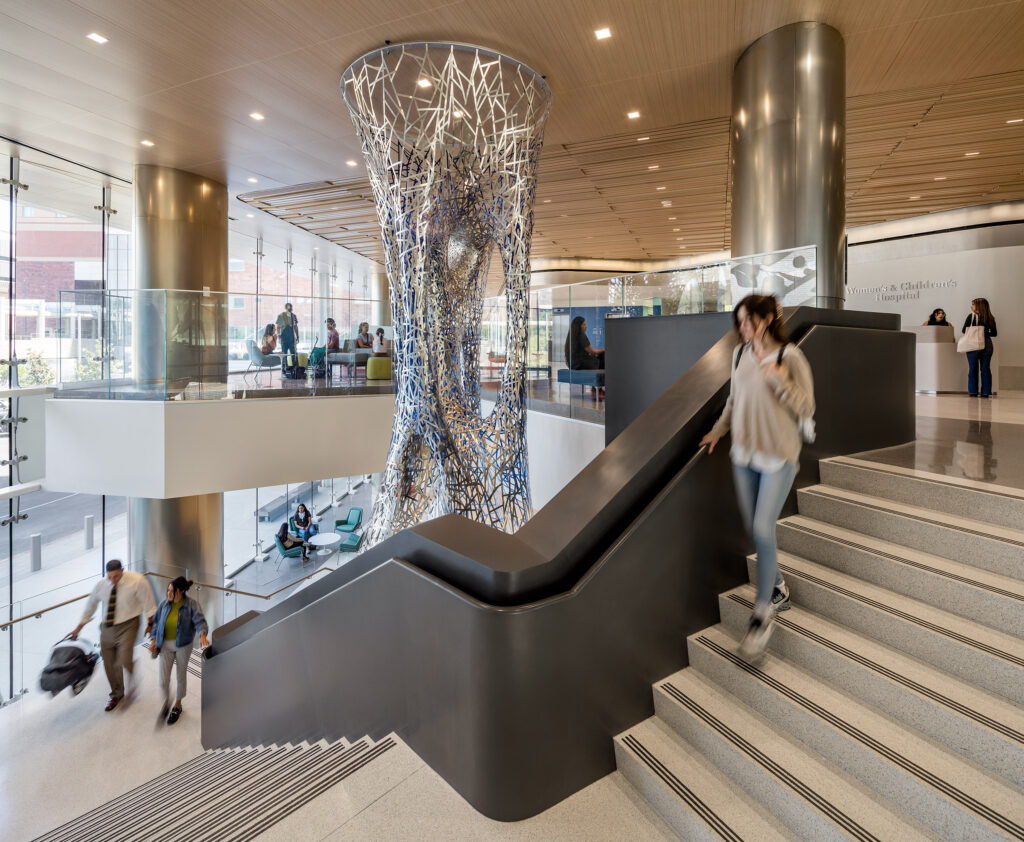
Entering the new University Health Women’s and Children’s Hospital in San Antonio, you are greeted by a flurry of color, art, and activity. A monumental stair in the lobby wraps Nest, a two-story suspended abstract sculpture by Michael Szivos that resembles a bird’s nest. Nest and other art pieces throughout the hospital serve as metaphors for the building itself, designed to be a place of joy and healing for mothers, babies, and staff alike. Nearby, glass tubes filled with bubbles change color as children gather around. “You know a piece of art has been a big hit when the glass protecting it is routinely covered in children’s fingerprints,” laughs Allison Hays Lane, executive curator for University Health.
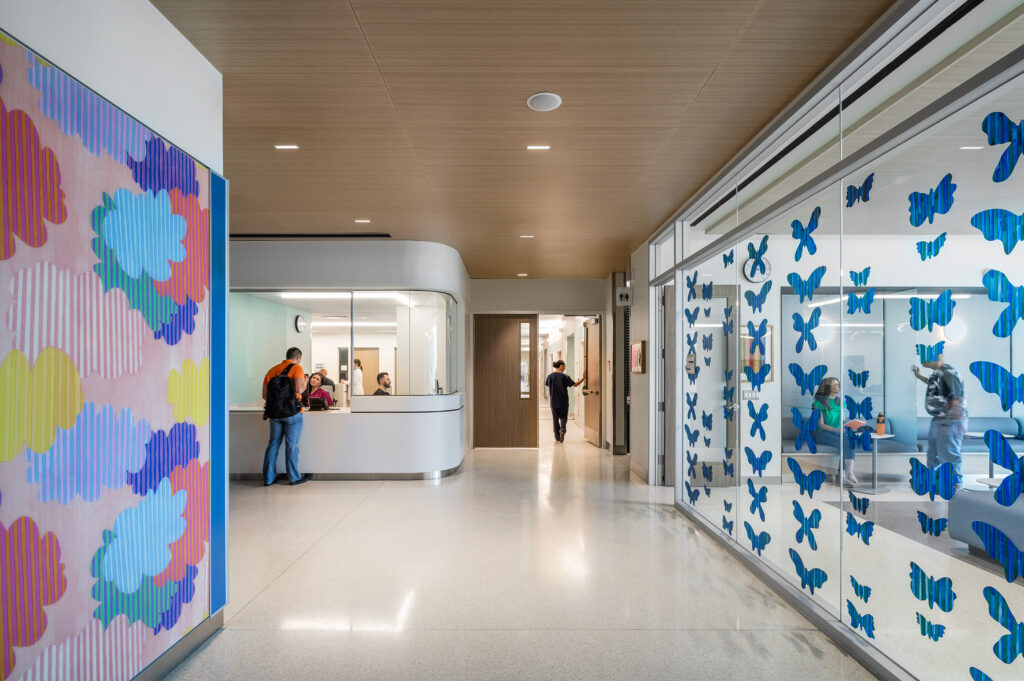
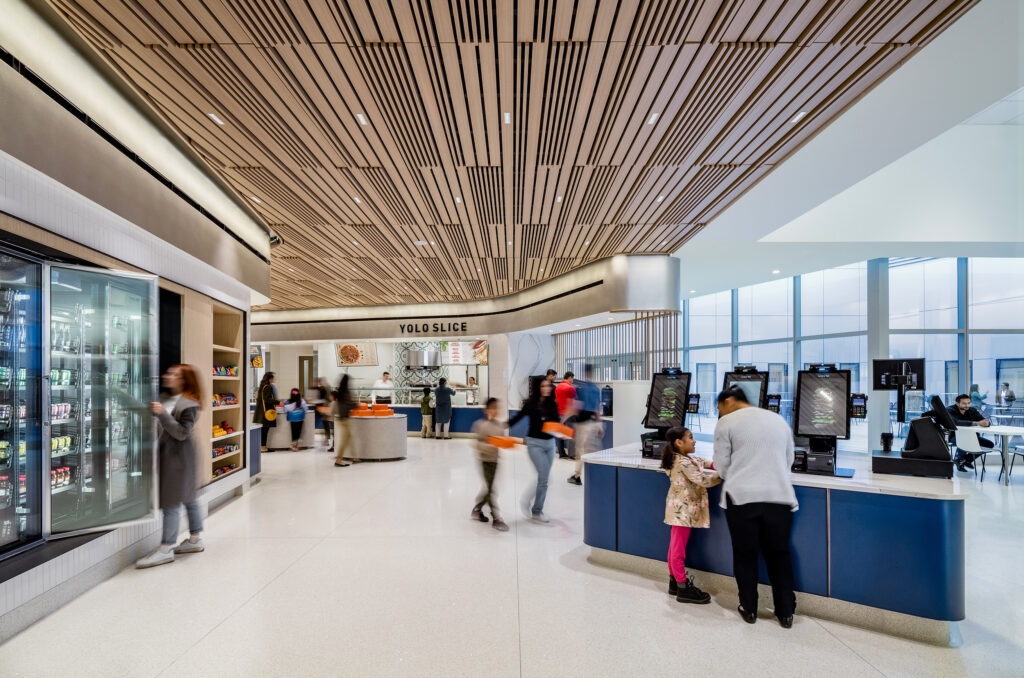
This playful approach to the design and integration extends throughout the hospital—from the lobby to the cafeteria, into patient care rooms, and along public circulation paths. Marmon Mok and ZGF Architects collaborated on the design; both firms were selected for their extensive experience in designing healthcare environments and their demonstrated ability to use evidence-based design strategies to improve health outcomes. Integrating art throughout the built environment is one such strategy. “Art is so important because many of the children and families coming here are trying to manage stress, whether it be a child who is dreading an exam or treatment, or a family member who is trying to manage some type of loss,” says Hays Lane. “Art has this ability to uplift, calm, soothe, and heal.”

The 14-story, 698,000-sf hospital is nestled within the South Texas Medical Center campus, about 20 minutes from downtown San Antonio. The first three floors of the hospital are attached to an existing hospital facility, Sky Tower, which serves the general population and provides easy access to highly specialized equipment. The Women’s and Children’s tower is rotated atop its podium to minimize solar heat gain and glare while optimizing views of the Texas Hill Country beyond. Opening its doors in December 2023, it is the first hospital in South Texas dedicated to both women’s and children’s health. Nationally, there are only 20 similarly specialized medical centers.
The concept of building a hospital specifically to provide care for women and children was born from research highlighting the enormous impact that integration—or separation—can have on mothers and children, particularly during pregnancy, labor, and delivery. “Beyond providing the highest level of neonatal and maternal care available to mothers and children, couplet care was also a huge priority for University Health,” says Tiffany Long, AIA, the partner-in-charge of the project for Marmon Mok. Couplet care is a model that emphasizes the importance of keeping the mother and newborn together throughout the postpartum period to promote bonding and recovery. A typical Neonatal Intensive Care Unit (NICU) places all newborns within the same space and provides limited facilities for parents to remain nearby. Often, these parents must return home without their newborn and travel to and from the hospital to nurse or visit their child. “Research on the benefits of couplet care demonstrates improved preparation for home care after release, higher breastfeeding success rates, greater parent involvement, and reduced overall stress,” shares Long.
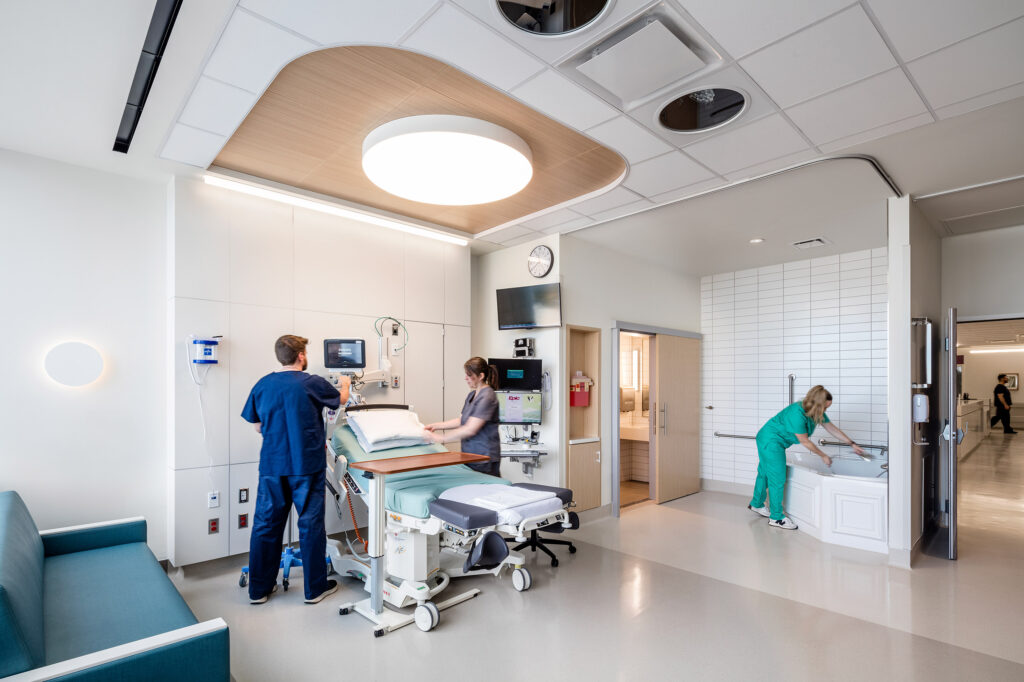
At the Women’s and Children’s Hospital, several private NICU rooms accommodate specialized treatment for newborns and provide a bed and private bathroom for the recovering mother. To achieve this, the design team had to request approval from the State of Texas. “The ratio requirements for mother and baby treatment rooms as written are antiquated and not built to support couplet care,” explains Long. The design team compiled over a thousand pages of research supporting couplet care and submitted it with a request for a variance from the state-mandated ratios, ultimately receiving approval. This approach saved square footage that would have been required to accommodate newborns and mothers in separate facilities. The resulting additional space was devoted to postpartum care. “This approval set a precedent for other facilities to follow and has changed nursery design in our state,” says Long.
The project is also notable for its sensitivity to each patient’s individual experience. Circulation paths are designed to maintain visual and auditory privacy for patients and their families, helping to prevent additional emotional distress for those experiencing loss or trauma. “Families experiencing challenging outcomes are placed in rooms next to the elevators and stairs to minimize overlap with families experiencing joyful outcomes. The intent is to give them the space and privacy needed to support healing,” says Hays Lane.
Even the most minute details have been considered: glass walls in patient floor corridors allow daylight into interior spaces; every hallway ends in a window rather than a blank wall; and all overhead lighting is diffused to ensure visual comfort for patients on gurneys. Wall-protection panels throughout the hallways were leveraged as opportunities for art and printed with a variety of designs, patterns, and colors, all custom pieces by local and regional artists.
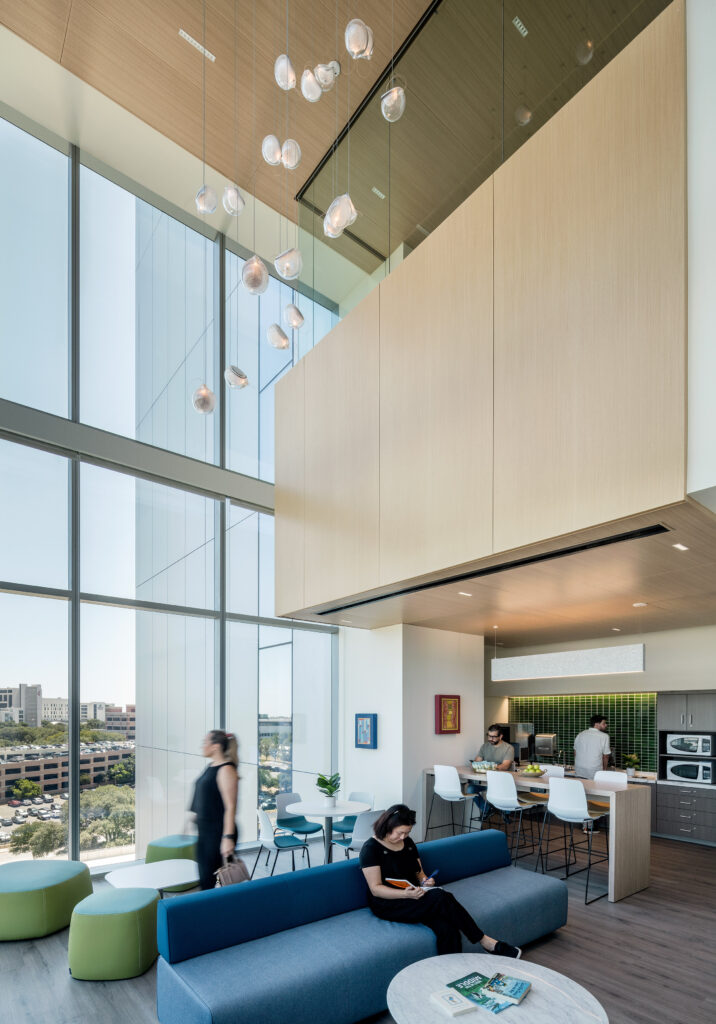
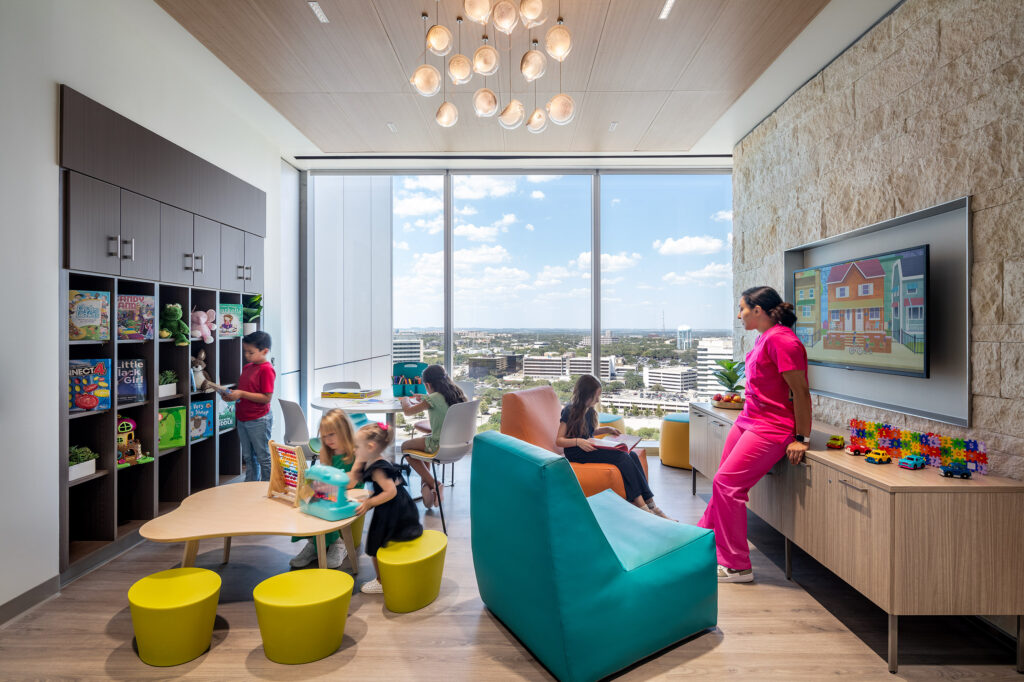
Amenity spaces designed to accommodate families with children are distributed throughout the hospital tower and podium. Within the tower, family lounges with ample daylight, sprawling views of the Hill Country, and regional, nature-inspired finishes are provided on every floor. Lounges and waiting rooms throughout the project incorporate opportunities for play, helping children manage stress and foster resilience.
All these nuances were achieved in parallel with a highly rigorous layout that leveraged the benefits of prefabrication. Patient rooms within the tower are mirrored and stacked, with each bathroom and headwall module prefabricated, transported to the site, and craned into place. Other highly complex repetitive elements were also prefabricated, such as the mechanical, electrical, and plumbing racks that extend across each level, as well as the exterior unitized curtain wall system. Roland De La Garza, AIA, the project architect with Marmon Mok, shared that “prefabrication solutions shifted an estimated 283,000 man-hours from the job site to the manufacturing floors. This minimized the number of workers required on-site and ultimately proved instrumental to the project’s success.”
Brandy Palacios, a certified nurse with University Health, participated in the design engagement process and now works in the facility. “The art, the daylight, and the attention to detail are amazing for the patients, but it’s also amazing for the staff who work here. We have hard days, too, and it’s so helpful to have beautiful spaces where we can go get some space and calm down,” says Palacios. “Many of us have been the recipients of this type of care at different moments in our lives, so this hospital feels very special and personal somehow. All of us who work here would want the type of care that we provide here.”
As a new model for healthcare that supports improved health outcomes by reducing stress and enhancing comfort and security, the University Health Women’s and Children’s Hospital has been the recipient of various awards, including a 2024 IIDA Healthcare Design Award, a 2024 IIDA Imagine That Spotlight Award, and the 2023 CODA Healthcare Merit Award. The overwhelmingly positive feedback from patients and staff alike ensures that, while the Women’s and Children’s Hospital is the first of its kind in South Texas, it certainly won’t be the last.

Allison Peitz, AIA, is an architect at Lake Flato Architects in San Antonio.





Housing Policy and the Quest for Shelter
Austin’s Stealth House defies convention.
The making of El Paso’s Temple Mount Sinai
A bustling community center for Northwest Austin

Exploring new possibilities for green burial
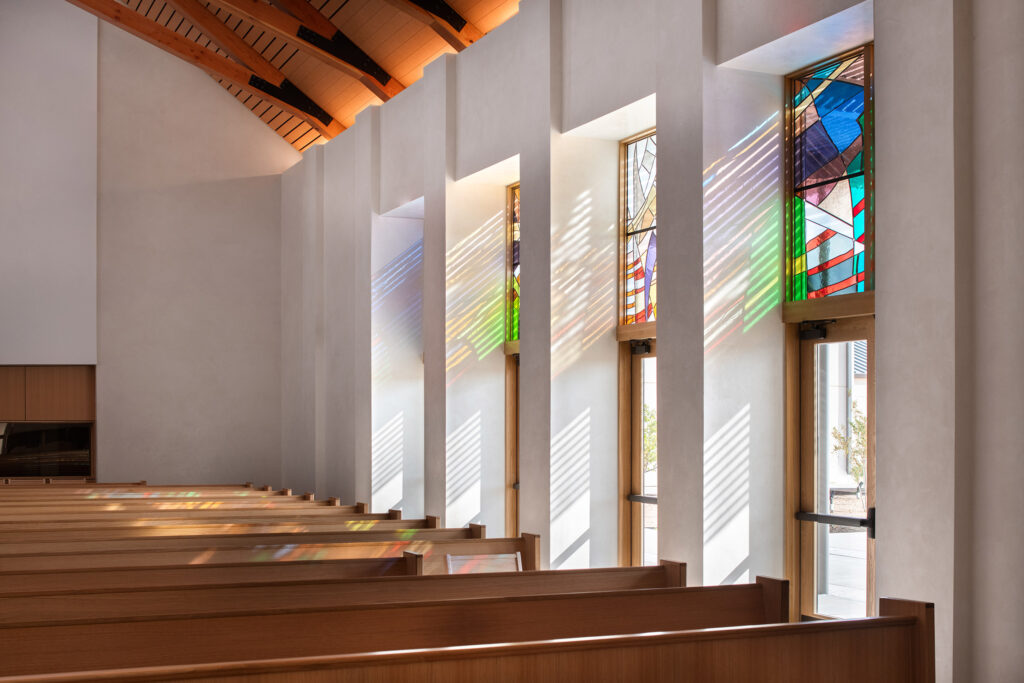
A new home for a West Texas church
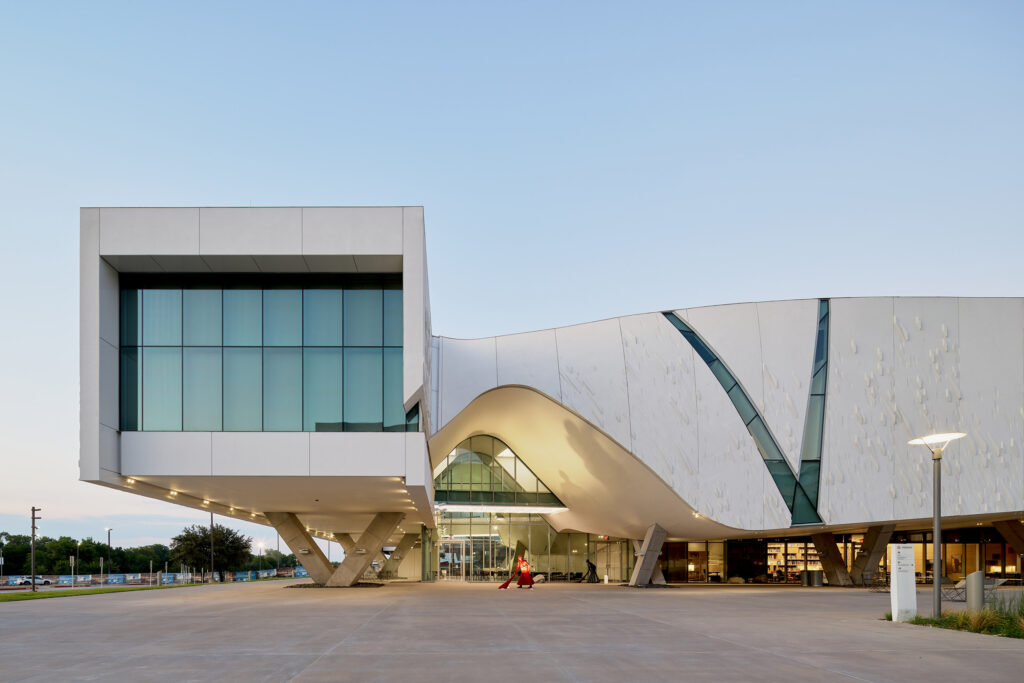
The first phase of UT Dallas’s new arts complex revealed
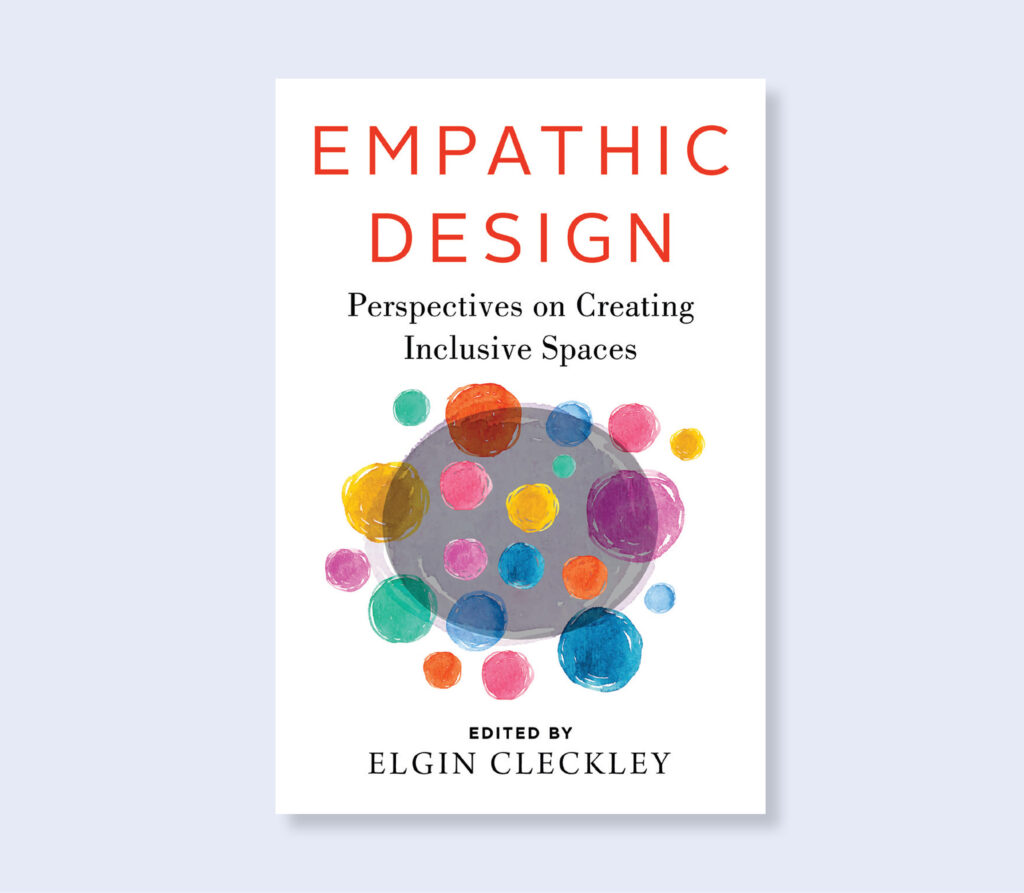
Empathic Design: Perspectives on Creating Inclusive Spaces
Elgin Cleckley, NOMA
Island Press, 2024

Creating the Regenerative School
Alan Ford, FAIA, Kate Mraw, and Besty del Monte, FAIA
Oro Editions, 2024

Hello, who manufactured the prefabricated head walls? They look great.