
Dec 17, 2025
As I reflect on my year serving as president of the Texas Society of Architects, I am filled with gratitude—for…

Housing Policy and the Quest for Shelter
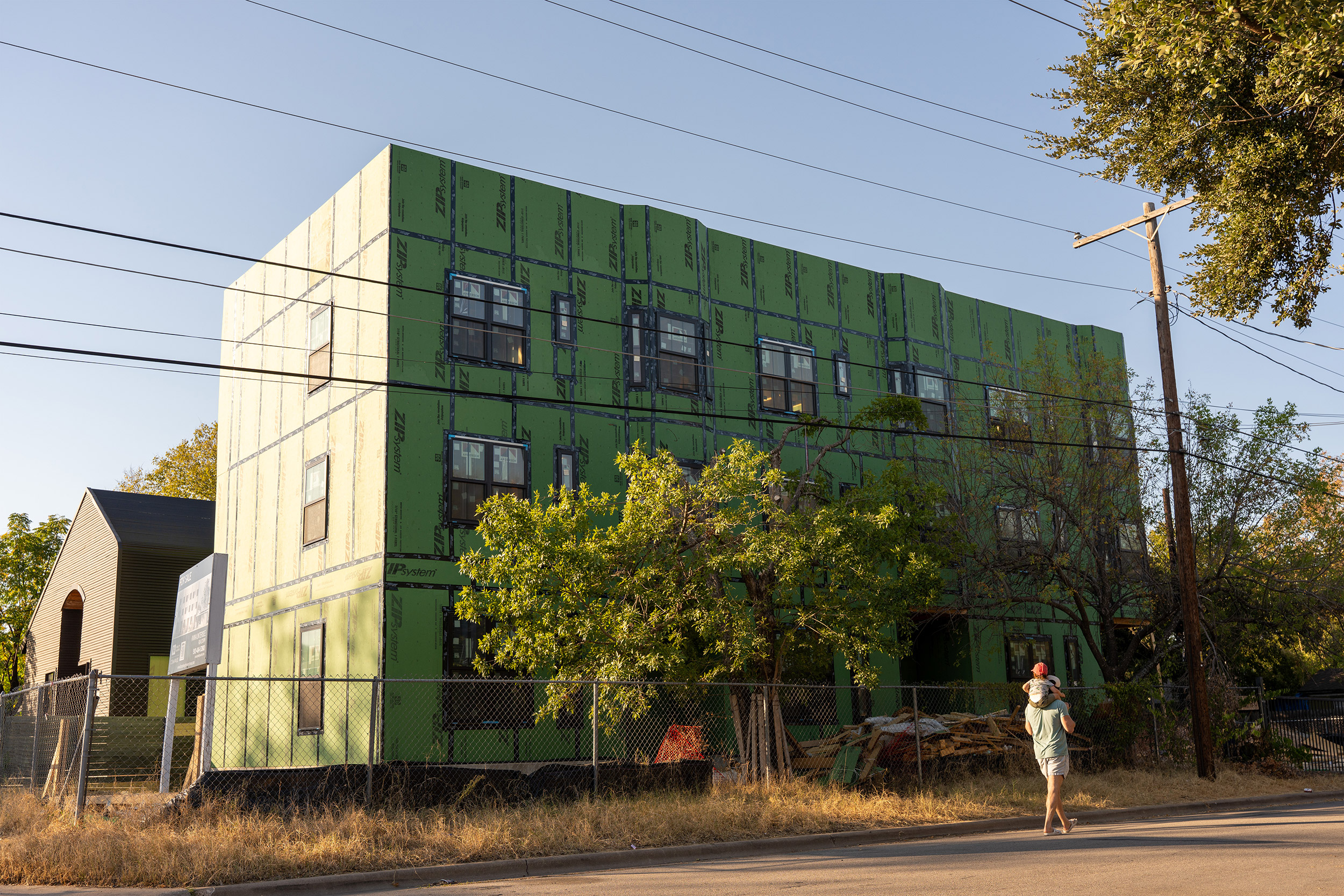
The provision of housing is one of humanity’s essential requirements, underpinning both physical safety and social stability. In the first half of the 2020s, housing unaffordability and instability emerged as a serious threat to middle-class Americans as hardships of the marginalized and disadvantaged reached more privileged groups. The resulting surge of attention to the complex of housing crises we face has created new opportunities to address the barriers to safe, dignified, affordable housing for all.
We are now seeing revisions to legislation and zoning regulations, the establishment of new building and development typologies, and increased funding for subsidized housing. Governments and communities are questioning the seemingly inevitable forces of land ownership, zoning and entitlement, financial services, and economics that create injustices normalized by the convenience and complacency of the relatively privileged.
Important recent examples of the change include efforts by Austin City Council to revise its Land Development Code, with the goal of allowing and encouraging “missing middle” and moderate-density housing options. The revisions required abolishing a collection of policies which both explicitly and implicitly banned a diversity of middle-housing typologies. The new Home Options for Mobility and Equity Initiative, locally known as the HOME Initiative, includes code amendments setting the stage for the allowance of more housing types and increased housing supply within single-family zoned areas of Austin. As a community-wide initiative, AIA Austin played a key role in the success of the policy changes, and its efforts should be upheld both as a model for other cities across the country and as an example of how architects can positively impact local policy changes.
Housing Policy Mechanisms
How can a zoning change—with no income restrictions and without subsidized funding—lead to more affordable housing? Efforts that generate actual dwelling units have the greatest immediate impact, while those that encourage and induce the construction of diverse housing are slower but more pervasive. These differences should inform how we prioritize and fund initiatives, but we cannot risk treating housing as a zero-sum game where people oppose shelters because they are not permanent solutions, or reject first-time homebuyer support because it doesn’t address acute chronic housing insecurity.
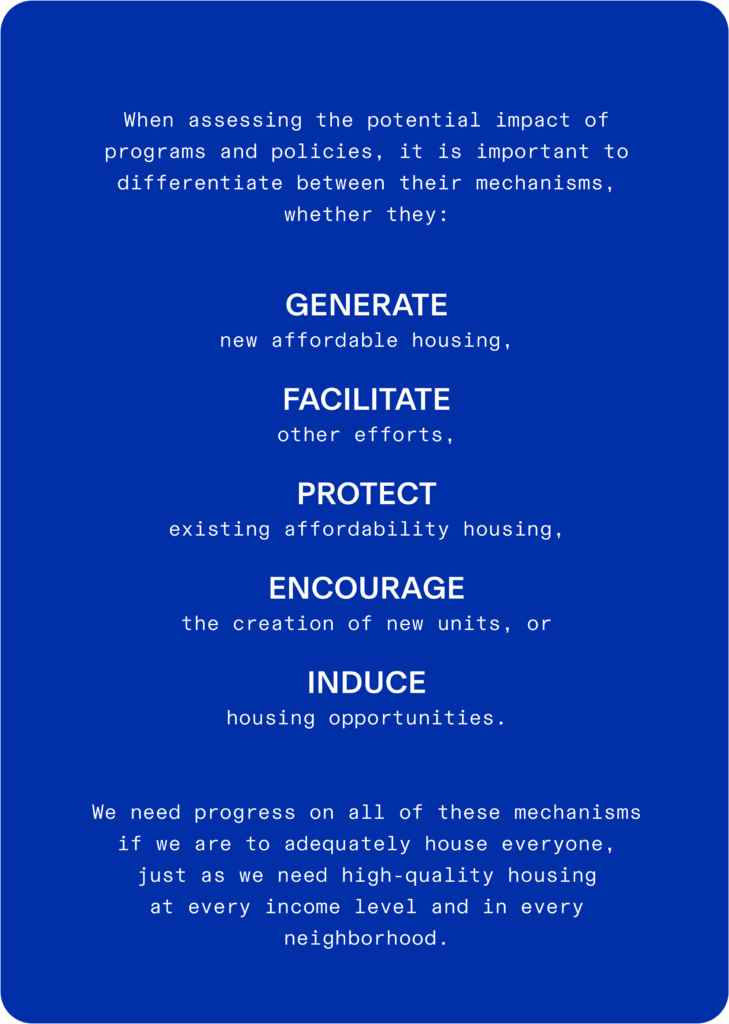
We are not facing a housing crisis; we are facing many overlapping housing crises. If we are to find meaningful solutions, they must be similarly diverse in approach, scale, typology, and cost. Likewise, they must include a broad range of participants and collaborators, with full awareness of the history that brought us here.
Supply-side housing policies like Austin’s HOME Initiative, which seek to increase the overall number and density of housing units, represent one piece of a broader landscape. Their role is to induce housing opportunities by allowing missing-middle typologies and by simplifying and reducing the costs of permitting and construction. The theory holds that increasing supply and reducing costs will drive overall housing costs down, even if the new construction is not directly affordable. Data support this theory.
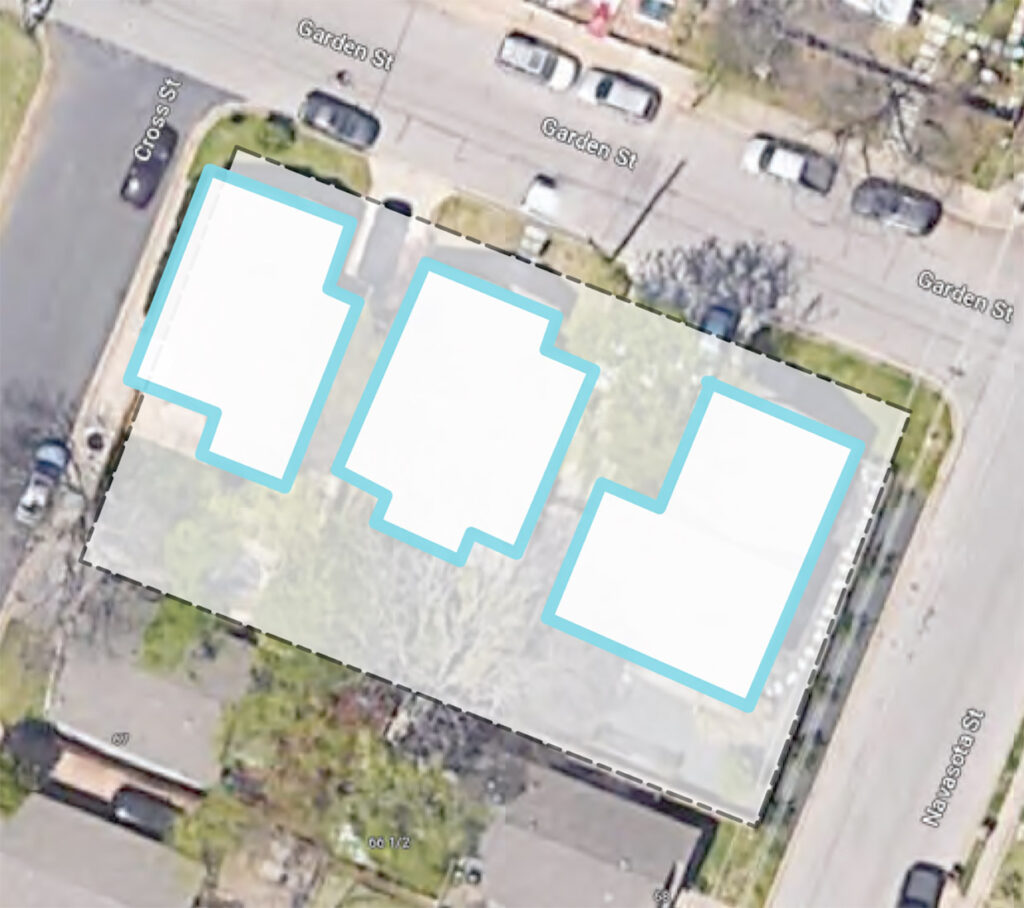
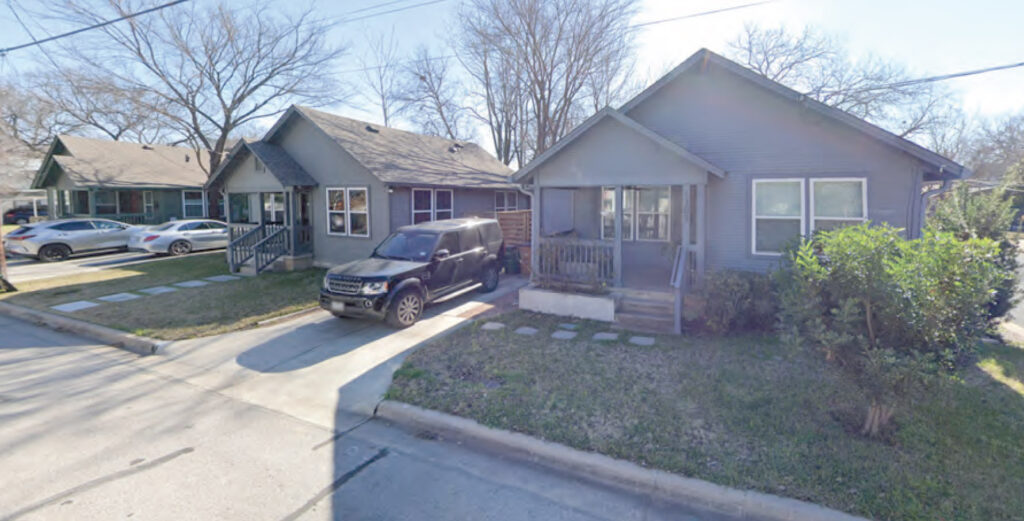
Two adjacent, equally sized lots with new construction for sale in East Austin’s Holly neighborhood illustrate this principle in action. On one lot, stood a new McMansion priced at $1.4 million; on the other, a duplex with A/B units priced at $800,000 each. While one of the duplex units may still be costly, each is less than the single-family home for a buyer, and, critically for the developer, the combined value of the two units exceeds that of the single one. Additionally, a Pew report published in July 2025 shows that adding new housing, even at the top of the market, slows rent growth, with the reduction felt most strongly by the lowest-income households.
In practice, profit-driven development models, exploitative landlords, and other ills of the housing market blunt and segregate the benefits of supply-side strategies. Naturally, such approaches are insufficient to address the full spectrum of housing needs, just as subsidized public shelters alone are insufficient. Similarly, subsidizing public shelters without a broader effort to increase market supply only exacerbates pressure on older, existing affordable housing stock, amplifying displacement in the process. Policies must work hand in hand.
How We Lost our Middle Housing
American housing is having its moment—again. Tired of being priced out of vibrant neighborhoods and unable to find housing options that don’t require outrageous commutes, a new generation of advocates and policymakers is looking to land-use reform as a means of addressing our housing crisis.
The United States is experiencing an unprecedented housing deficit, estimated at roughly 4.9 million homes. This figure, drawn from a Brookings Institution meta-analysis, accounts for a natural vacancy rate, the pace of housing construction, and population data in addition to estimates of pent-up demand. Within a decade, that number may double, as reported by McKinsey & Company, based on its projection of units that are currently overcrowded or substandard. We not only need to build more housing, we also need to reconsider how we build it. Currently 75 percent of zoned land in the country is restricted to single-family residential use. This has fueled sprawling commuter neighborhoods at the edges of cities, a low-density housing model necessitating constant infrastructure expansion and ever-widening highways. For every acre of developed land, another half-acre of new roadways and infrastructure is built to support it.
When we look at multifamily developments, we see a different picture. Texas has added an incredible number of new apartment buildings—more than 80,000 units are expected in 2025—which accounts for 30 percent of all new apartment construction in the United States. This building boom has been essential for cities like Austin as they recover from the spike in housing costs post-pandemic. Over the past decade, Austin’s population grew by just over 20 percent, while housing costs increased by 35 percent. The disparity is steep, but modest compared to cities like Phoenix, where housing costs rose by more than 65 percent in the same period despite a population gain of only 12 percent. Los Angeles, by contrast, actually lost population yet still saw a 50 percent increase in housing costs.
Yet when we examine the typologies of new multifamily developments, a troubling monotony emerges. They are typically either isolated garden-style apartments in the suburbs or dense podium buildings in urban cores. Downtown construction trends toward larger buildings with ever smaller units. Why does this dichotomy exist, and whom does it serve? Has it always been this way?
The answer, as with most discussions of land use, takes us back to 1926 to the Village of Euclid v. Ambler Realty Co., the landmark Supreme Court case that established the legal foundation for zoning in the nation. Famously, the Supreme Court’s ruling justice described apartments as “parasites.” Less well remembered was the district judge who was overruled, warning that zoning would cause societal stratification: “the result to be accomplished is to classify the population and segregate them according to their income or situation in life.”
Significant policy decisions continued to shape cities through the second half of the twentieth century. For this discussion, let’s next consider the post-war housing crunch and the impact of the GI Bill. Officially enacted as the Servicemen’s Readjustment Act of 1944, the GI Bill provided education, housing, and financial benefits to U.S. military veterans to help them transition to civilian life. The United States successfully built 15 million homes between 1945 and 1960. That’s one million homes a year, a pace we need to strive for today. During this time, the federal government enacted the Treasury–Federal Reserve Accord of 1951, which redirected incoming foreign capital into the mortgage market by capping the earning potential of Treasury bonds, fueling an incredible boom in suburban construction.
The burgeoning suburbs were supported further in 1956 by the Federal-Aid Highway Act, which provided federal funding for the largest public works project in American history. These highways connected cities to their expanding suburbs but also emptied and violently bisected urban neighborhoods. The damage continued through the 1960s and 1970s with widespread urban renewal policies and the resulting loss of urban tax bases. In 1974, the Housing and Community Development Act curtailed cities’ ability to build social housing, shifting emphasis to Section 8 vouchers, which still allow eligible households to rent housing of their choice, with the government paying a portion of the rent directly to the landlord and the tenant covering the rest.
In the 1980s, cities reduced allowable building densities through urban downzoning, while cuts to the U.S. Department of Housing and Urban Development (HUD) and the introduction of the Low-Income Housing Tax Credit (LIHTC) program encouraged the development of larger, centrally managed affordable housing projects. Over the following decades, deregulation and easy credit fueled a surge in homebuilding and speculative investment. All this set the stage for the 2008 housing and financial crisis, when a collapse in the subprime mortgage market triggered widespread foreclosures and a global recession—stalling home construction and leaving lasting effects from which the housing market has yet to fully recover.
Ultimately, the allure of sprawling, auto-centric suburbs replaced our once-vibrant streetcar neighborhoods. What remained was a development model highly subsidized by federal policy, one that prioritized highways and detached houses over community, affordability, and the human-scaled housing types that once sustained American city life. Small multiunit buildings, which had long flourished as an instrumental part of urban growth by offering incremental housing opportunities, were disincentivized and written out of building and zoning codes.
Not a Missing Middle, but Missing Middles
The concept of “missing middle housing” refers to the range of housing typologies that exist between the single-family house and the large multifamily apartment blocks. It is considered missing because these formal typologies are rarely built in America today, despite their historical significance.
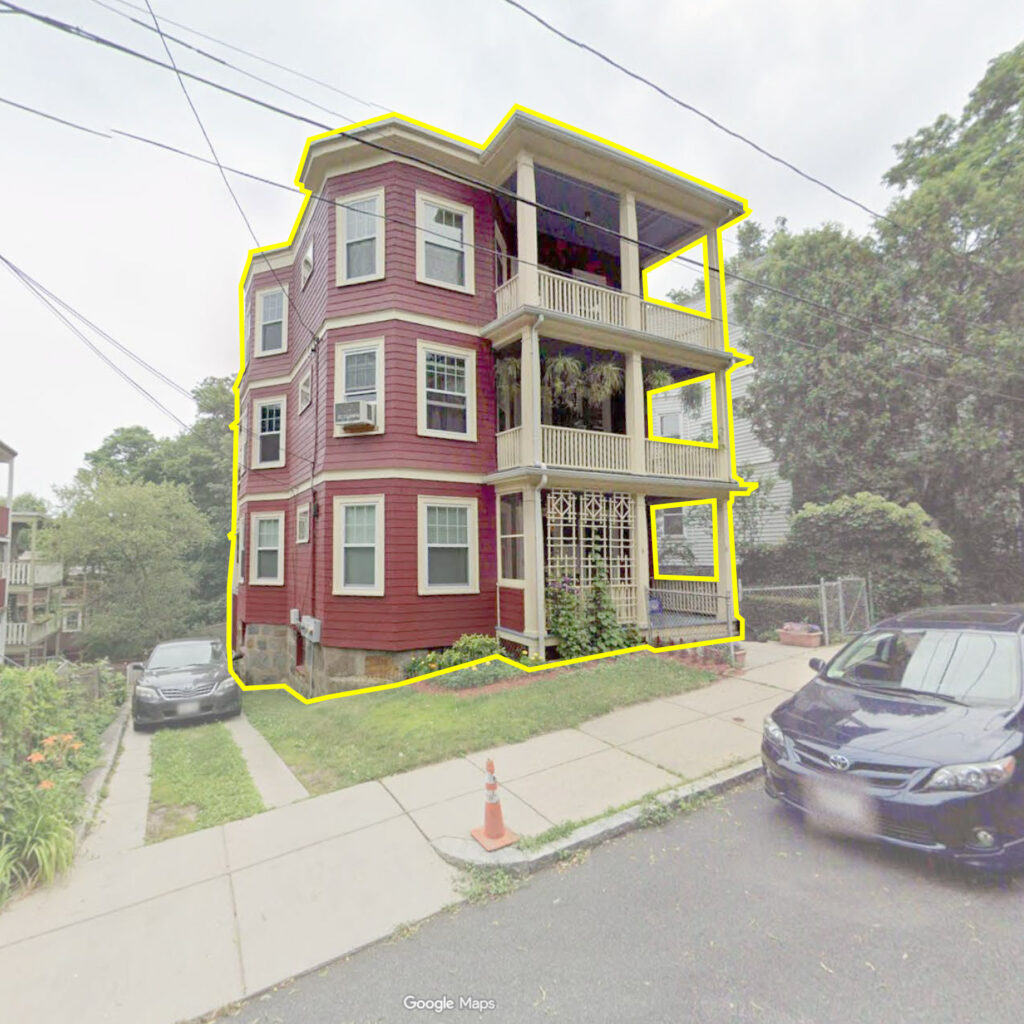
Boston’s triple decker—a three-story building of efficiently stacked flats—was essential to the city’s development. In the early 1900s, roughly 15,000 of these structures were built to expand the streetcar suburbs, offering upward mobility for immigrant populations. Ownership was fluid: a household might start by renting one unit, later purchase the building, and eventually rent out the other flats as children grew up and moved away.
In Buffalo, the shopfront house combined a one-story storefront with two or three stories of residences behind and above, blurring the line between private residential life and commerce. These neighborhoods thrived as lower barriers to entry for small businesses fostered a rich network of local markets and “third places,” social spaces like cafés, bars, and barbershops that exist between home and work and strengthen community life. In 1923, these buildings were made illegal to construct, but Buffalo’s comprehensive code update in 2017 reinstated them. Today, these historic, surviving buildings characterized some of the most sought-after neighborhoods in the city.

Throughout much of the twentieth century, the United States systematically undermined mid-scale housing typologies through zoning, building codes, legislation, and land-use policies designed to promote homeownership in sprawling, single-family suburbs. The policies effectively gutted middle-density, affordable, and social housing. Cities across the country are now looking for ways to reverse this trend, and Austin’s HOME Initiative is one example of the ongoing efforts.
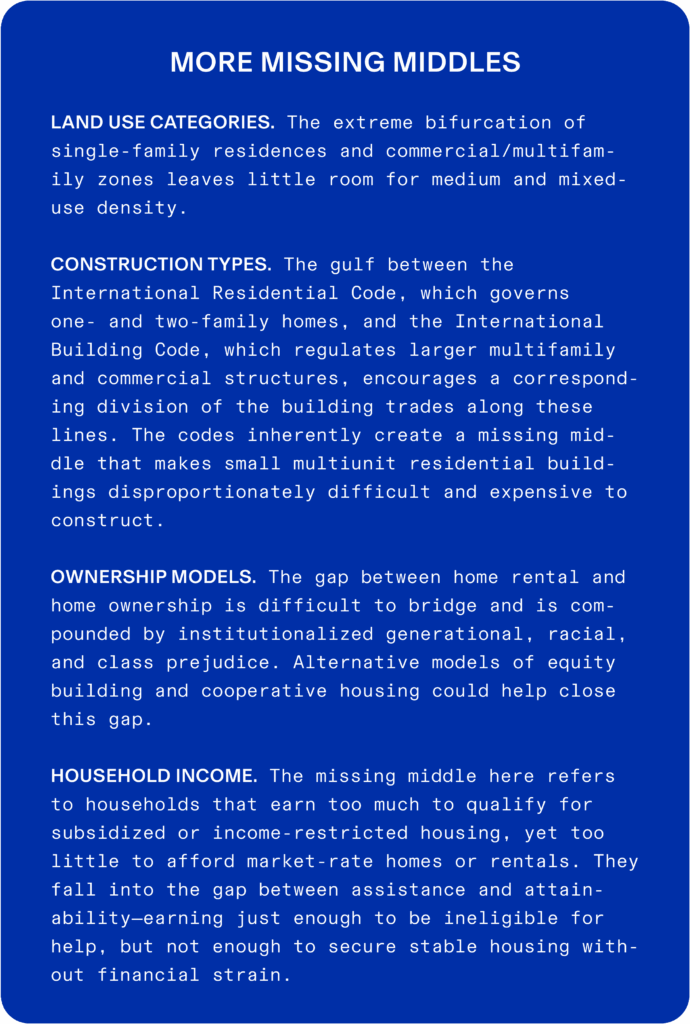
We must not forget however that typology is just one of several spectrums that must considered when addressing the factors influencing housing affordability and stability. Many others—land use categories, construction types, ownership models, and household income, to name a few—also have a middle that is missing.
Austin’s HOME Initiative
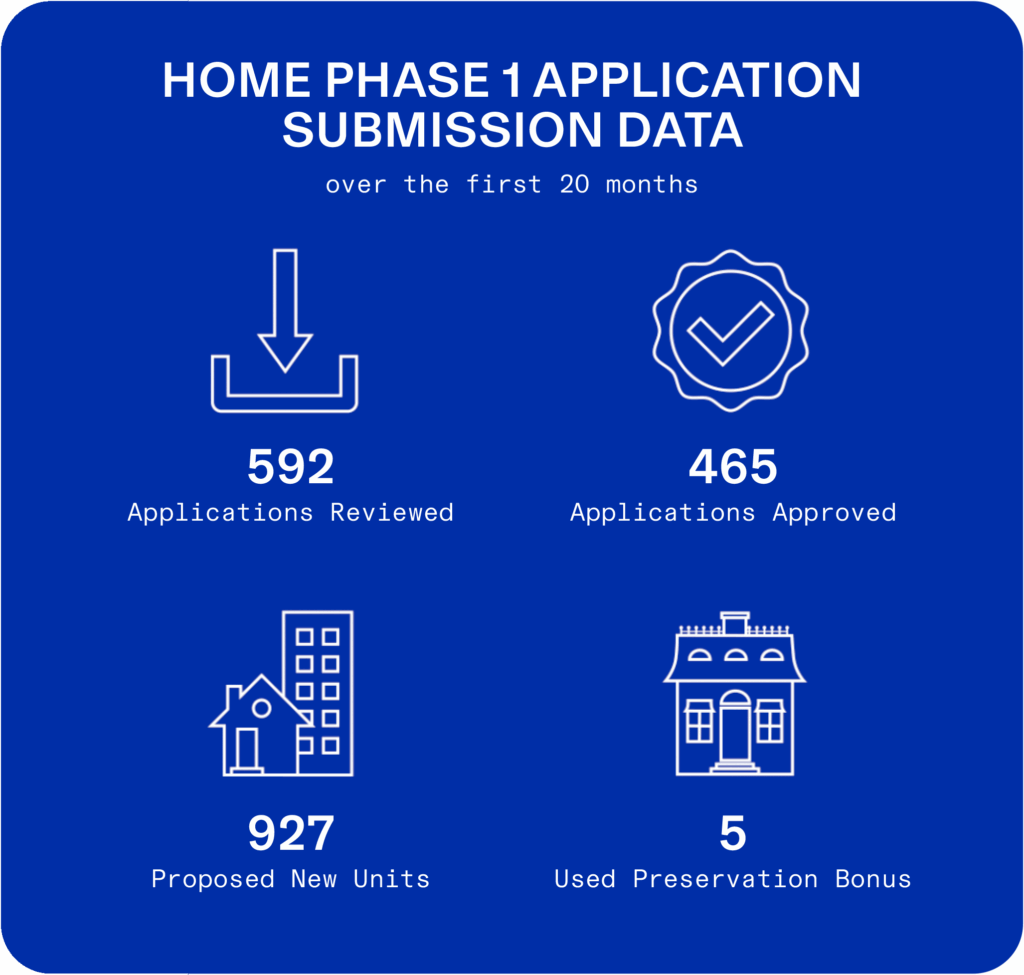
The HOME Initiative was designed to address several key gaps in Austin’s housing landscape by allowing and encouraging both smaller housing options and a greater diversity of typologies. Interest in revising Austin’s land-use policies slowly revived after the failure of CodeNEXT, a comprehensive land development code overhaul, in 2020. Forced by a series of Not In My Backyard (NIMBY) lawsuits to take a piecemeal approach, the city identified several initial priorities: allowing multiple units on single-family–zoned lots, simplifying accessory dwelling unit (ADU) regulations, adjusting residential historic preservation incentives, and reducing minimum lot sizes. These efforts were ultimately divided into two implementation phases.
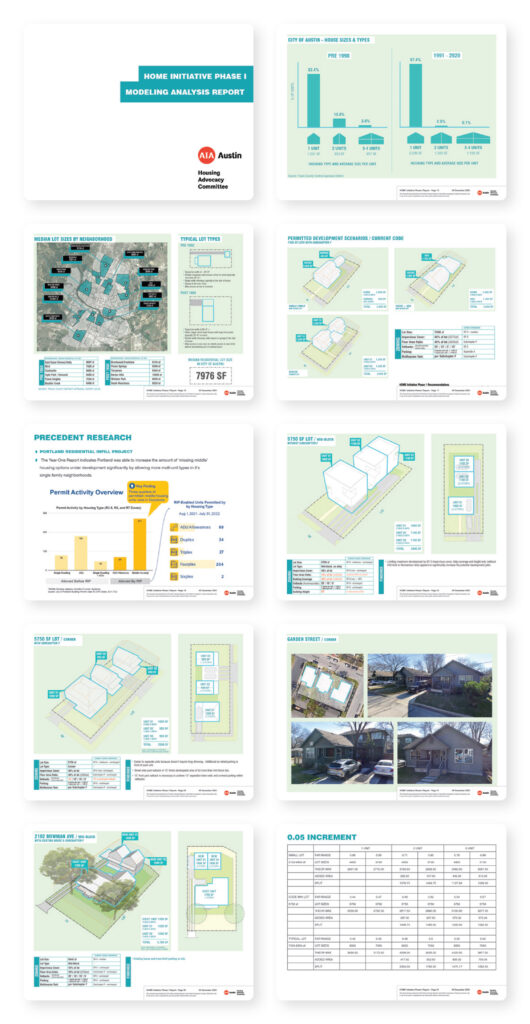
Building on the success of its contributions to the CodeNEXT process, city leaders invited AIA Austin to assist in modeling the proposed changes. AIA Austin’s Housing Advocacy Committee took on the task, conducting precedent research and modeling, compiling stakeholder feedback, and presenting findings to the Planning Commission and City Council.
The committee’s advocacy focused on several interrelated goals: increasing the overall housing supply as one measure to improve affordability; removing unnecessary burdens from homeowners seeking to add accessory units; ensuring new single units would not exceed current size limits; promoting a variety of unit sizes and diverse formal typologies; simplifying regulations to reduce the burden on design, review, and permitting; and incentivizing the preservation of existing and historic housing stock.
By the conclusion of the HOME Initiative Phase I adoption process, the committee had made 12 recommendations to the final language of the ordinance and all were accepted.
HOME Initiative Phase I allows three units to be built on all single-family–zoned lots. Increasing zoned capacity—essentially allowing a single parcel of land to hold more residences—eases the pressure of displacement by raising the overall housing supply within a neighborhood. Instead of one large, expensive house replacing a smaller one, multiple smaller homes can now share the same lot, adding more units than are being removed. This added capacity helps absorb demand that would otherwise drive-up prices for existing housing. Importantly, these units are not tied to any hierarchical relationship, as in the previous ADU policy, and each unit is afforded the same dignity as the others.
HOME Initiative Phase II reduces the minimum lot size from 5,750 SF to 1,800 SF—a significant change to a standard established in 1946 to counter efforts then underway to end racial housing segregation.
We analyzed the possibilities of the code changes as part of AIA Austin’s Housing Advocacy Committee. During our modeling process, we discovered several unexpected consequences of the proposed policy changes, prompting us to revise our recommendations from our initial hypotheses. In one instance, we identified a potential loophole created by the proposed simplification of regulations that eliminated floor-to-area ratio (FAR) limits. Without those limits, it would have been possible to construct larger single units under the new regulations—contradicting the initiative’s goal of encouraging smaller housing options. To support implementation, we presented a range of options outlining how to set these limits and the potential impacts of each. The Planning Commission and City Council ultimately adjusted these limits based on their policy discussions.
One of the most significant questions surrounding the allowance of small lots concerned building setbacks. Some policymakers expressed safety concerns about zero-lot-line construction. It soon became apparent, however, that much of this apprehension stemmed from misunderstandings about how the code actually functions. In response, we prepared a primer on building separation within the International Residential Code, which regulates larger multifamily and commercial structures, to demonstrate how the code governs and protects life safety across a range of conditions.
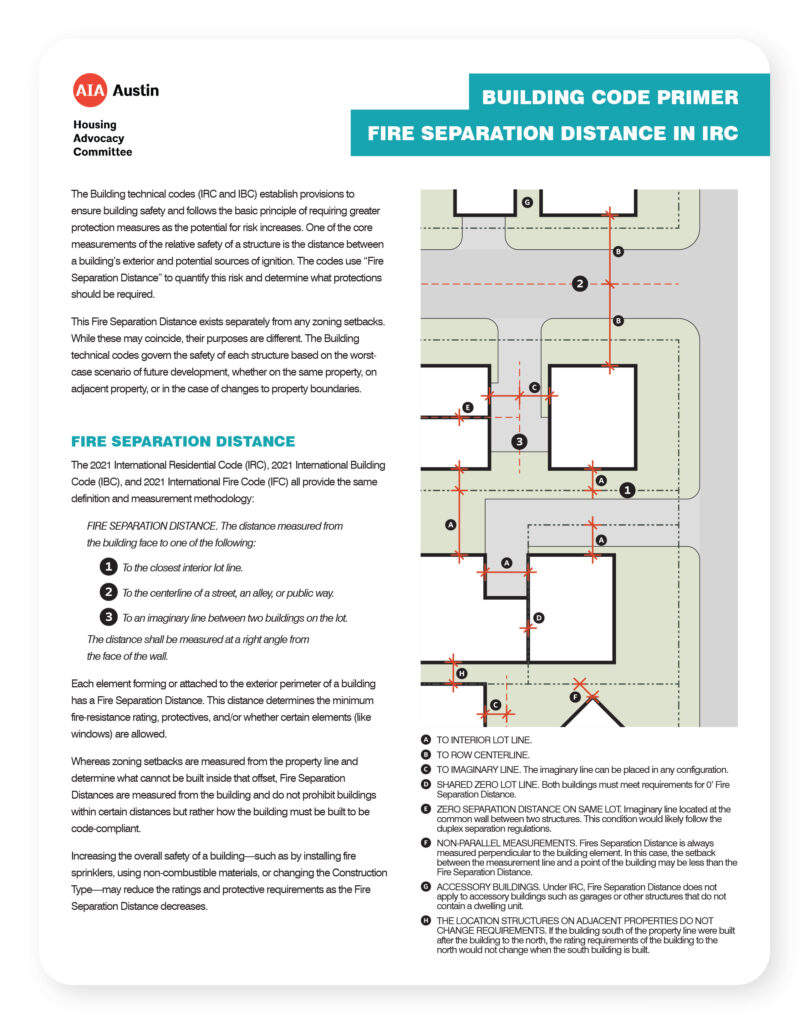
With this graphic resource, we were able to educate policymakers on two key points: First, the building code is already written to ensure fire safety for every permutation of building location relative to a property line. Second, nothing that occurs on an adjacent lot, either before or after construction, changes the requirements for how an owner can build on their own lot. When city building officials and the fire department both confirmed that the existing building codes were sufficient to address life-safety requirements, the City Council agreed that the zoning code did not need to be overburdened with additional fire-safety regulations.
Successful partnership with the city led to coalition building with developers and organizations like Preservation Austin, Austin Infill Coalition, AURA (formerly Austinites for Urban Rail Action), Texans for Reasonable Solutions, Texas 2036, and Texans for Housing, which led to other coordinated policy efforts including single-stair building code reform, compatibility setback reform, preservation bonuses, and zoning reform at both the local and state levels.
Housing Policy Mechanisms in Action
First and foremost, HOME Initiative will induce new supply of a diversity of housing units throughout the city. But the opportunities presented by HOME Initiative extend beyond simply increasing the number and density of units. Allowing for small lots, accessory dwelling units, and small lot subdivision also facilitates projects undertaken by groups already building subsidized affordable housing. For these groups—whose efforts are often constrained by the high cost of land—HOME Initiative enables more efficient use of the city’s limited supply of buildable lots.
HOME Initiative policies also seek to protect existing affordable housing through measures such as preservation bonuses and by offering long-time, property tax–burdened, homeowners opportunities to generate income through additional units or the sale of portions of their lots.
Recently, housing has become a priority for high-cost cities across the nation, and jurisdictions are introducing polices to expand housing opportunities at every level of government. Here in Texas, Dallas expanded its International Residential Code, which governs one- and two-family homes, to allow up to eight units per lot—quadrupling the previous limit—through what is known as the Consolidated Dwelling Amendment. Treating the “plexes,” from duplexes up to eightplexes, in a similar manner to a single-family house reduces construction costs and better aligns safety provisions. This approach can both encourage the creation of these missing typologies and support smaller-scale affordable projects.
Statewide, bills passed during the 2025 legislative session are poised to further stimulate housing production and improve spatial efficiency. Senate Bill 15 reduces the minimum lot size for greenfield development, discouraging sprawl and facilitating starter-home construction, while Senate Bill 840 allows housing by right in all commercial zones.
The Architect as Advocate
AIA Austin Housing Advocacy’s work revealed why architects are uniquely positioned to contribute to the complex challenges of housing reform. Our professional experience performing test fits and our deep knowledge of codes and processes provided vital insight into what works—and what doesn’t—for real projects. We also drew from the experiences of our clients, particularly homeowners who found their desired projects, including ADUs, impossible under existing regulations. Equally important, our visual communication skills proved pivotal in illustrating the potential applications of proposed regulations and in contextualizing both current and historical land-use patterns.
But perhaps most valuable to city staff and leadership was our unique perspective: architects serve not only as voices of professional expertise but also as voices of reason—standing between the perceived extremes of exclusionary neighborhoods and exploitative developers. As an organization composed of individuals united by a shared commitment to improving the built environment, deeply engaged with our communities, and attuned to both the benefits and potential harms of development, AIA member architects have a responsibility to come together in organized advocacy in order to help shape the design excellence and equity of our cities.

With a focus on enacting and embodying solidarity, subsidiarity, and human dignity in the built environment, affordable housing architect and advocate Jason John Paul Haskins, AIA, serves as the director of construction and design for Foundation Communities and is the principal architect and founder of Habitavit.

Chris Gannon, AIA, is the principal at Shams Gannon Architecture, advancing missing middle housing in design and policy. He chairs AIA Austin’s Housing Advocacy Committee, sits on Austin’s Building and Fire Board of Appeals, and is active in local and statewide housing organizations.





A new model for neonatal care
Austin’s Stealth House defies convention.

The making of El Paso’s Temple Mount Sinai
A bustling community center for Northwest Austin

Exploring new possibilities for green burial

A new home for a West Texas church

The first phase of UT Dallas’s new arts complex revealed

Empathic Design: Perspectives on Creating Inclusive Spaces
Elgin Cleckley, NOMA
Island Press, 2024

Creating the Regenerative School
Alan Ford, FAIA, Kate Mraw, and Besty del Monte, FAIA
Oro Editions, 2024

Excellent article and great work. I did sort of miss the mention of Houston’s efforts to also modernize; perhaps in the sequel article, gentlemen, as the subject should remain front and center.
Growing up in Chicago I’ve lived in brownstones, triple-decker flats, and various styles of houses that had separate entrances, and I think it would be interesting to see more modern takes on these from a consumer perspective. It is especially useful since many parents are ageing and it’s not uncommon for multiple generations to live in the same household in this era. I think it is nice that they are working with local legislation to create opportunities for a “style” of multiunit housing options