Dec 17, 2025
As I reflect on my year serving as president of the Texas Society of Architects, I am filled with gratitude—for…
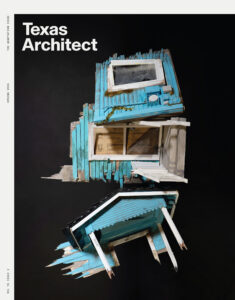

Creating the Regenerative School
Alan Ford, FAIA, Kate Mraw, and Besty del Monte, FAIA
Oro Editions, 2024
A surprise takeaway from Creating the Regenerative School is how so many designers are accomplishing net-zero goals while also fostering a sense of wholeness for students on K-12 campuses. Although excited about regenerative concepts, while reading the opening essay I skeptically underlined: “Net zero is achievable within the constraints and challenges of a public school.” By the end of the book, however, I was convinced by the authors.
To build on his 2007 book, Designing the Sustainable School, Alan Ford, FAIA, returns with two additional authors, Kate Mraw and Betsy del Monte, FAIA. The overall premise stays the same: thirty-eight case studies of schools and an encore of four case studies of environmental centers dive deeply into regenerative design topics with generous spreads of photos, diagrams, and statistics over multiple pages. Creating the Regenerative School welcomingly brings more meaningful data to its analysis of each project.
Case studies pull from global climate zones, crossing the Norwegian subarctic, arid northwestern India, and diverse stateside regions. Building typologies range from individual structures at preschools and high schools to an entire K–12 campus. Budgets vary, and although six case studies unfortunately withheld these metrics, most are generously shared, providing useful points of comparison. Examples of more modest budgets include a Montessori building in Washington—a labor of love with artful details like child-centered windows for its littlest users—completed on an impossibly small budget of $1M in 2018, and VMDO Architects’ design for Bluestone Elementary School in Virginia, a net-zero-ready school completed for less than $260 per sf in 2017. The featured project with the highest cost is over $1,350 per sf.
Leadership and policy successes shine across the case studies. Margherita Finamore, the inimitable former project manager of the Sustainable Building Environment Sector of Pesaro, Italy, created a contract specifying near net zero and sustainability metrics at no additional construction cost for the Antonio Brancati Secondary School. The project came in on budget. Student leadership is also part of the mix in the stories. When students at Benjamin Banneker Academic High School in Washington, DC, learned that their project was at risk of being canceled, they descended on City Hall with a call to continue construction and prevailed.
There is candor within the pages about the design process as well. At Asilong Christian High School in Kenya, BNIM wanted to craft a contemporary campus that could grow over time employing local labor and construction materials. All of these qualities create an inspiring concept that feels like Christopher Alexander’s book A Pattern Language come to life. One essential idea involved applying the woven wicker screening used for traditional grain storage to the buildings. Although male community leaders thought it would not work, the design team persisted. They followed up with women who built the local granaries and received valuable technical guidance. Photos illustrate a pleasant outcome through this astute pivot.

A standout stateside case study is NeoCity Academy in humid, subtropical Kissimmee, Florida. On a slim budget of less than $300 per sf in 2019 and within restrictive state requirements, the team built a net-zero school that is now ranked third for magnet high schools across the state. Tomas Jiménez-Eliaeson, AIA, a designer partner at Little Diversified Architectural Consulting, said that advocates and visionary leadership at individual, team, and organizational levels enabled the outsized results.
Novel and reapplied technical approaches to regenerative design are touched on throughout the case studies as well. In Bainbridge Island, Washington, Mithun collaborated with a supplier to digitally scan and select 24 whole trees as structural load-bearing columns—realizing an aesthetic appropriate for the local context. EskewDumezRipple found inspiration for the exquisite Thaden School’s Home Building in local vernacular chicken coops. This case study speaks frankly about the challenges of designing in Bentonville, Arkansas, with its humid summers, cold winters, and ever-present cloud cover.
For the Rajkumari Ratnavati Girls’ School in India, a modern update of a perforated jali wall harnesses the Venturi effect to draw in cooling winds. Diana Kellogg of Diana Kellogg Architects intended its striking oval form around a courtyard to feel like a warm embrace for these societally undervalued girls with historically low literacy rates. Within the enclosed courtyard, they are free to run, play, and dream.
The discussion around carbon in the case studies reflects how quickly the field is evolving and some of the current conflicts. The section on sustainable heating and cooling at St. James Intermediate School in Myrtle Beach, South Carolina, notes the use of concrete block walls, spray-foam insulation, and hollow-core concrete roof and floors. The quote that the authors don’t know of another school in the country with a lower energy use intensity (EUI) is meaningful, but at what cost in terms of embodied carbon?
For SOM’s work at Kathleen Grimm School for Leadership and Sustainability at Sandy Ground in Staten Island, New York, the design team used triple-glazed windows in 2015. The architect offers a candid reflection, noting that the windows seemed like the right solution at the time but are now being reconsidered for their carbon footprint. Anecdotes like the fact that Sam Lasky, FAIA, a principal at William Rawn Associates Architects, and colleagues at Arrowstreet discussed balancing a net-zero objective with good neighborliness in terms of right-sizing the massing of the King Open and Cambridge Street Upper Schools and Community Complex in Cambridge, Massachusetts. The humility and balance wrapped in these comments is part of what makes this book a valuable resource.
The case study order is alphabetical, which feels neutral for an editorial team, and in theory should result in easy reference for readers. However, the result is more challenging, as readers are left zipping between climates, budgets, and school typologies at random. It also produces some disconcerting moments, such as the back-to-back placement of the most economical international project alongside the one with the highest disclosed budget—more than 200 times greater in cost. This purported neutrality of order risks diminishing rather than amplifying the unique contribution of both through unfair comparison.
Breadth of audience is always a challenge for this type of book. The introduction welcomes all with a stake in school design and then seems to forget that educators, policymakers, and decision-makers might appreciate support along the way. Some core concepts like net zero and nature are not defined, while others like intersectionality and place attachment are explained. A glossary and index in addition to more thorough footnotes in the opening essays would have gone a long way to bridge the gap without bogging down more informed readers.
It was a delight to finally come across the single Texas case study toward the end of the book—the charismatic Will Smith Zoo School in San Antonio by Lake Flato Architects. However, this raised a question for me: why, despite ample representation from leaders in the design profession in Texas, is only one project featured? One of the authors, Kate Mraw, lives in Texas, and another, Betsy del Monte, although currently elsewhere, had a robust career in North Texas recognized with an AIA Dallas Lifetime Achievement Award in 2022. At least three of the 16 thought-leader voices featured in the opening essays are based in Texas. So why does this edition include only one case study in the state when the previous version had three? I can only hope that a future edition will resolve this puzzle—because Texan voices are championing the conversation.

Lisa Casey, Hon. AIA Dallas, ASLA, LEED AP BD+C, is a landscape architect at Studio Outside in Dallas. She also serves on the Dallas Architecture and Design Foundation Board.

Housing Policy and the Quest for Shelter

A new model for neonatal care
Austin’s Stealth House defies convention.
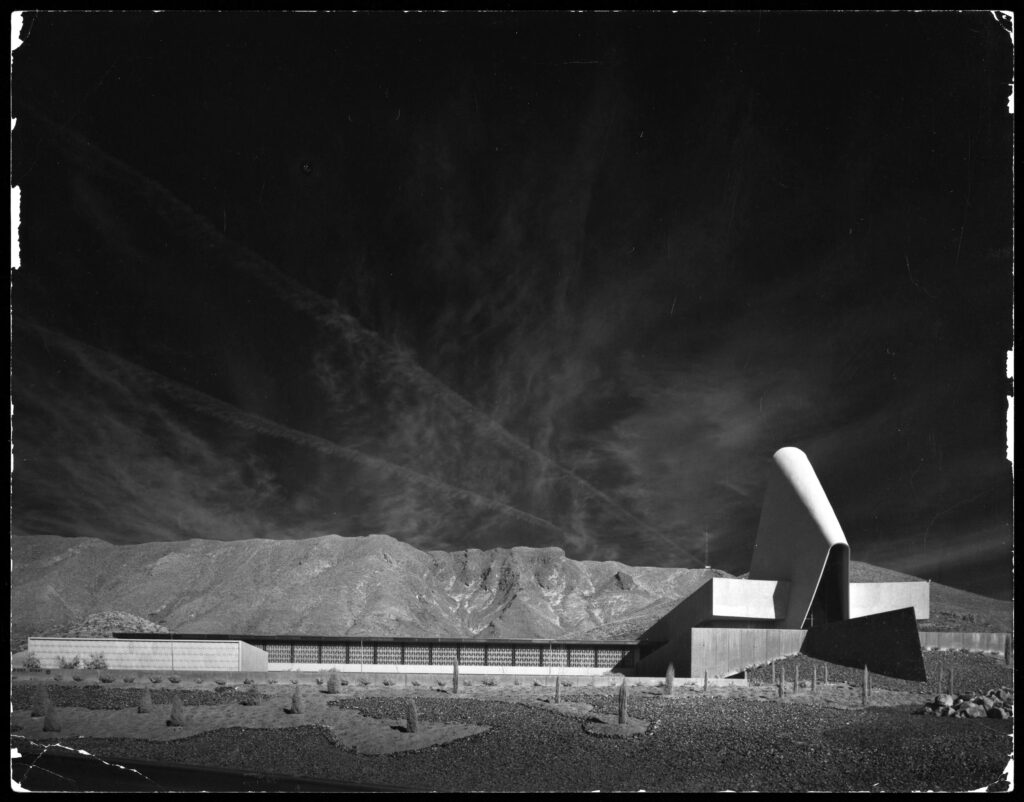
The making of El Paso’s Temple Mount Sinai
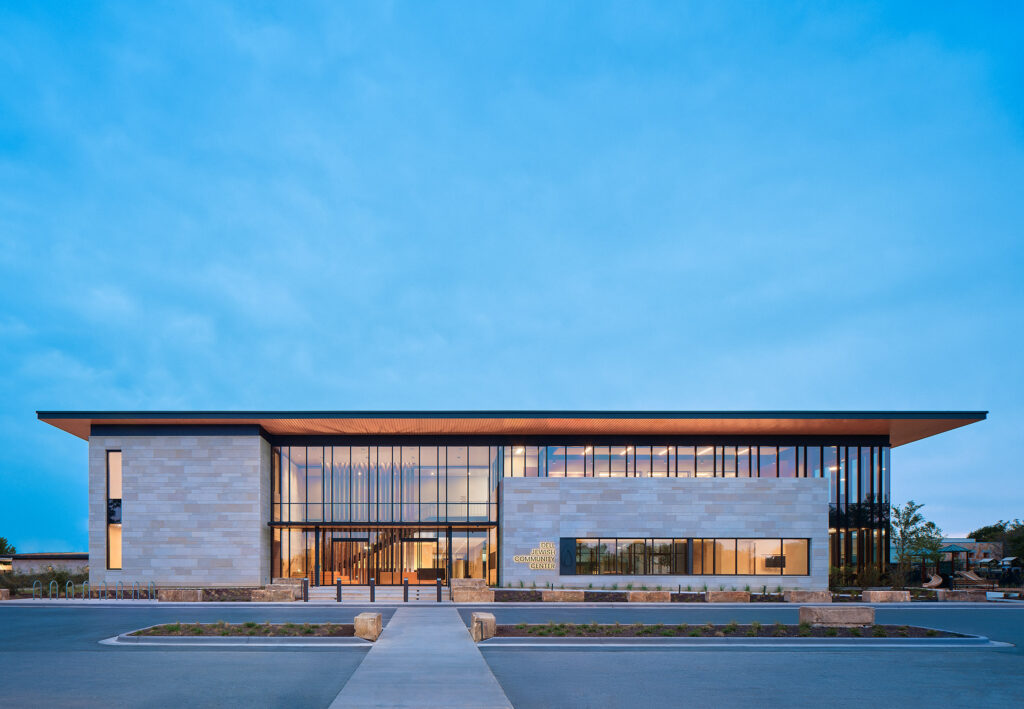
A bustling community center for Northwest Austin

Exploring new possibilities for green burial
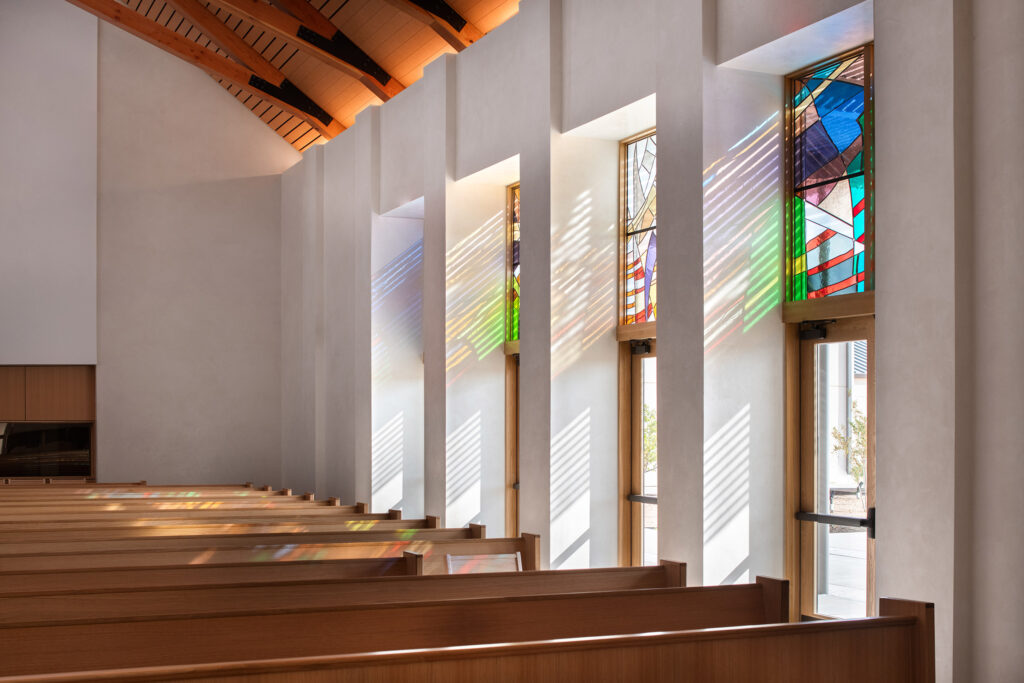
A new home for a West Texas church
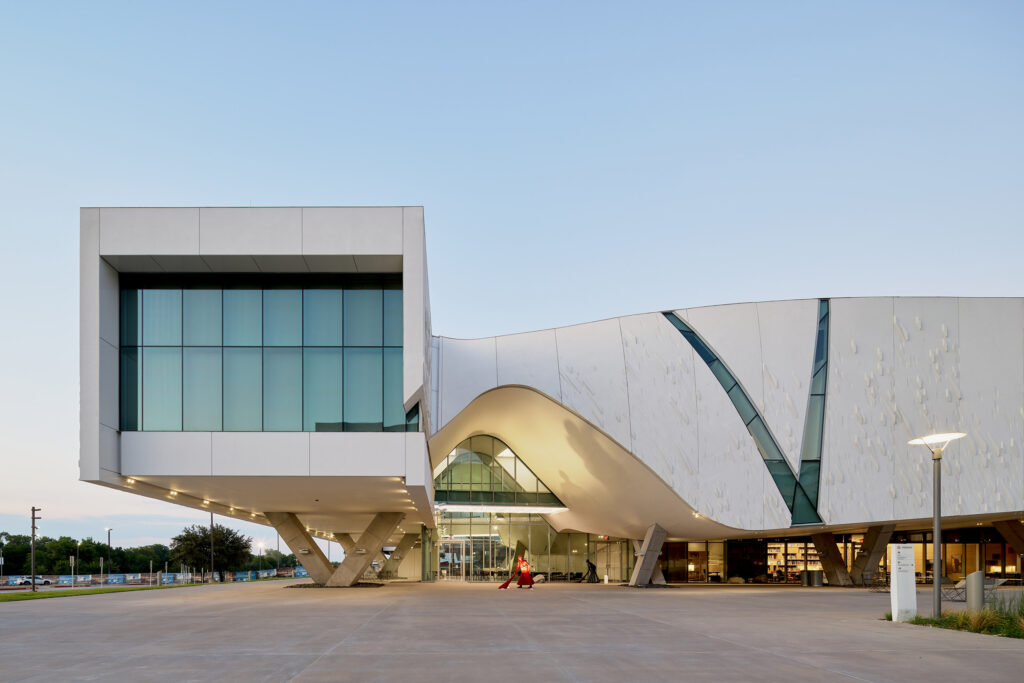
The first phase of UT Dallas’s new arts complex revealed
Empathic Design: Perspectives on Creating Inclusive Spaces
Elgin Cleckley, NOMA
Island Press, 2024