
Dec 17, 2025
As I reflect on my year serving as president of the Texas Society of Architects, I am filled with gratitude—for…
A new home for a West Texas church
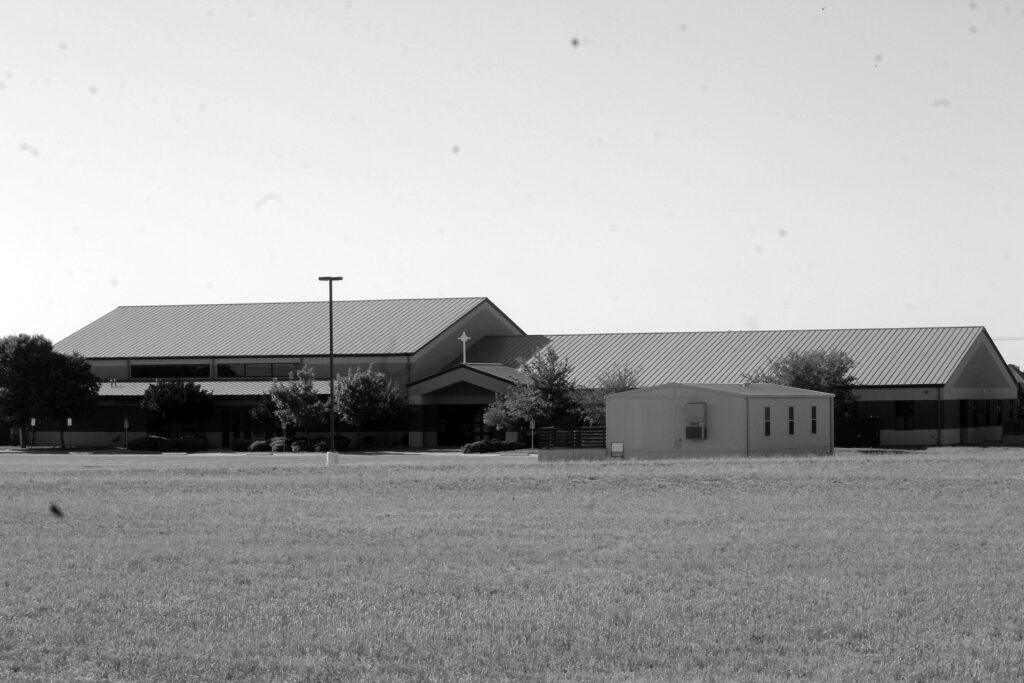
In 2005, a small congregation meeting in a school cafeteria took a leap of faith. They purchased 16 acres of undeveloped land outside the Midland “loop” for a bargain price. At the time, the area was relatively undeveloped, the new property surrounded by rural residences and farmland. A few years later, a practical metal building was constructed as the first permanent home for Christ Church Anglican.
What was intended to be a temporary solution became the church’s home for the next 15 years. Since space was limited, rooms served multiple purposes. The main area acted as the sanctuary but transformed into a dining hall for community dinners or a gymnasium for youth group activities. Despite the building’s utilitarian interiors and lack of natural light, it became the backdrop to church life, embedding itself in parishioners’ memories. So when the building committee began serious conversations about the next construction phase, much time was spent considering the merits of multifunctional spaces and fiscal responsibility.
Early schemes were modest and included a small prayer chapel and permanent classrooms to replace those currently housed in portable buildings. The vision evolved as the building committee toured other churches, spoke with parishioners, and considered the future. Committee member Cash Pullin said they debated whether to continue investing in temporary solutions but ultimately shifted instead toward a vision for permanence.
This new mindset led to an expanded scope and a master plan that included a new worship space and building additions for classrooms and offices. The decision was made to repurpose the existing building to house dedicated spaces for a parish hall and youth group rooms. Visits to performance-centric church facilities solidified the group’s priorities: their new sanctuary should honor ancient Anglican tradition and focus on worship but do so without being stuffy. The committee charged Rhotenberry Wellen Architects (RWA), led by Andy Chandler, AIA, with the task.
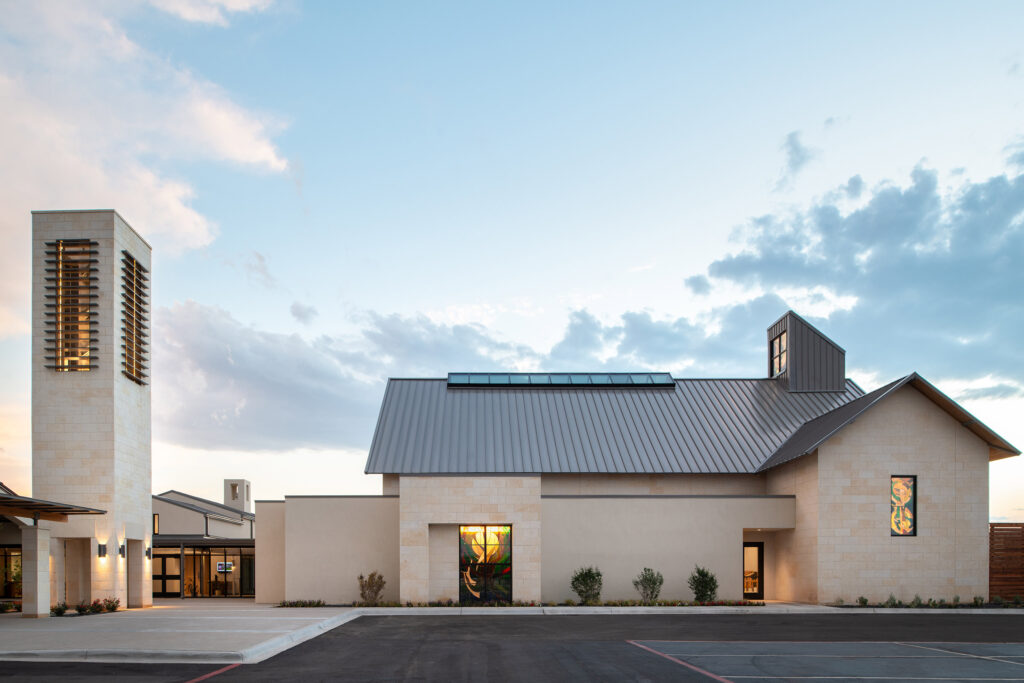
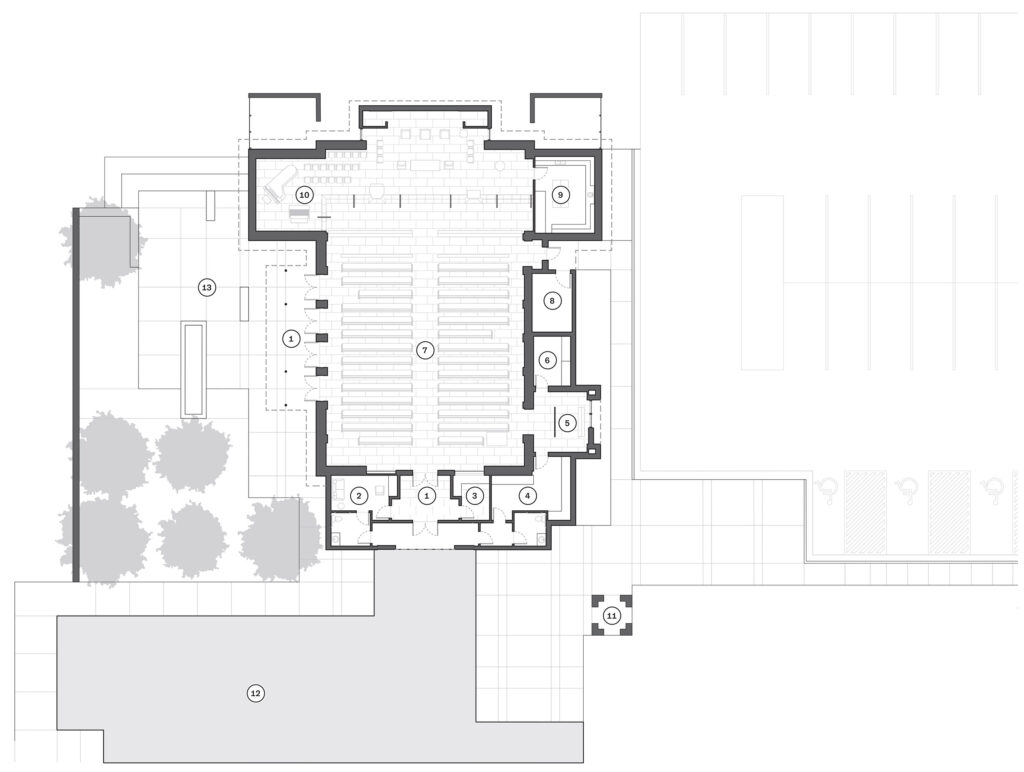

The resulting 300-seat sanctuary adheres to traditional ecclesiastical forms. The building follows a cruciform plan with a keel-like ceiling spanning the nave. The space is rendered with a straightforward palette of materials: white oak, Texas limestone, and Venetian plaster. Ornament is intentionally sparse, reserved for liturgical objects and furniture. A key goal for the design team was avoiding off-the-shelf furnishings and materials, preferencing human-made solutions where budget allowed. Liturgical objects like the pulpit and candelabras were custom-designed by RWA and executed by various craftspeople. Parishioner and artist Stan Jacobs carved a wooden bas relief depicting lambs for the altar table. Altar rail kneeling cushions were needlepointed by the church’s sewing group, Sisters in Stitches. While the design avoids excess, it embraces the transcendental value of beauty in its material composition and thoughtful detailing.
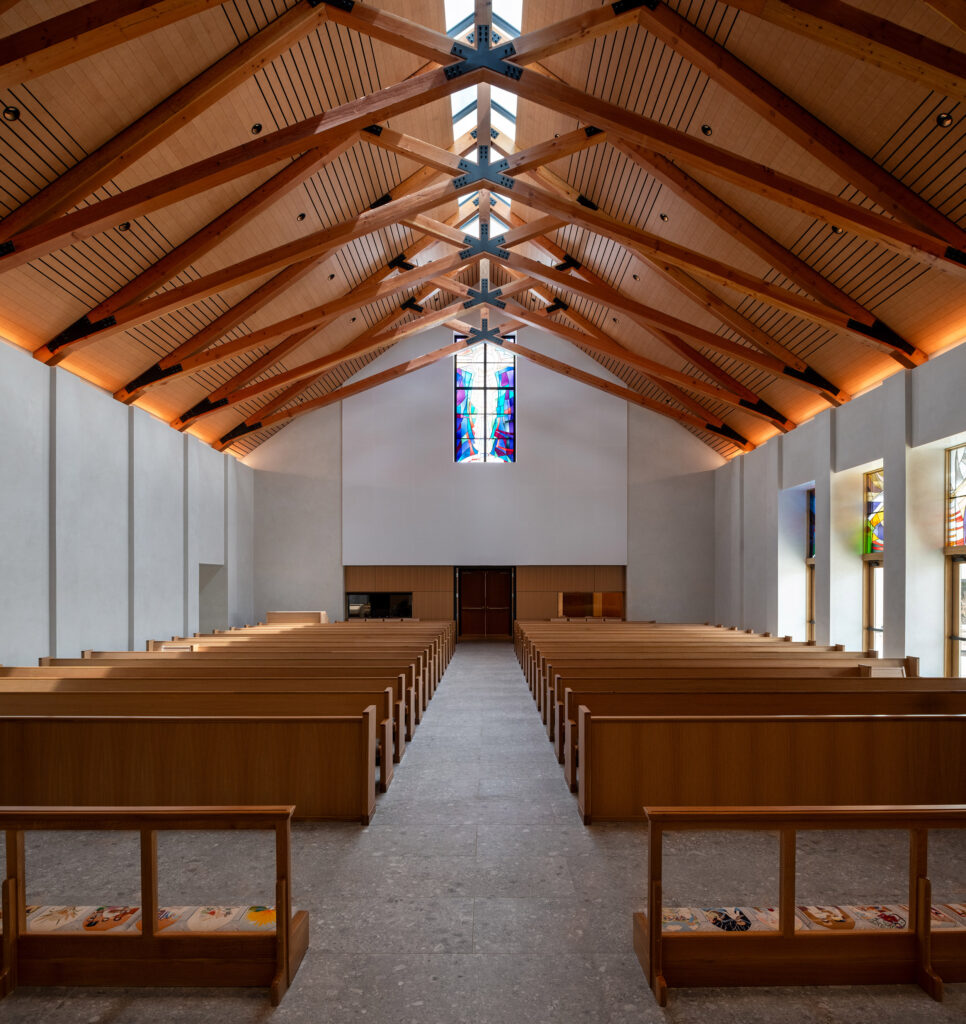
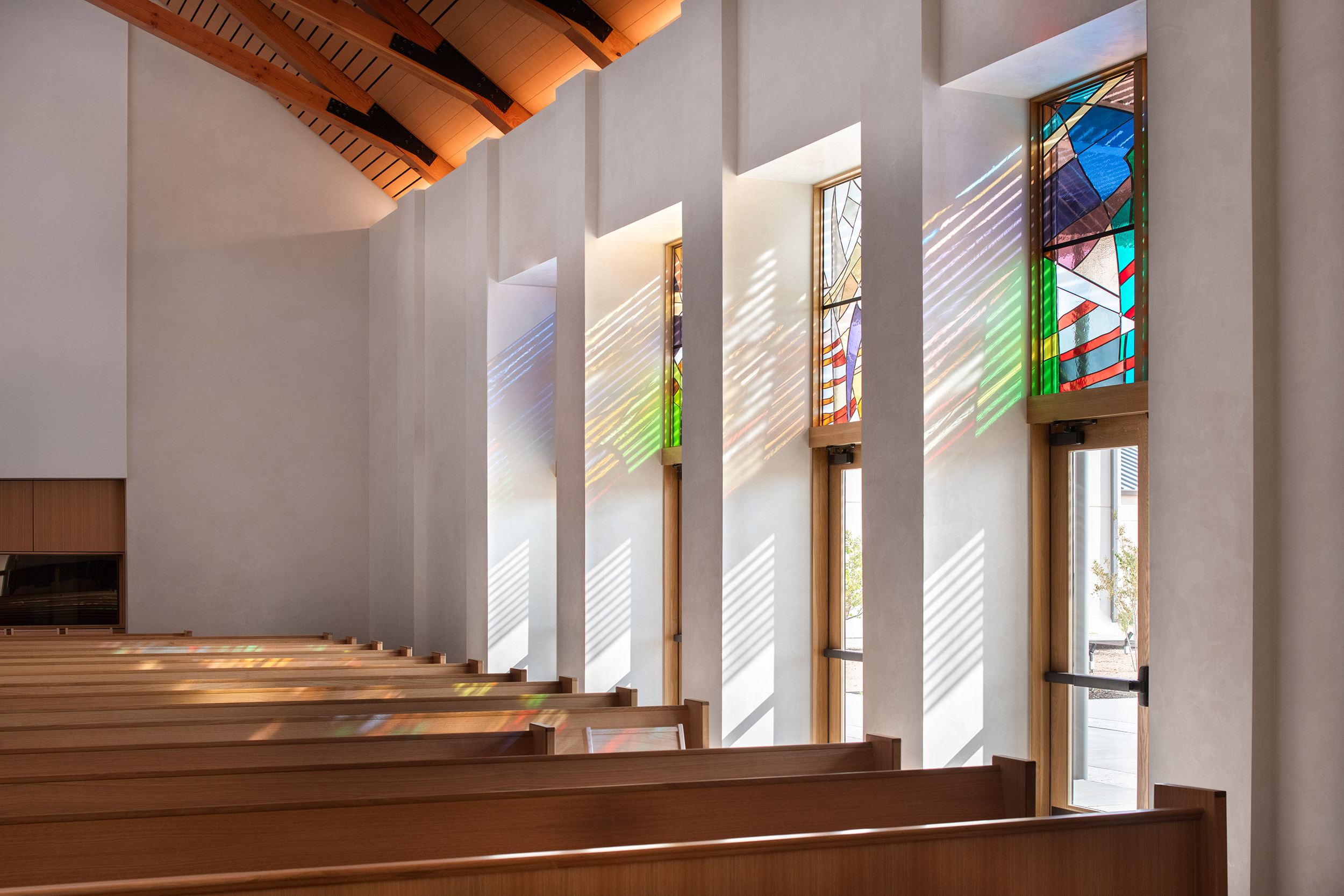
The silent protagonist of the sanctuary’s design is light, which creates a serene, contemplative experience. “Light was a big part of the design,” says Chandler. “We had an opportunity to create a space that could change throughout the day, to be a different room every time someone comes in. We placed the stained glass strategically. For example, in the morning at certain times of year, the window becomes alive and floods the space with life.”
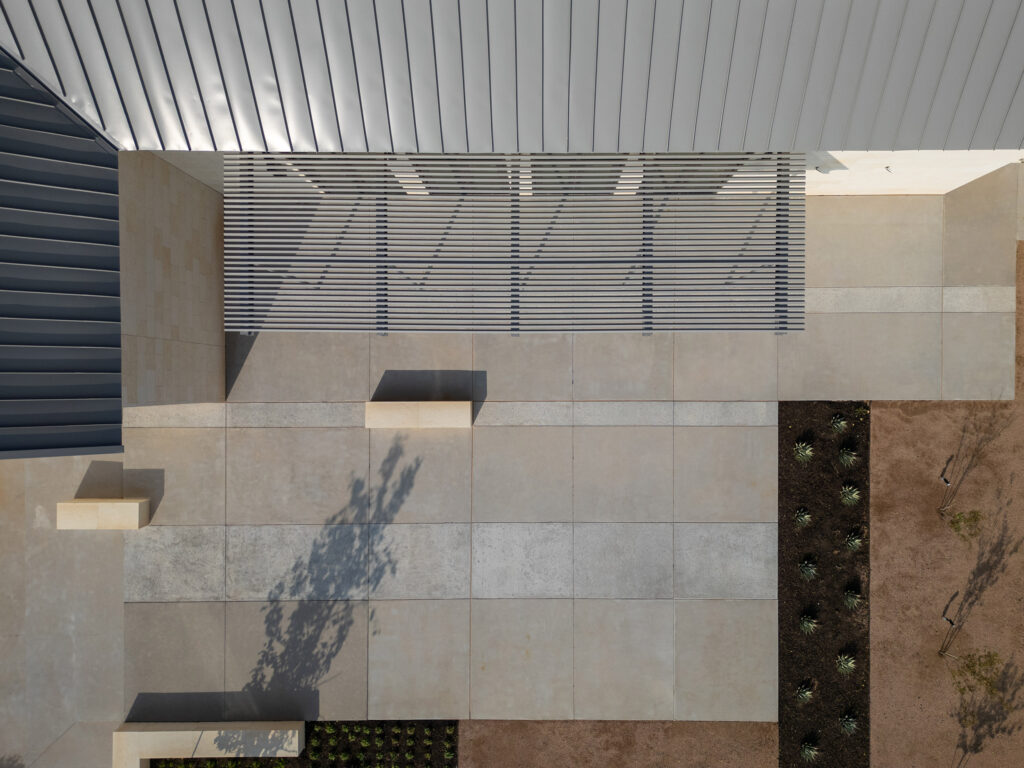
The new sanctuary departs from inwardly focused churches, where windows and exterior views are limited. Instead, natural light is celebrated here as a reminder of the greater natural world and community beyond the church walls. A series of glazed double doors open to an adjacent courtyard, providing clear views to the West Texas horizon. A double-pitched skylight runs nearly the full length of the nave, filtering light through the structural wood trusses. The neutral material palette of the interior enhances the plentiful natural light, giving the space an airy, luminous quality.
The use of light takes on new dimension when it interacts with the stained glass placed throughout the sanctuary. West Texas artist and TxA Artisan Award–recipient Jeff Smith was commissioned to design, fabricate, and install the stained glass. The panels are composed of different types of mouthblown glass in a complex color palette: milky white and amber opals and oaks, transparent colors, rolled “seedy” glass, and strategically placed Austrian crystal prisms. The opalescent glass transmits and reflects light, allowing the design to be viewed from both sides. Parishioners can see directly through the transparent glass, which also enables direct sunlight to project colors into the interior. Seventy crystal prisms are embedded in the panels, each bending sunlight into rainbows that scatter serendipitously across interior surfaces. Together, the carefully crafted compositions form dynamic works that become an essential part of the three-dimensional architectural space.
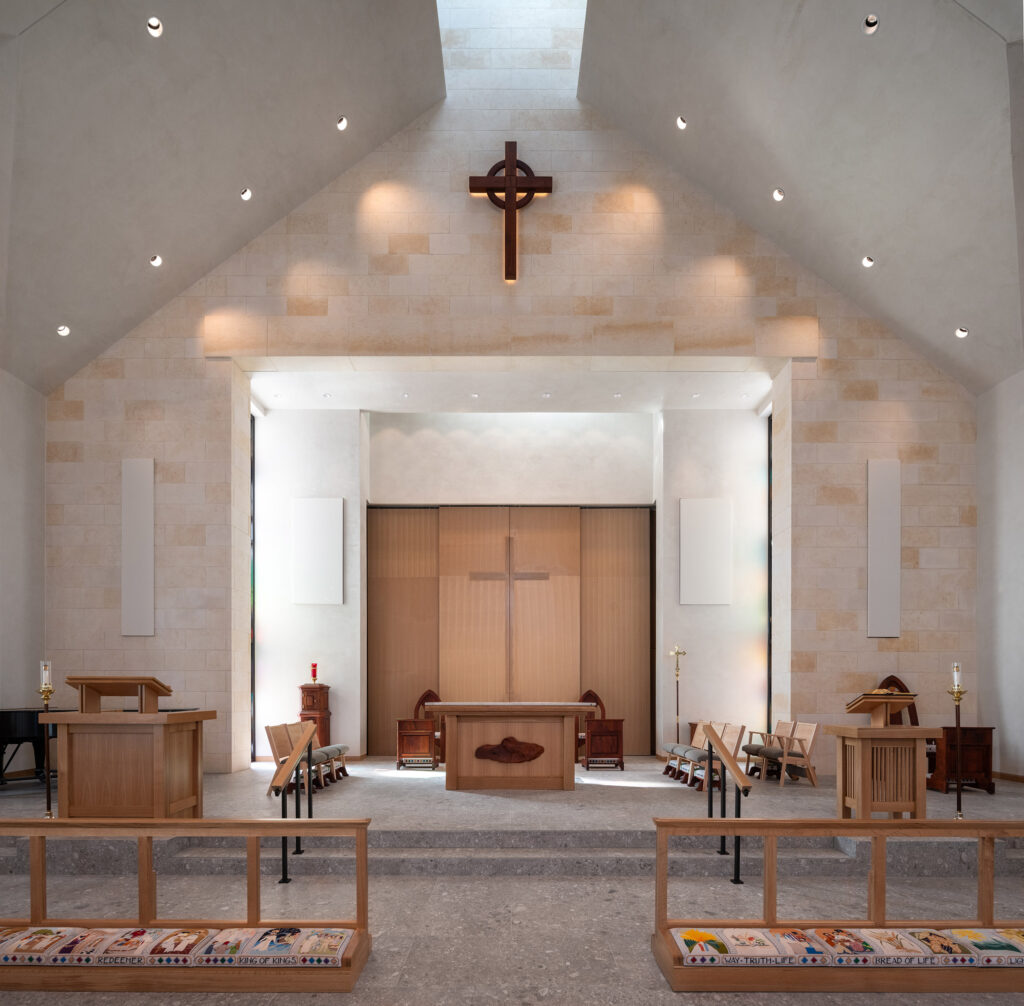
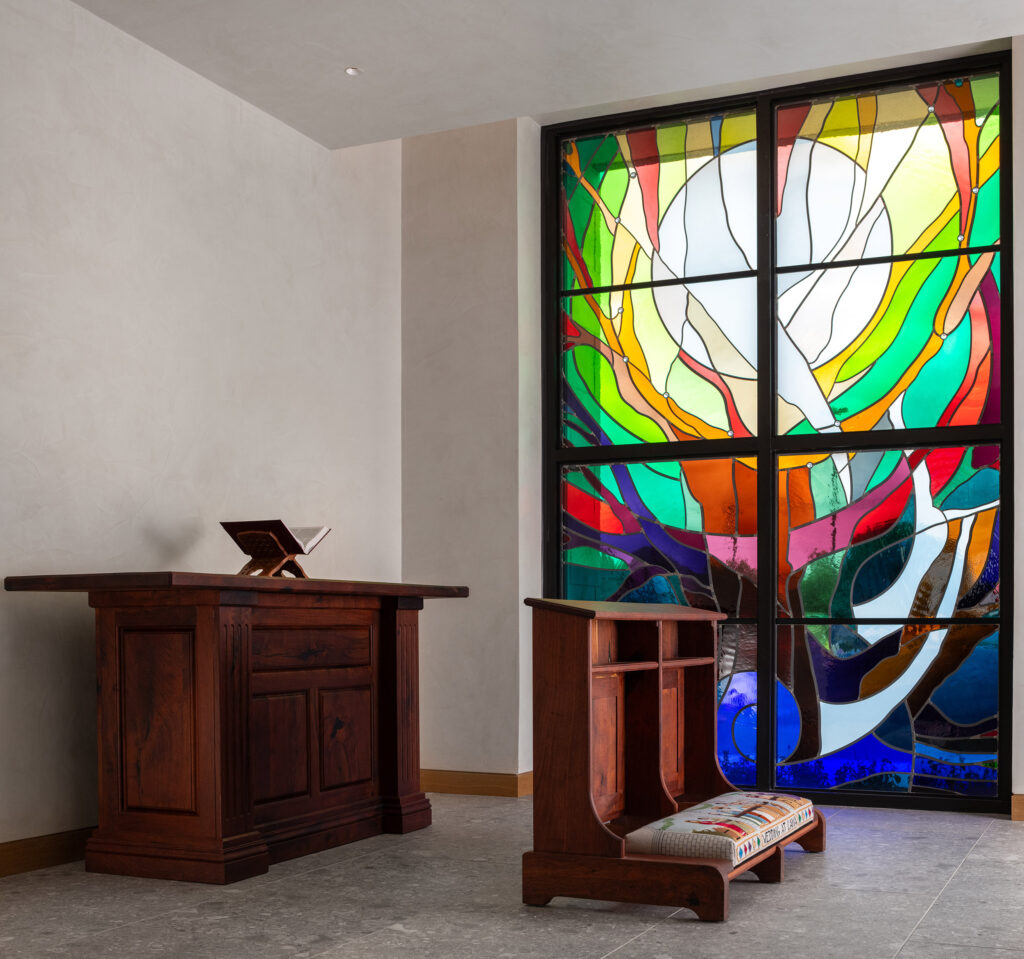
A deviation from traditional stained glass with literal depictions of long-dead saints, Smith’s work is intentionally abstract, empowering viewers to become participants and devise their own interpretations. After pre-design meetings and site visits with the design team, the artist conceptualized six collections of windows. A narthex window located above the main entry greets worshippers with cross and ichthus symbolism. Four transom windows above the courtyard doors harness the western sun, projecting sculptural patterns across the plaster walls. Two 20-foot-tall altar windows inspire wonder as colors play across the altar and clergy during worship services. Hidden from view in a roof monitor, the glass panel Let there be Light casts mysterious, ethereal patterns of color above the altar. Patterns from the stained glass shift with the sky and seasons, marking time with color and creating an ever-evolving experience for congregants. The interpretive designs invite contemplation and communion with the divine. A late addition to the project, the glass serves as the finishing touch on an artful composition of space.
Uncomplicated and approachable, the new Christ Church Anglican sanctuary remains faithful to the building committee’s objectives. The design is powerful in its simplicity—quiet enough to serve as a backdrop for spiritual rituals and their full range of emotions—from joyous celebrations to somber reflections. Light is ubiquitous, creating a dynamic space that is constantly changing with the passage of time and seasons. Above all, the new sanctuary is rooted in the needs of its parishioners, providing a spiritual harbor amid the sea of life.

Audrey Maxwell, AIA, is a principal at Malone Maxwell Dennehy Architects in Dallas.

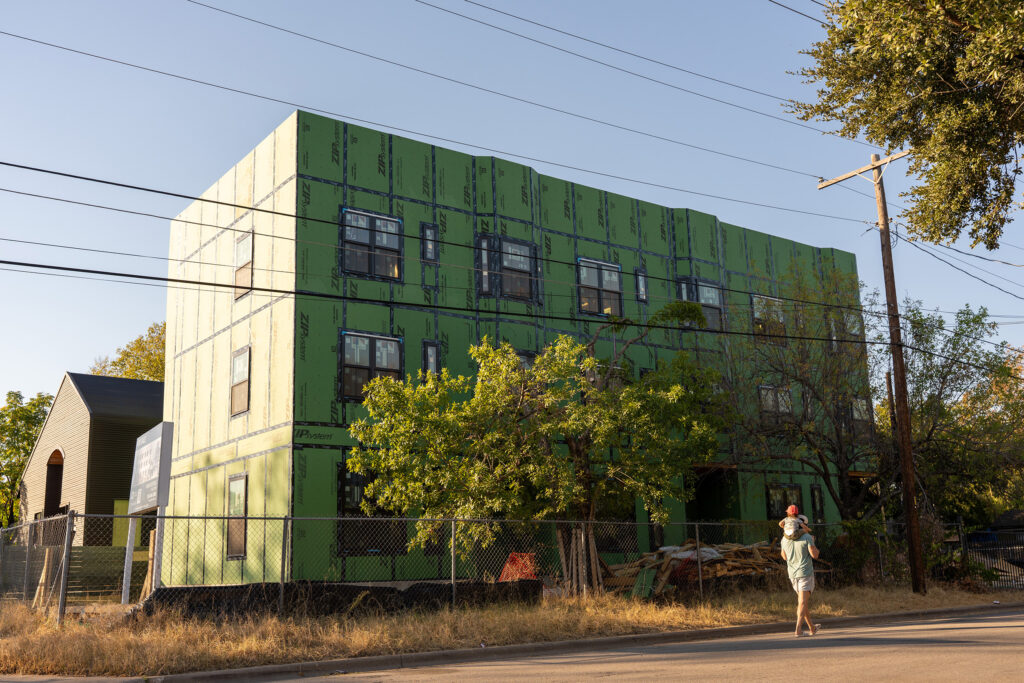
Housing Policy and the Quest for Shelter
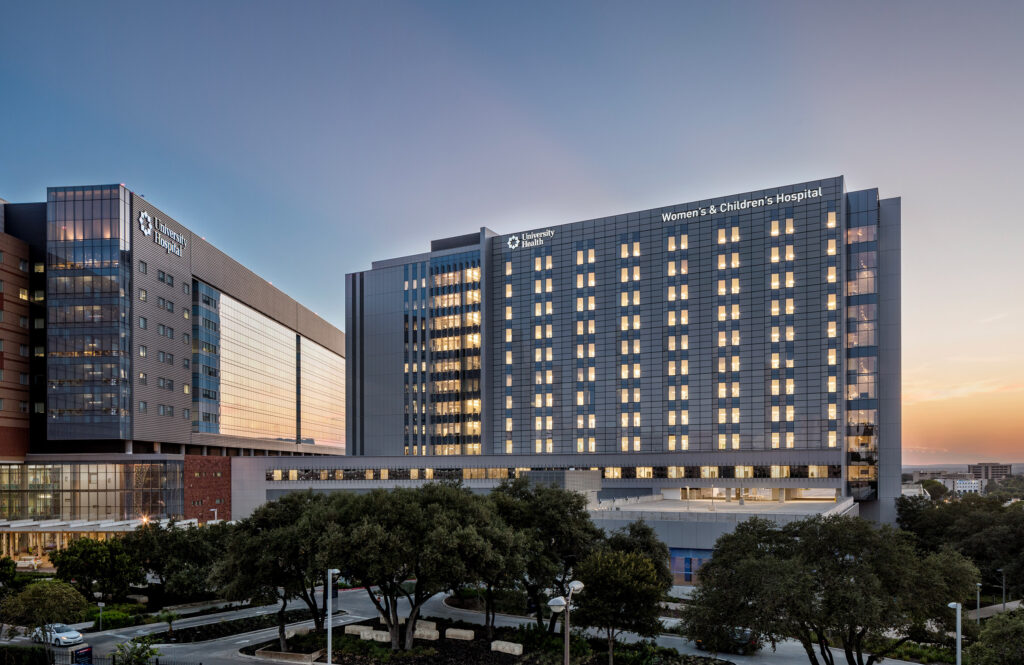
A new model for neonatal care
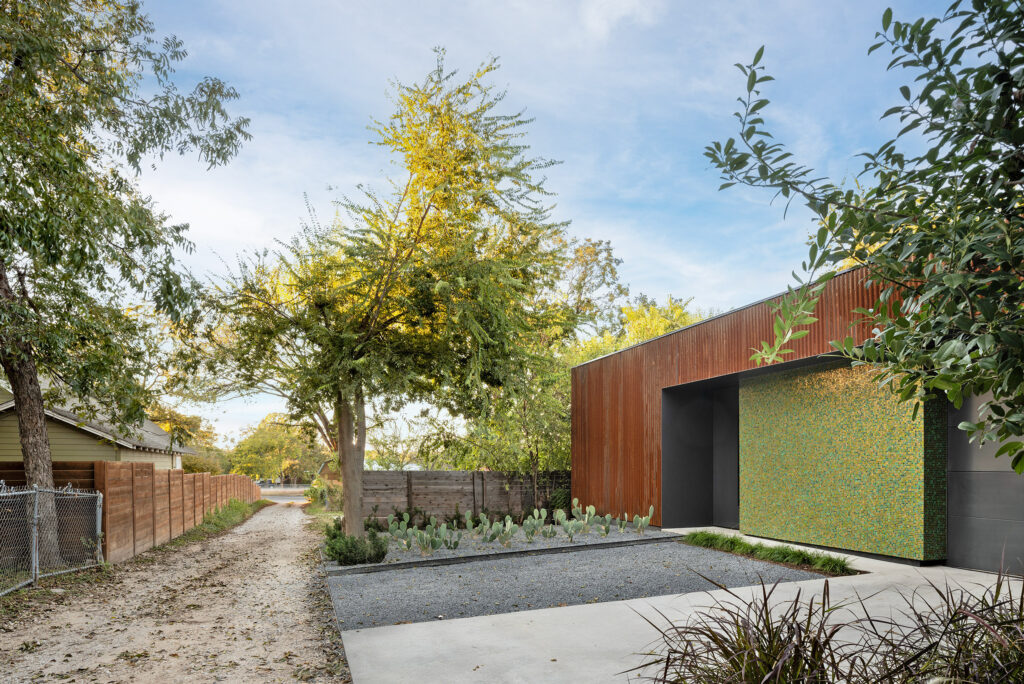
Austin’s Stealth House defies convention.
The making of El Paso’s Temple Mount Sinai
A bustling community center for Northwest Austin

Exploring new possibilities for green burial
The first phase of UT Dallas’s new arts complex revealed
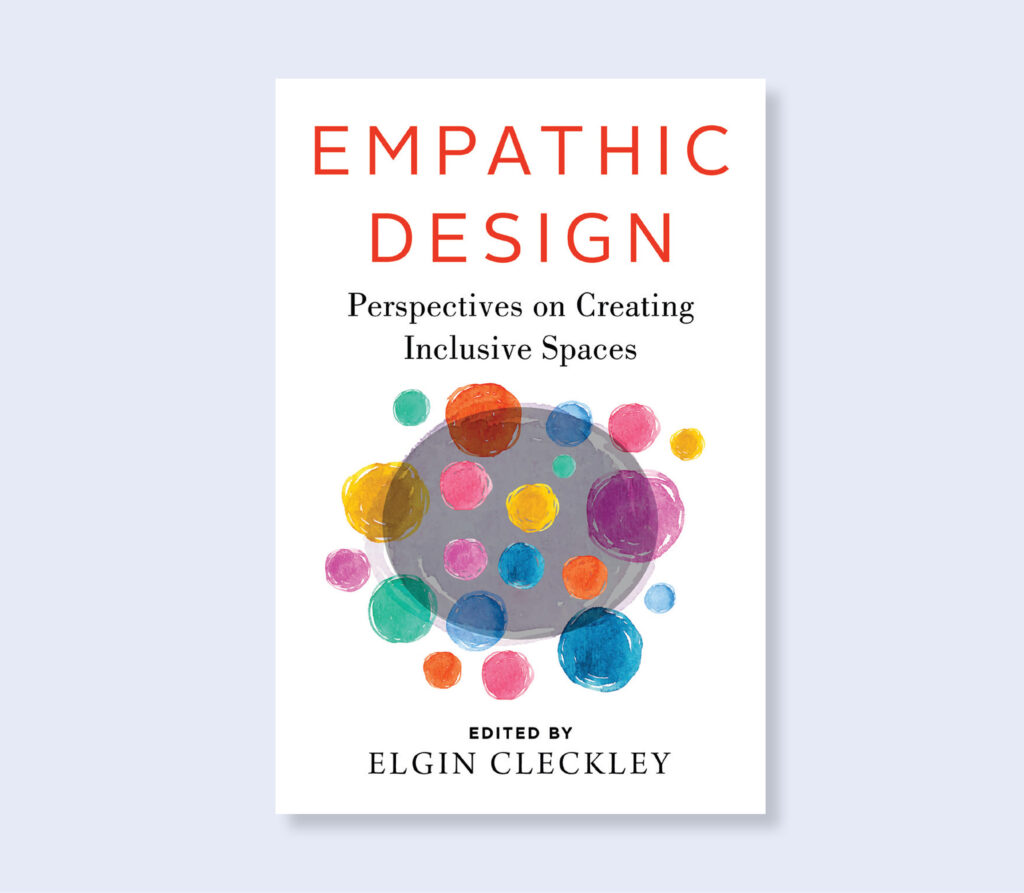
Empathic Design: Perspectives on Creating Inclusive Spaces
Elgin Cleckley, NOMA
Island Press, 2024

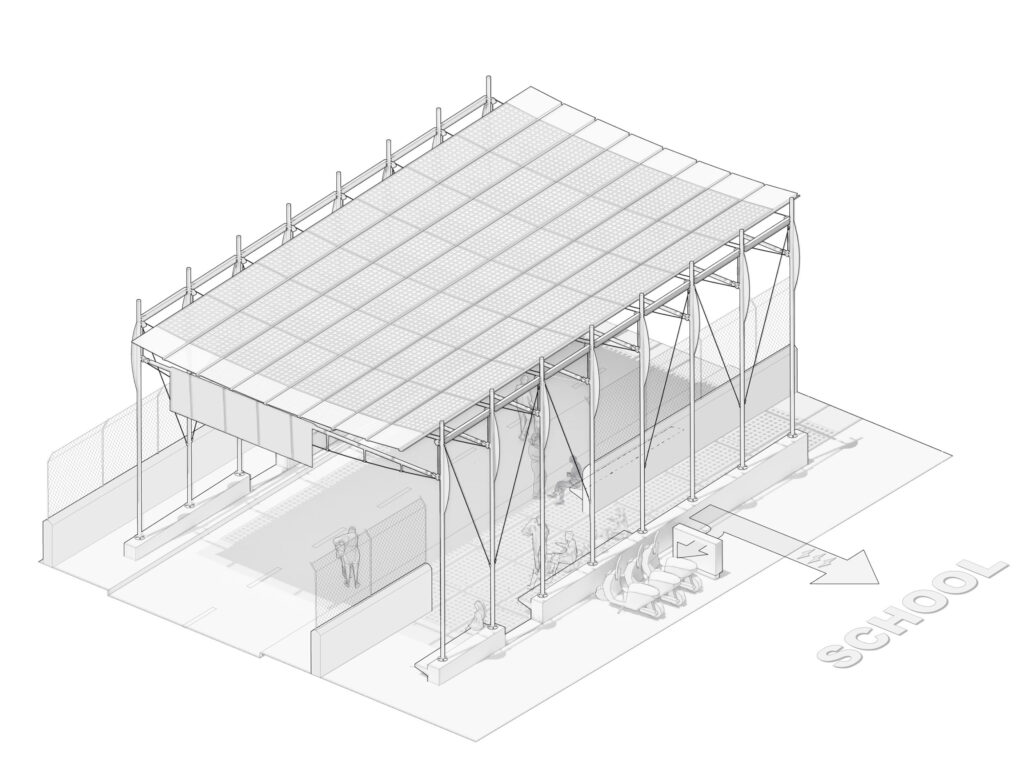
Creating the Regenerative School
Alan Ford, FAIA, Kate Mraw, and Besty del Monte, FAIA
Oro Editions, 2024

A truly beautiful sanctuary. Well conceived and crafted thoughout. A modern design that addresses the rich traditions of sacred worship spaces.Jeff Smith’s art glass brings story and light to life in all of his glass projects. Well done Rhotenberry Wellen and the entire design team.
As a worshipper at Christ Church Anglican I am often surprised by a new display of the colorful light on the walls, floor and ceiling as the sun moves through the day and seasons. In many church sanctuaries one becomes accustomed to the unchanging beauty. This is different, exhilarating and spiritually enhancing. The sun born variety of light is testament to God’s creation.