Dec 17, 2025
As I reflect on my year serving as president of the Texas Society of Architects, I am filled with gratitude—for…

In conjunction with the 32nd Building Communities Conference and Trade Show, held at South Padre Island by the Lower Rio Grande Valley Chapter of the American Institute of Architects (AIA-LRGV) on the first weekend of September 2025, conference attendees had the opportunity to participate in a day-long architectural tour of H. Matamoros, Tamaulipas, the Mexican border city of over half a million people across the Rio Grande/Rio Bravo from Brownsville. The Colegio de Arquitectos del Noreste de Tamaulipas (CANT), led by architect and board president Gabriela Mercedes Reinhardt Rodríguez, organized the tour. Called “Bricks and Borders: An Architectural Journey Across the Rio Grande,” it highlighted Matamoros’s historical patrimony—and some of its most exciting new architecture. The event served an additional purpose. As AIA-LRGV executive director Maria Sustaeta, Hon. AIA-LRGV, phrased it: “This international tour bridges the gap between architects by establishing an ongoing collaboration that transcends borders.” CANT members received their Texan visitors with exceptional hospitality.
“This international tour bridges the gap between architects by establishing an ongoing collaboration that transcends borders.”
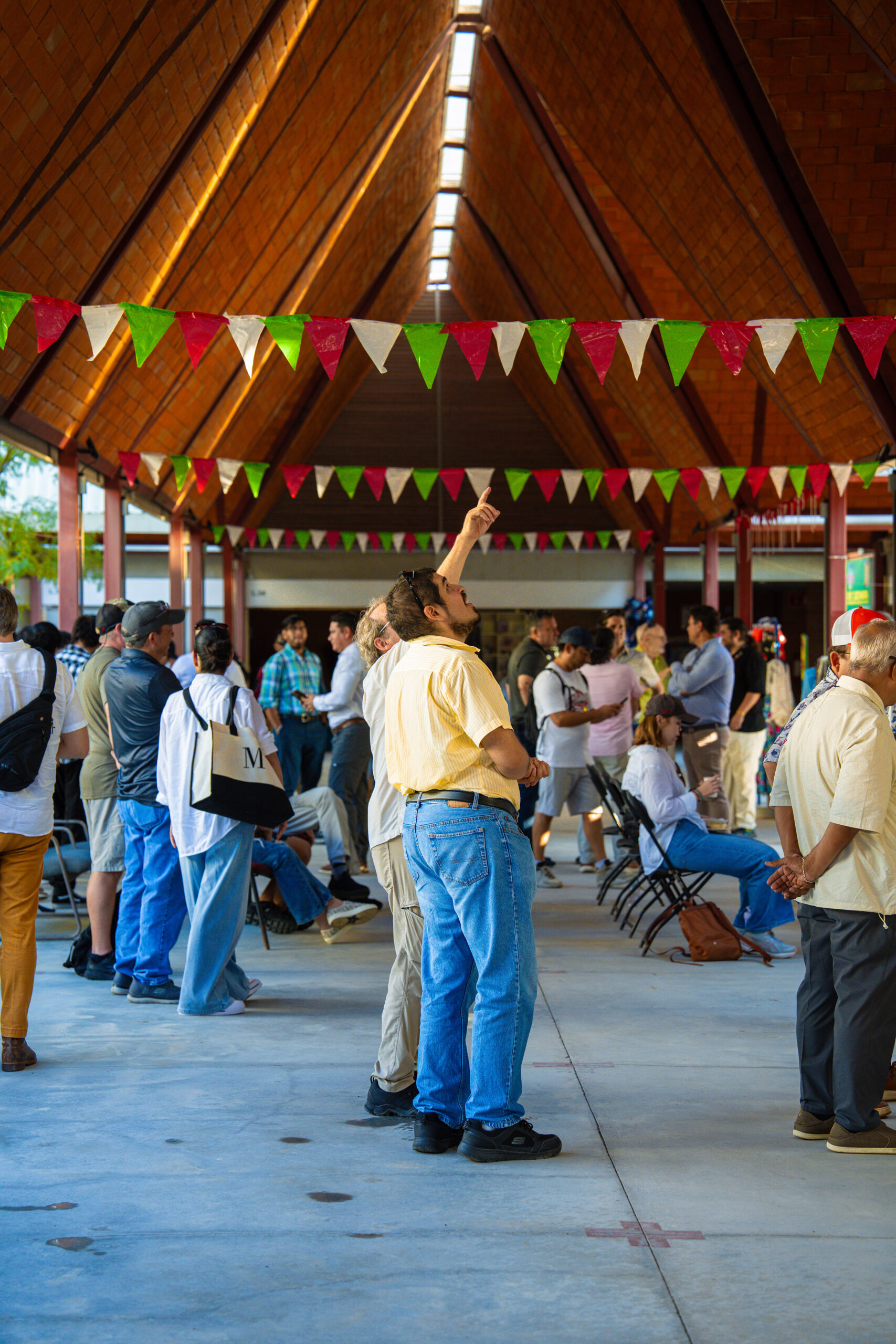
The tour began in a working-class neighborhood in southeast Matamoros, where in 2019–20 a federal agency, the Secretaría de Desarrollo Agrario, Territorial y Urbano (SEDATU), funded construction of a public market, designed and built in just six months. The architects were Colectivo C733, a temporary affiliation of architects commissioned by SEDATU to produce community facilities in low-income neighborhoods in 35 Mexican cities. Matamoros’s Mercado Catarino Garza, designed by a team headed by Mexico City architect Gabriela Carrillo, is an astonishing sight. In plan it consists of 16 square bays, wrapped by an outer brick wall, that surround a rectangular central patio. Each bay is roofed with an inverted pyramid, open at the top and bottom. The pyramids, which the architects call paraguas (umbrellas), are supported on a prefabricated steel frame infilled on the down side with ceramic tile and on the sky side with corrugated metal that reflects the sun and channels rainwater into floor drains. The market’s triangular geometry creates tall, shaded interior spaces. Triangular louvered wood panels between the pyramids facilitate breeze penetration, essential in Matamoros’s humid climate. Conference speaker Rafael Longoria, AIA, of Houston likened the market to Louis I. Kahn’s Trenton Bath House.
In the historic center of Matamoros, CANT representatives guided visitors through the one-story Instituto Regional de Bellas Artes, housed in the former Hospital Militar, its oldest section dating to the 1850s. There, one-story brick buildings separated by narrow, planted patios are linked by breezeway corridors, a demonstration of spatial layering in a tight urban setting. Matamoros architect Alberto González Aceves of Grupo Decora presented his design of the recently completed Hotel Embajadores in Matamoros in the institute’s auditorium, and Matamoros’s city historian, Martín Rodríguez Arellano, spoke about the site’s significance.
Lunch at the historic Hotel Moctezuma (today Hidalgo Botanero), facing Matamoros’s main square, Plaza Hidalgo, was followed by a visit to the Catedral de Nuestra Señora del Refugio, a twin-towered neoclassical church completed in 1833. It was designed and constructed by a New Orleans master builder, Mateo Passement, but periodically rebuilt following damage in 19th- and 20th-century hurricanes, as priest (and architect) Fr. Jesús Cano Torres and Diana A. Benavides explained. Participants sought mid-afternoon relief in the Teatro de la Reforma, a former movie theater built in 1958 on the site of Matamoros’s 1865 opera house. In 1992, the movie theater was reconfigured to evoke its 1865 predecessor, and it now serves as the city’s major performing arts space. Architects Miguel Angel Jaime Ramírez and María Aurora Castillo Garza spoke at the theater about their preservation-related work in Matamoros’s zona centro. CANT then treated visitors to a mid-afternoon merienda at MERT Boulangerie, a coffee shop opened by Brownsville artist, designer, photographer, and chef Alejandro Quintanilla. Quintanilla rehabilitated a historic, two-story brick merchant’s house, built in the 1860s, for use as his café and gallery.
Outside Matamoros’s zona centro, tour participants visited two architecturally distinctive sites. First was the Museo de Arte Contemporáneo de Tamaulipas (MACT), occupying a dramatically profiled building complex constructed in the 1960s as the Centro de Artesanías, one of a pair of border cultural centers designed by Mexico City architect Salvador Flores Ortega (the other is in Ciudad Juárez). As the chief of the museum’s academic department, artist Javier Dragustinovis, explained, architectural historians Germán Pallares-Avitia, Elisa Drago, and Pablo Landa identified Flores Ortega as MACT’s architect after decades of misattribution to other architects. The second and final stop was at the Colegio San Jorge, a private nursery-through-secondary school occupying a series of residential lots in Colonia Jardín, Matamoros’s mid-20th-century elite neighborhood. Architects Francisco Flores, Gabriela Barragán López, and Pedro A. Moya Flores, working with the school’s director of innovation, Jorge Luis Almanza, threaded three- and four-story learning, athletic, and circulation spaces between existing houses, creating an intricate network of spaces—some intensely planted, others unobstructed—that incorporate fragments of houses formerly on the site in witty and surreal ways. Various screening devices (concrete block, glass block, expanded metal) and bold colors (lime green and fuchsia predominate) enable institutional buildings to urbanize, rather than annihilate, the residential fabric of Colonia Jardín.
Conference speakers included TxA president-elect Krystyn Haecker, AIA, and, from within the Valley chapter, landscape architect Stephen Walker, Manuel Hinojosa, FAIA, Teresa Fonseca, AIA, David Negrete, AIA, and Michael Allex, AIA, along with Fort Worth architect Bart Shaw, AIA, and Austin architect Stephi Motal, AIA. This year the conference featured two keynote presentations: by technology consultant Matthew Bertram, talking about the impact of AI on architectural practice, and by El Paso architects Eugenio Mesta, AIA, and Paulina Lagos, AIA, of Exigo, talking about their civic work. Conference chair Sergio Láinez, AIA, chapter president Marta Salinas-Hovar, AIA, and executive director Sustaeta produced the conference and trade show.

Stephen Fox is an architectural historian and a Fellow of the Anchorage Foundation of Texas.
Housing Policy and the Quest for Shelter
A new model for neonatal care
Austin’s Stealth House defies convention.
The making of El Paso’s Temple Mount Sinai
A bustling community center for Northwest Austin

Exploring new possibilities for green burial
A new home for a West Texas church
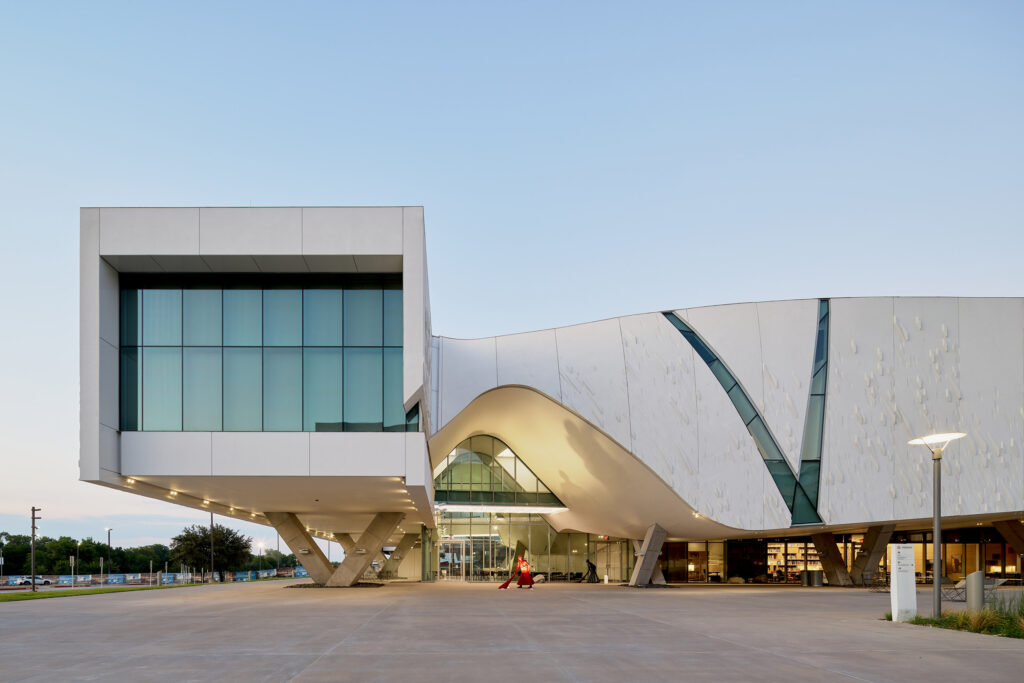
The first phase of UT Dallas’s new arts complex revealed

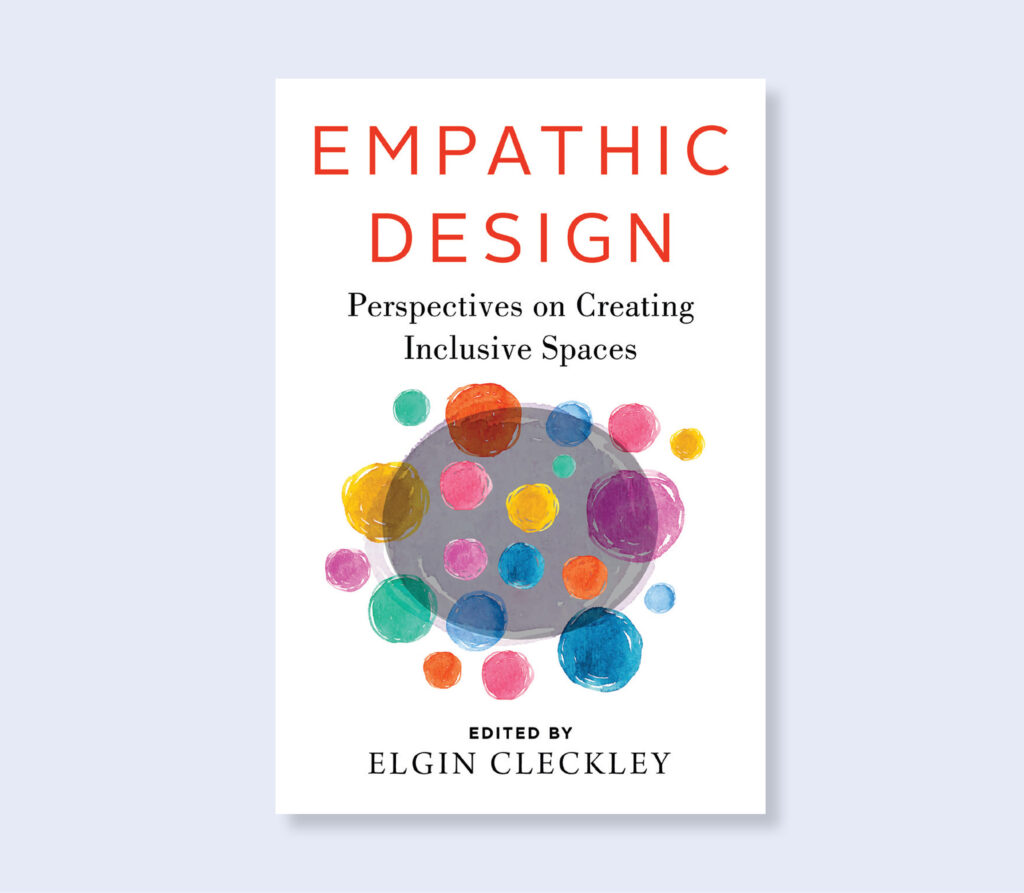
Empathic Design: Perspectives on Creating Inclusive Spaces
Elgin Cleckley, NOMA
Island Press, 2024

Creating the Regenerative School
Alan Ford, FAIA, Kate Mraw, and Besty del Monte, FAIA
Oro Editions, 2024